Bay-view Pavilion

Bay-view Pavilion

UC Berkeley MAAD 25 Fall Studio One
Individual Work
Timber Pavilion
Site: Berkeley Marina, California
Area: 4096ft²
2025.11-2025.12

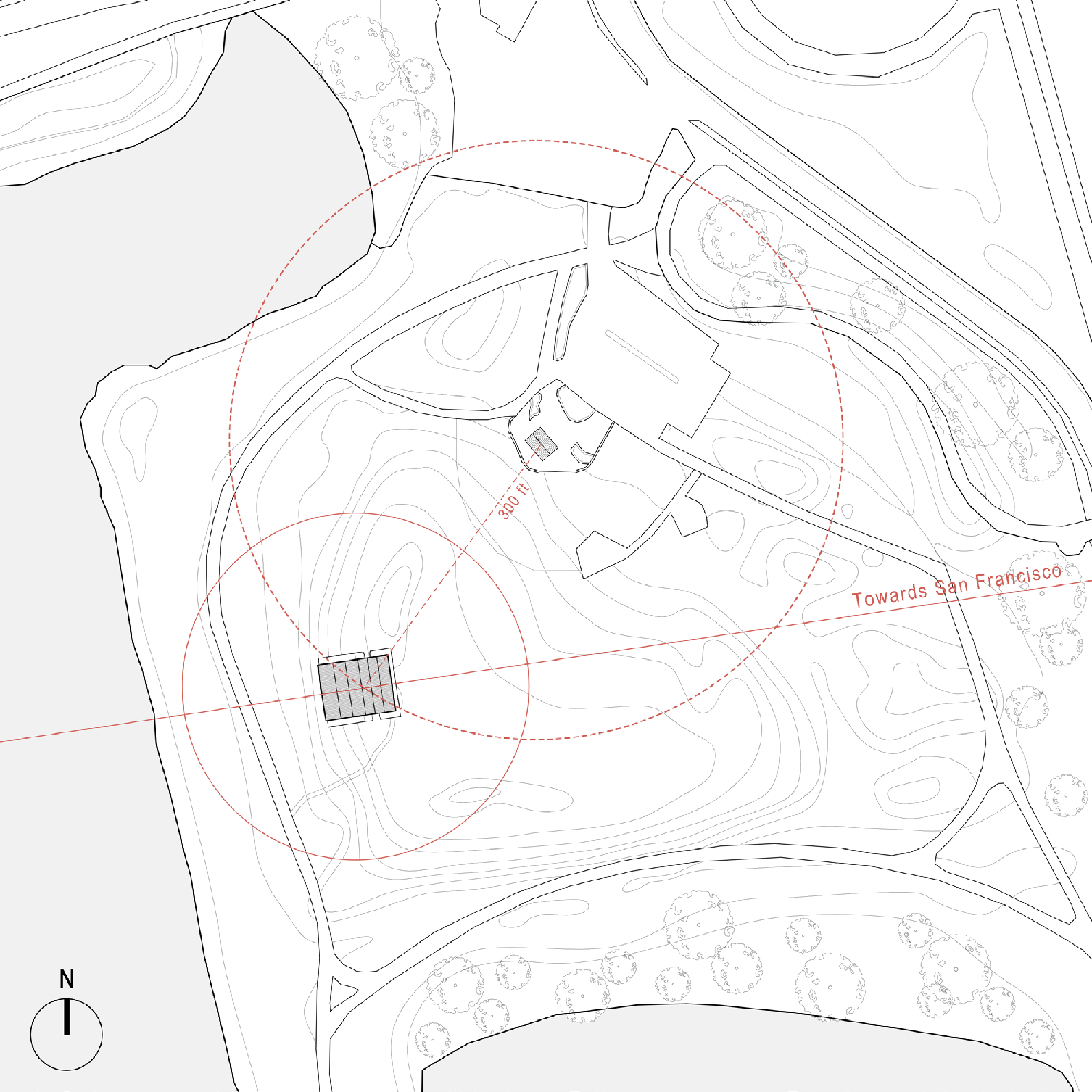
Located at Berkeley Marina in California, this project enjoys an exceptional location and panoramic views of the bay. The site is relatively open, and the earthen slope carries a kind of primal force that creates a strong urge to climb to the top and take in the scenery. A viewing route therefore forms naturally, with an intuitive, elemental narrative shaped by sightline control and spatial perception. This gave me inspiration to respond to the site conditions.

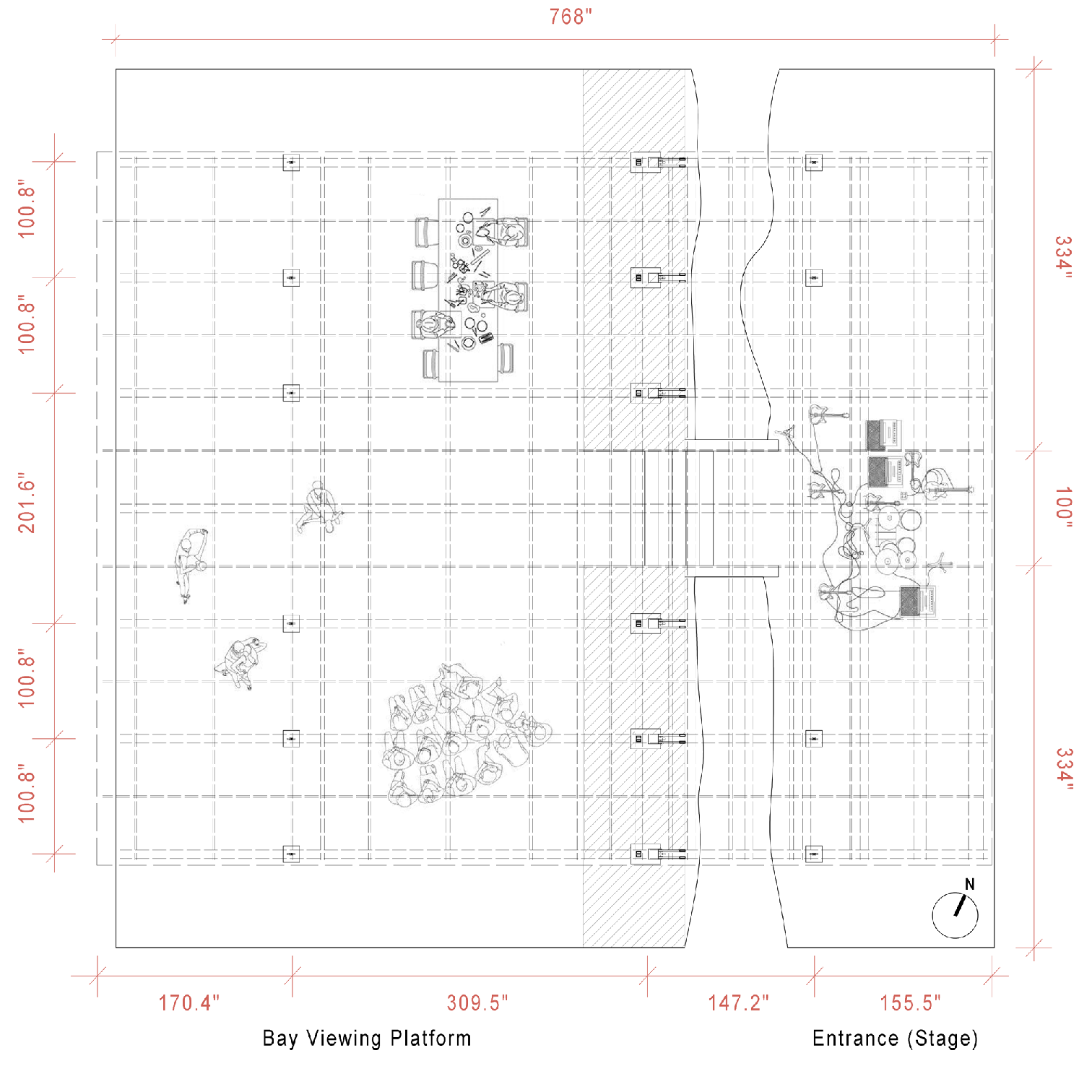
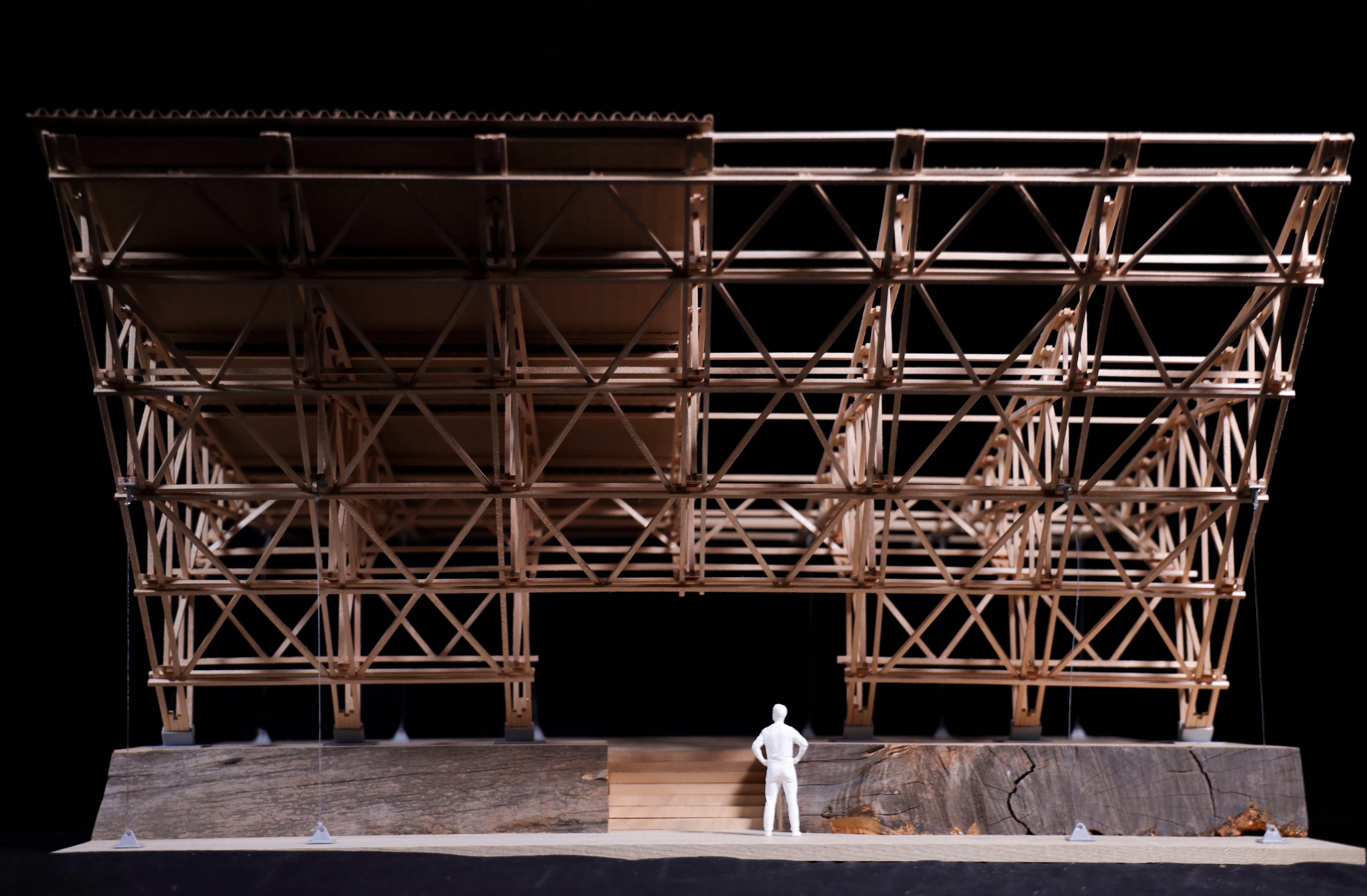
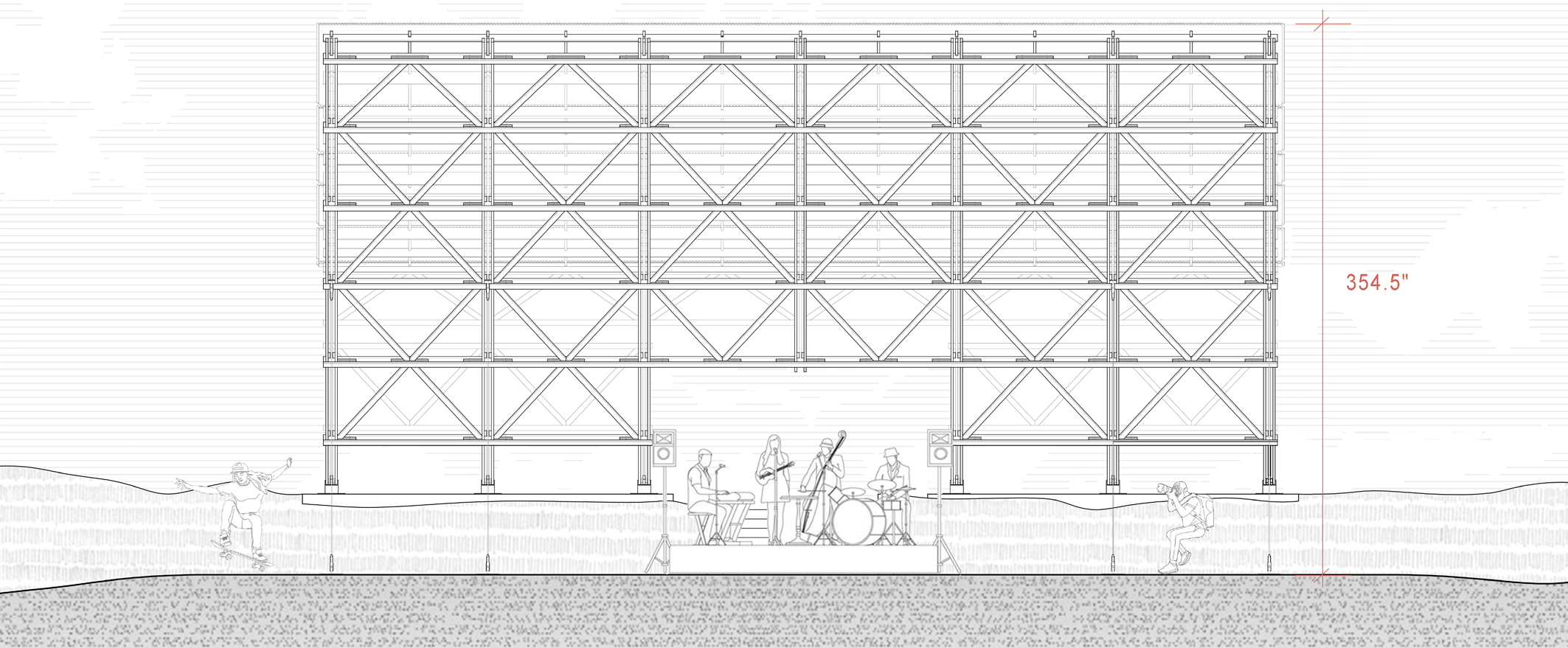
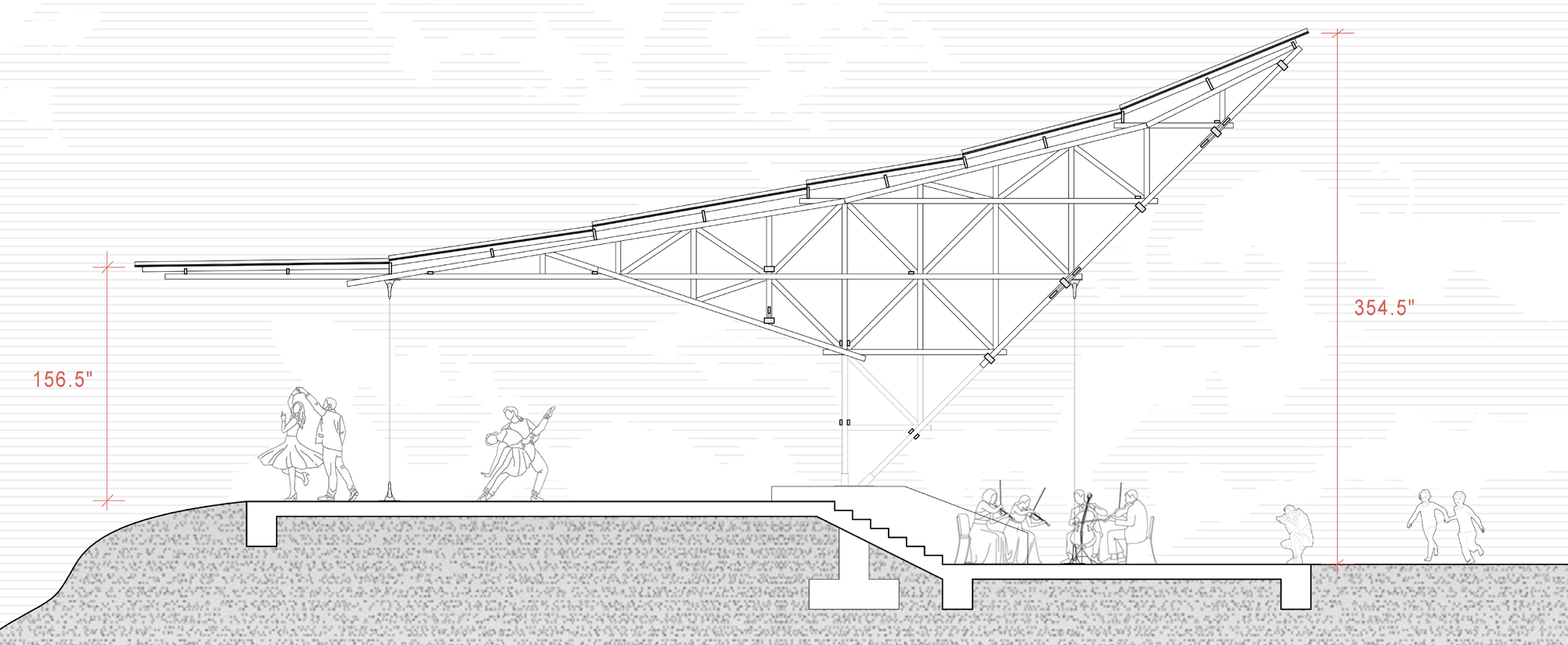
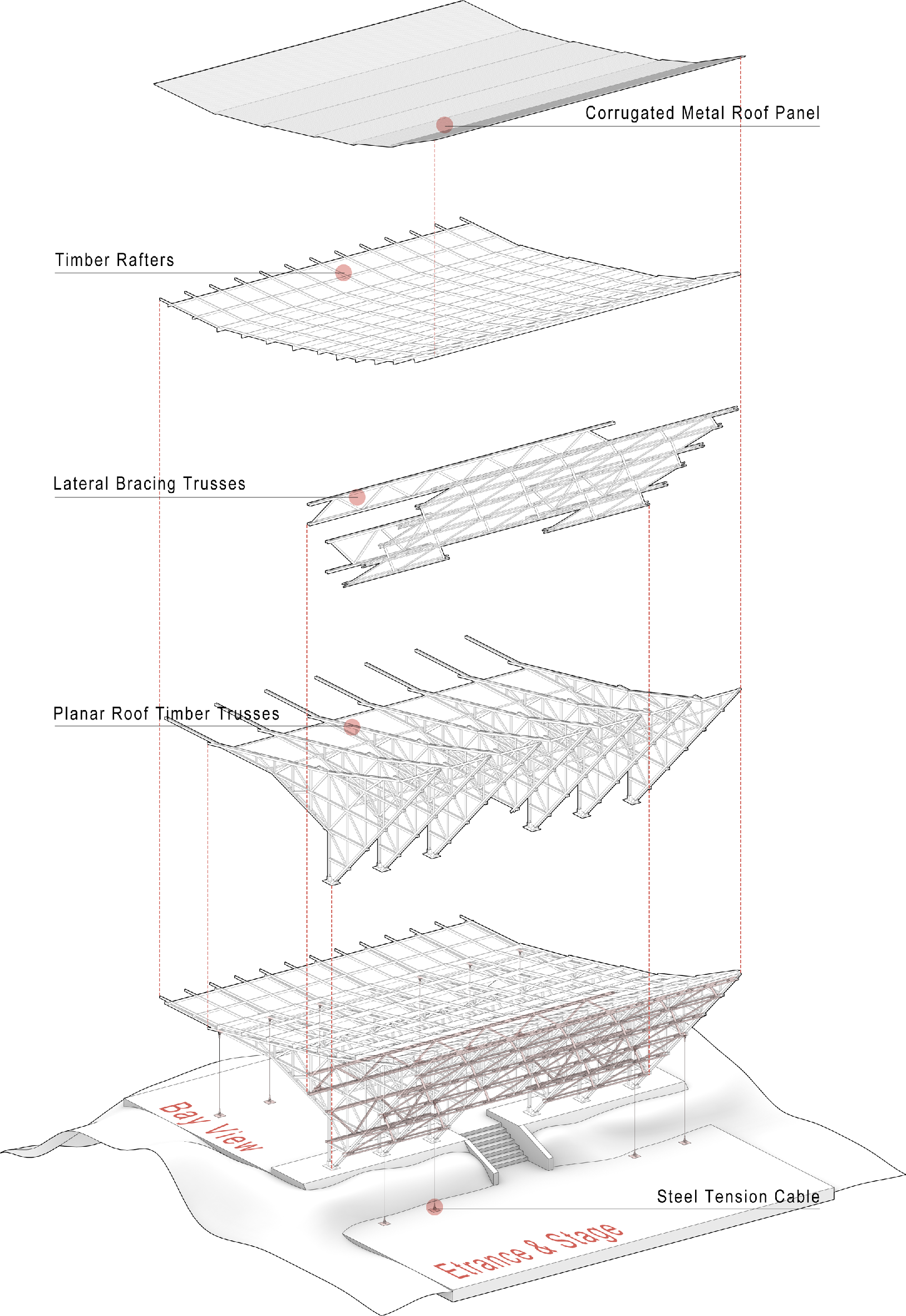
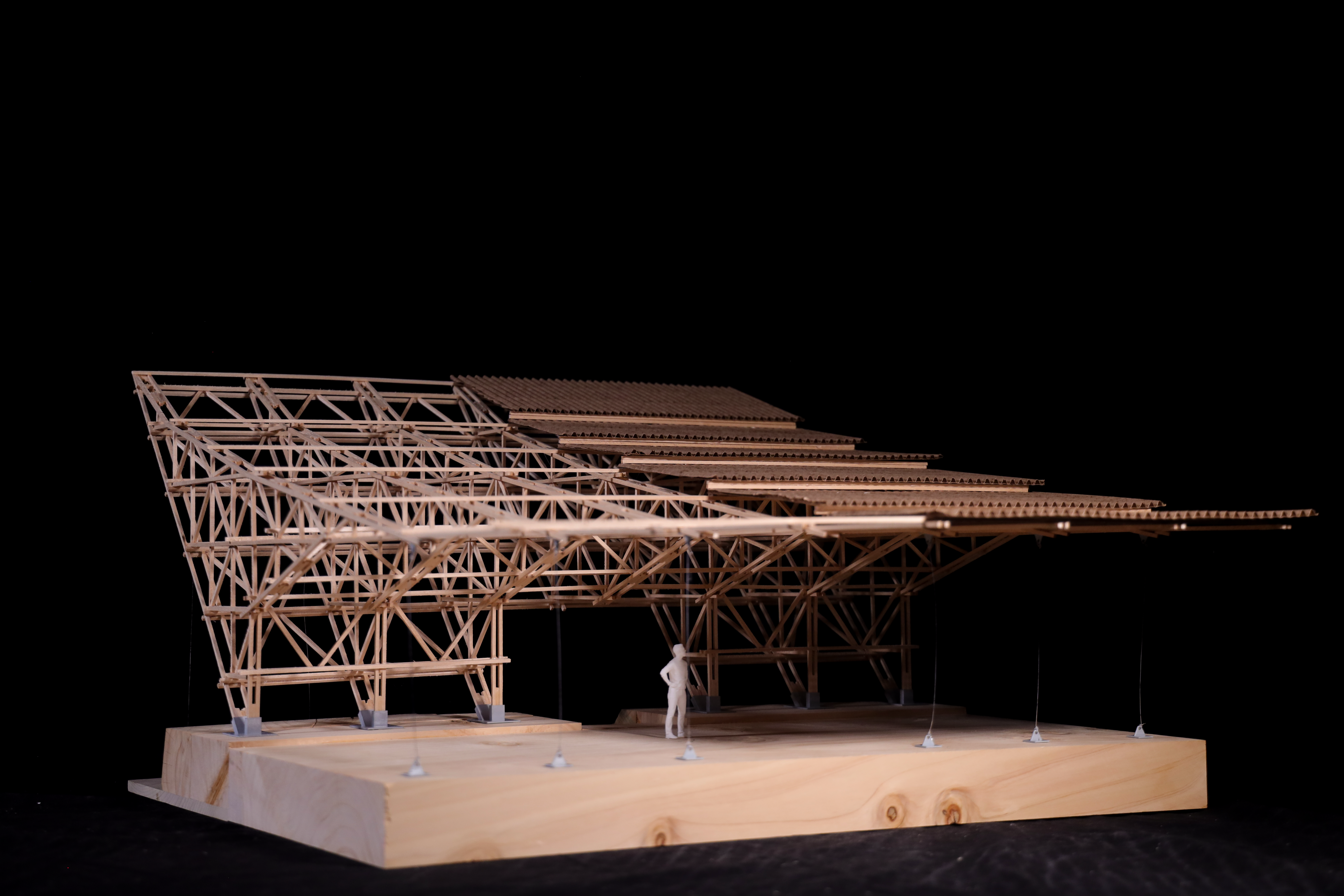
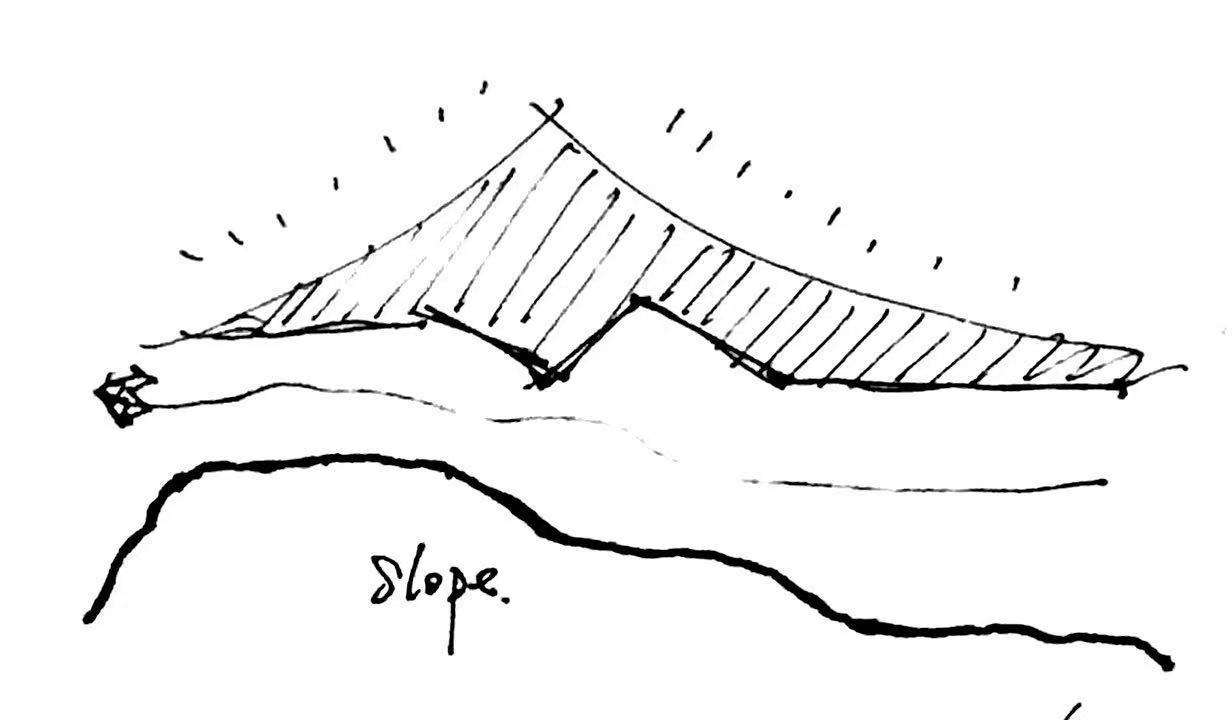
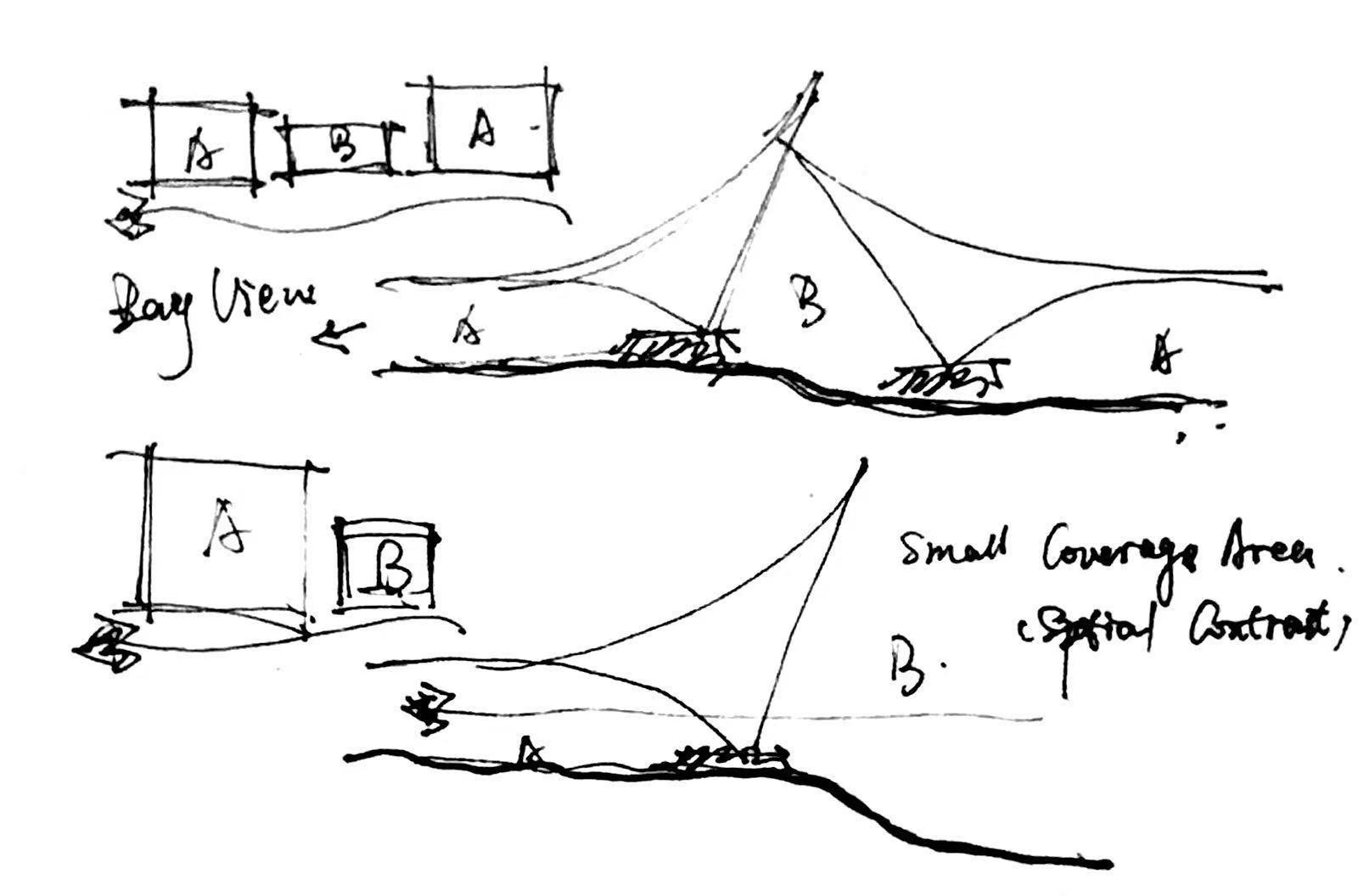
In this project, I aim to explore low-tech construction strategies and the role of structure in spatial division. I envision a single, powerful roof that echoes the terrain—almost as if it grows out of the slope. Beneath this unified roof is a continuous truss system that extends all the way down to the foundation. Yet through this complete, continuous truss framework, the building is able to carve out two entirely different spatial conditions on either side, accommodating different programs and corresponding to the distinct characteristics of the site on both edges—creating moments of surprise and a dramatic dialogue as one moves through the circulation.

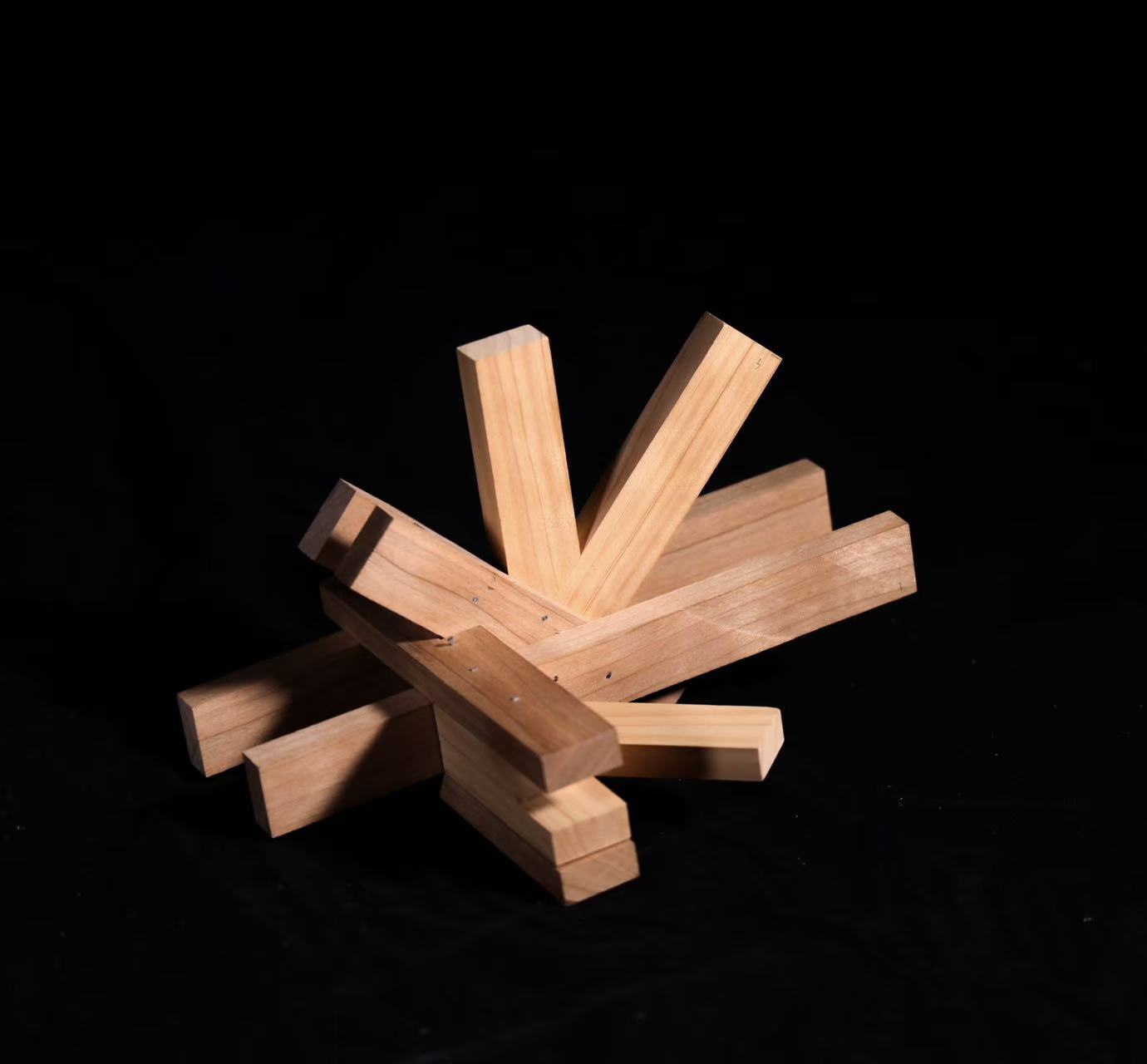
In terms of construction strategy, I use dimensional lumber in repeated interlocking and stacked assemblies. By continuously repeating readily available and inexpensive materials, a large structural system is formed, producing an extraordinary timber spatial atmosphere—refined yet monumental, and still low-tech. This also makes the project easy to realize and build. Ultimately, the experience unfolds from a grassy stage rising upward as the bay view gradually comes into sight; the lowered eaves focus people’s gaze on the distant landscape.
Concept 1Concept 2
Concept Sketches and Evolution
The proposal aims to use a simple yet powerful roof to establish a unified order that follows the terrain, while the truss roof system is used to organize and subdivide the interior space. Simplifying the truss helps enhance the contrast in spatial qualities and intensify the dramatic tension/conflict.
Site Plan
Site Plan
Ground Floor Plan
Ground Floor Plan
Pavilion 1Pavilion People Perspective
figure
Elevation
Elevation
Section
Section
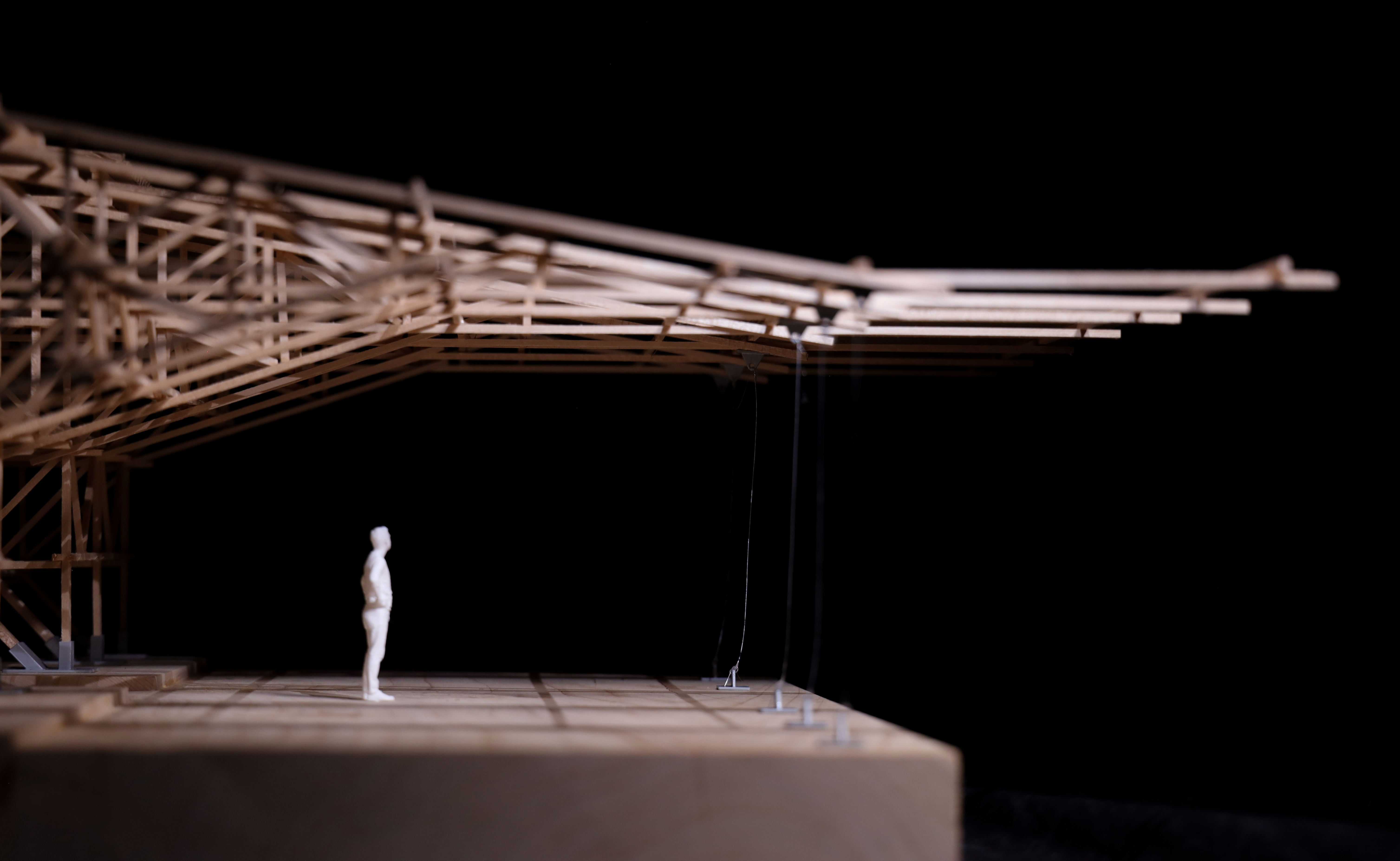
Overhanging Eaves
Overhanging Eaves
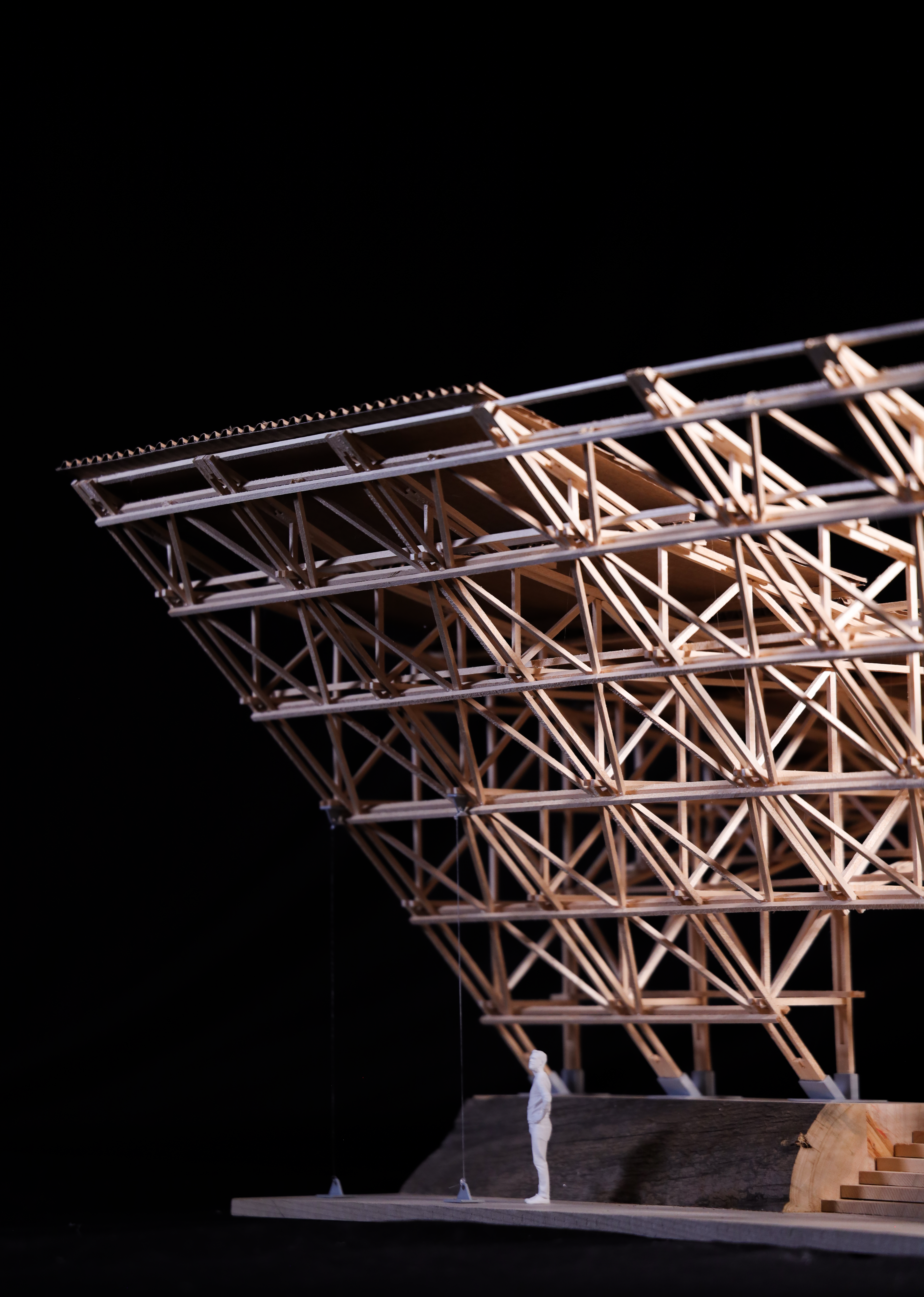
The overhanging eave faces the bay toward San Francisco, creating a large, one-directional extended space. Together with the viewing platform below and the downward slope, it pushes the building’s boundary beyond the edge of the man-made landscape, making it feel as though the architecture is growing out of the land. The eave lowers the line of sight, allowing the space to open horizontally and stretch into the distance.
figure
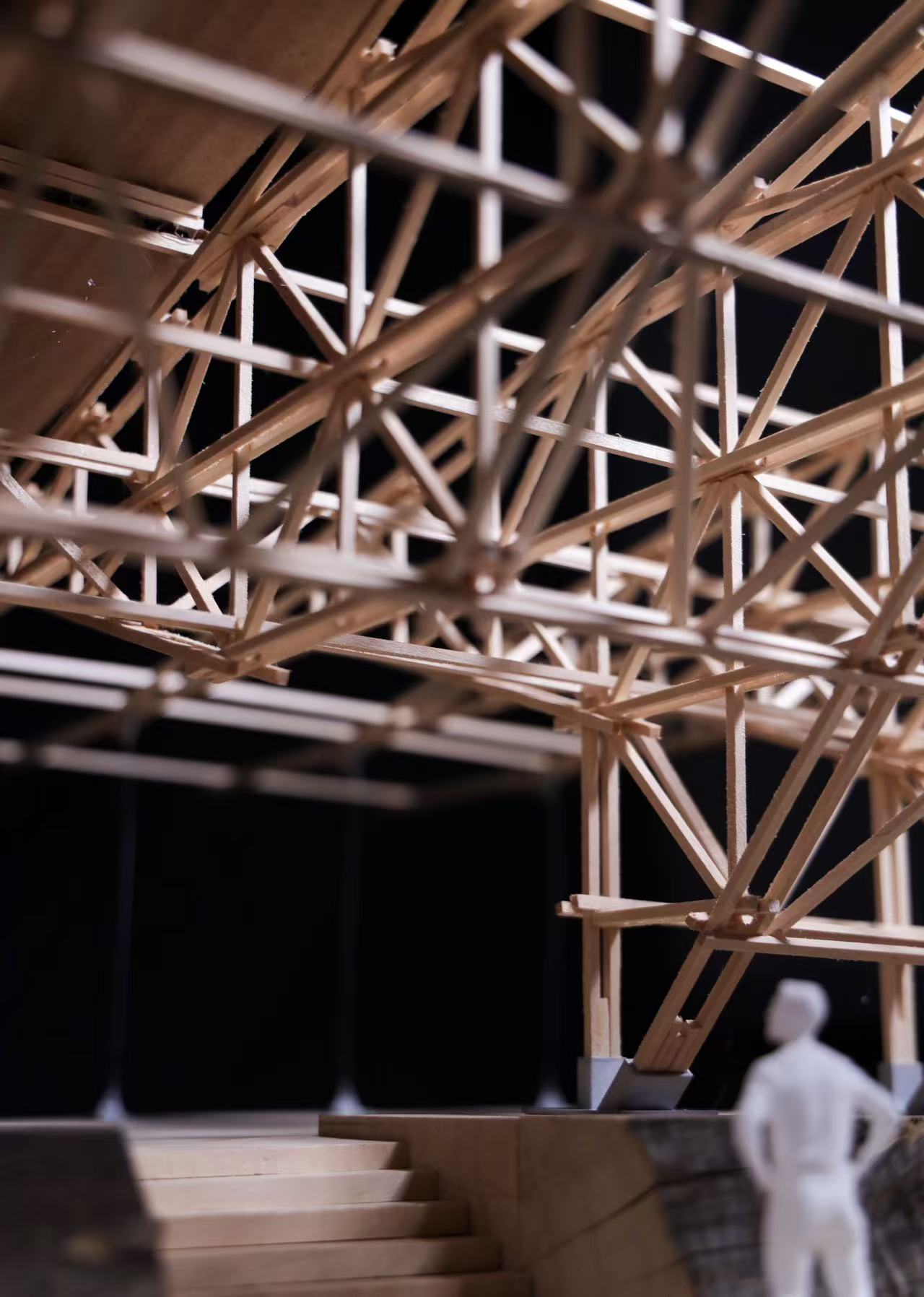
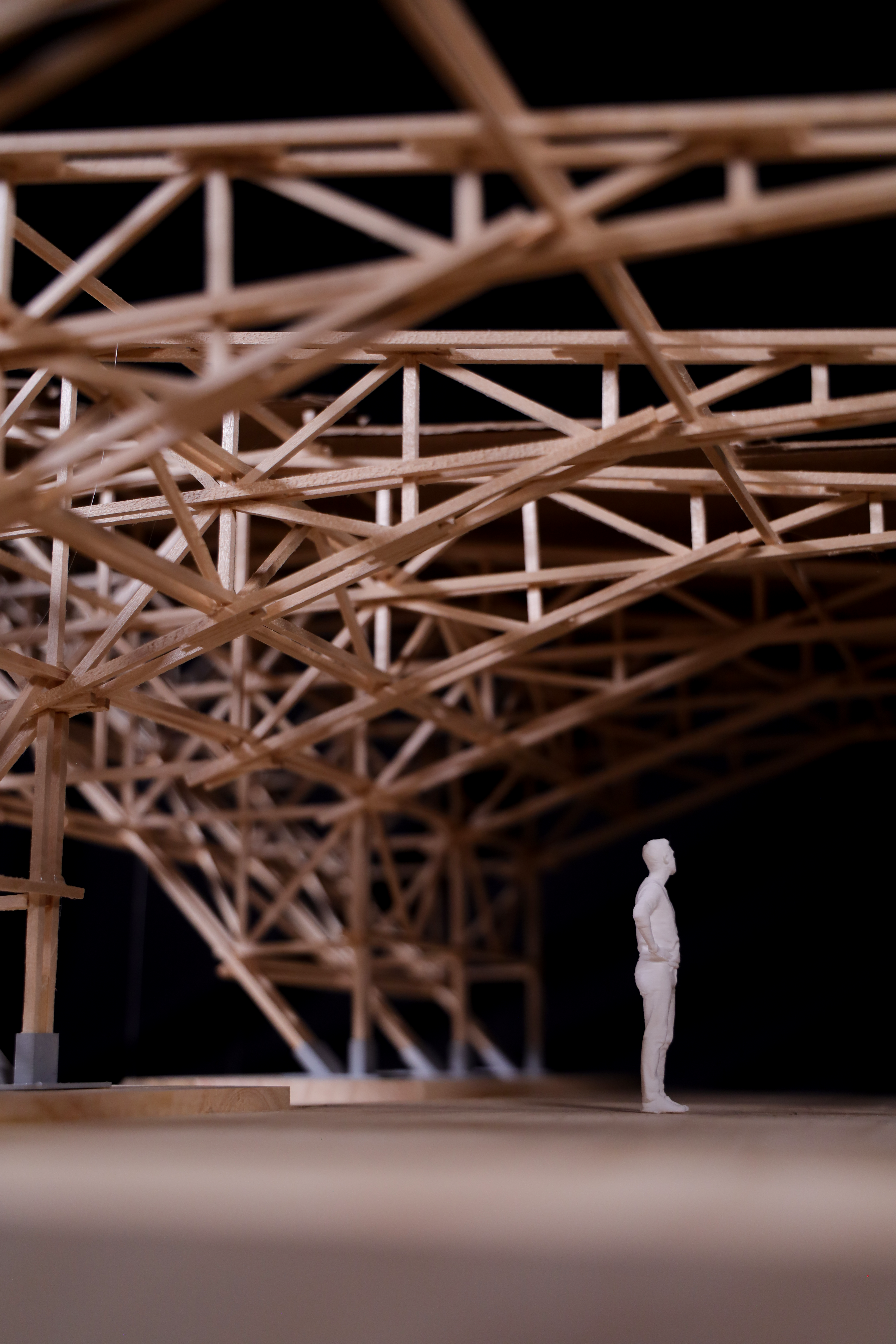
The structure is composed by stacking identical small-scale members to produce the effect of a megastructure. In terms of construction, it follows a low-tech strategy, minimizing the use of steel components.
Roof Construction
Roof Construction
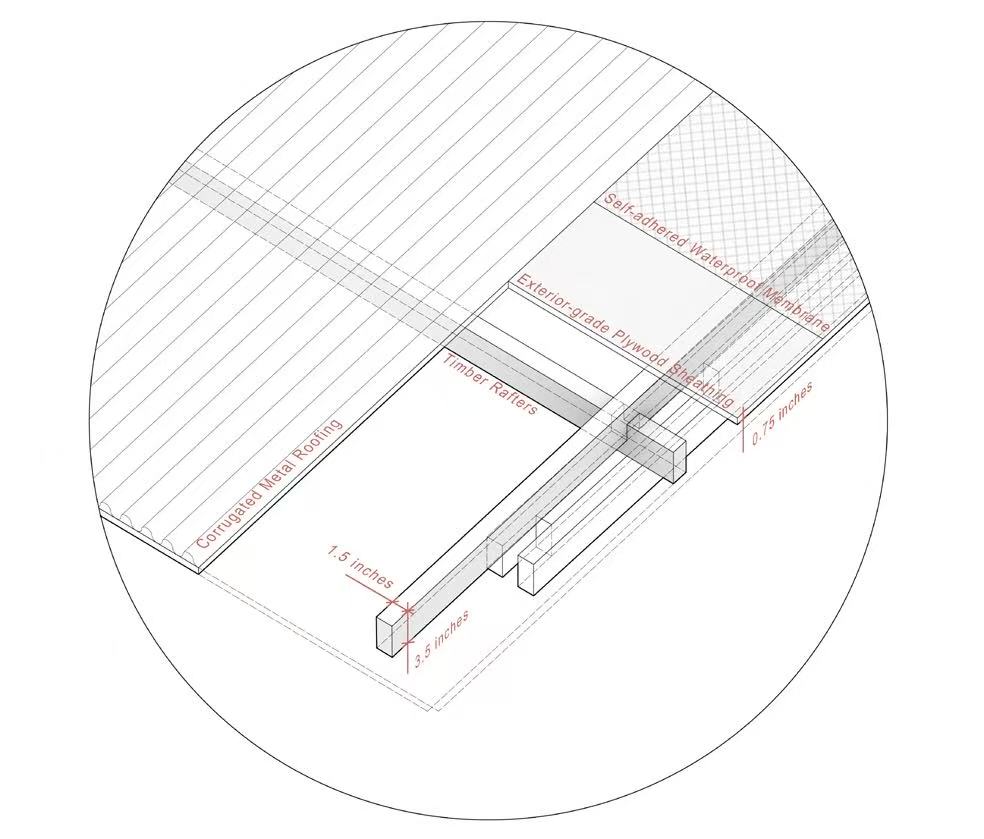
The roof uses a timber joist framework to support plywood sheathing for the waterproofing layer and roof finish panels.
Truss Joint
Truss Joint
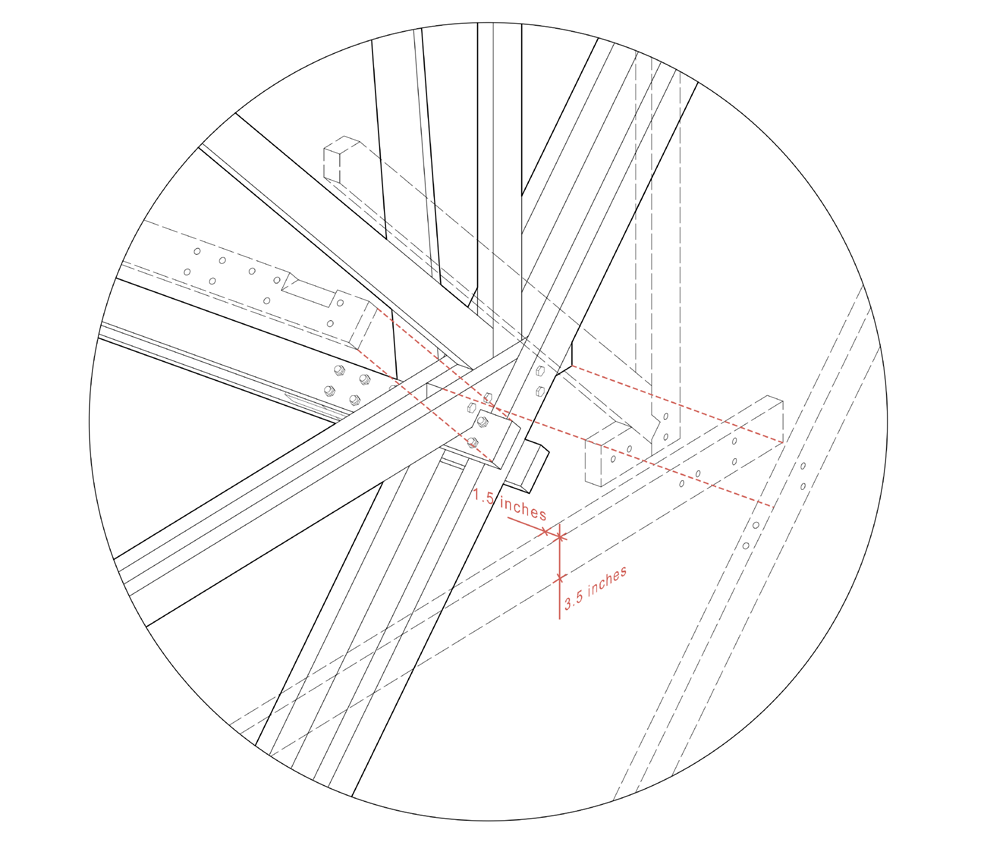
The main truss joints are formed by interlocking and overlapping 2×4 timber members.
Foundation Joint
Foundation Joint
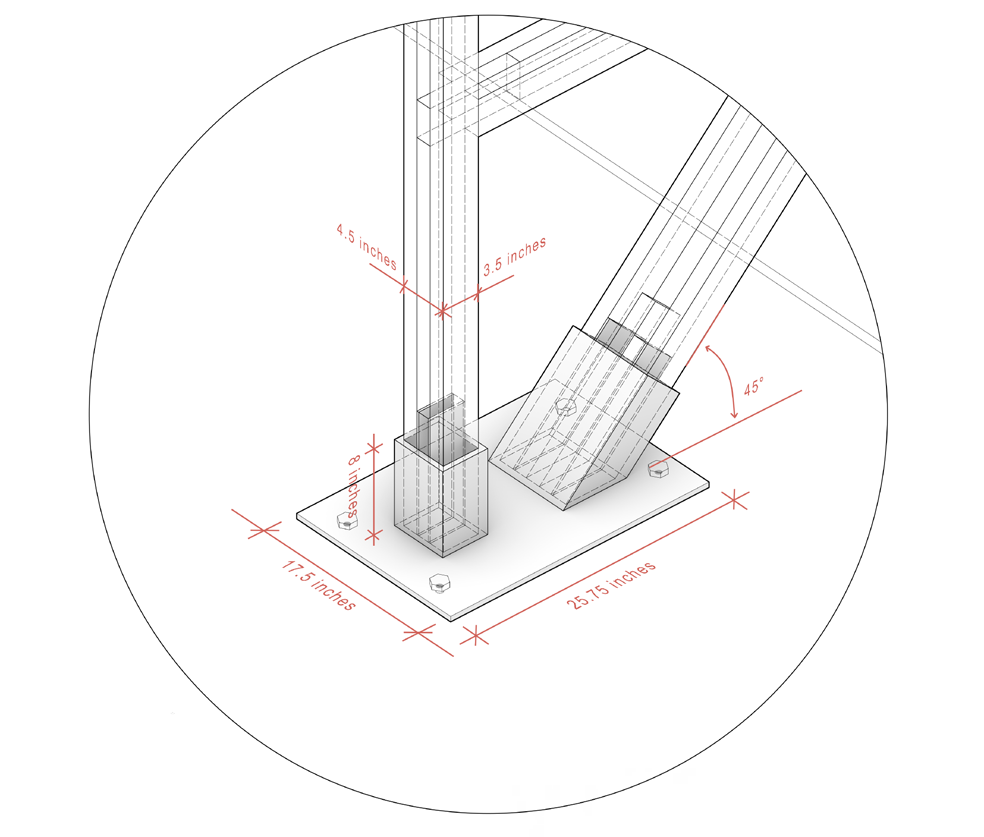
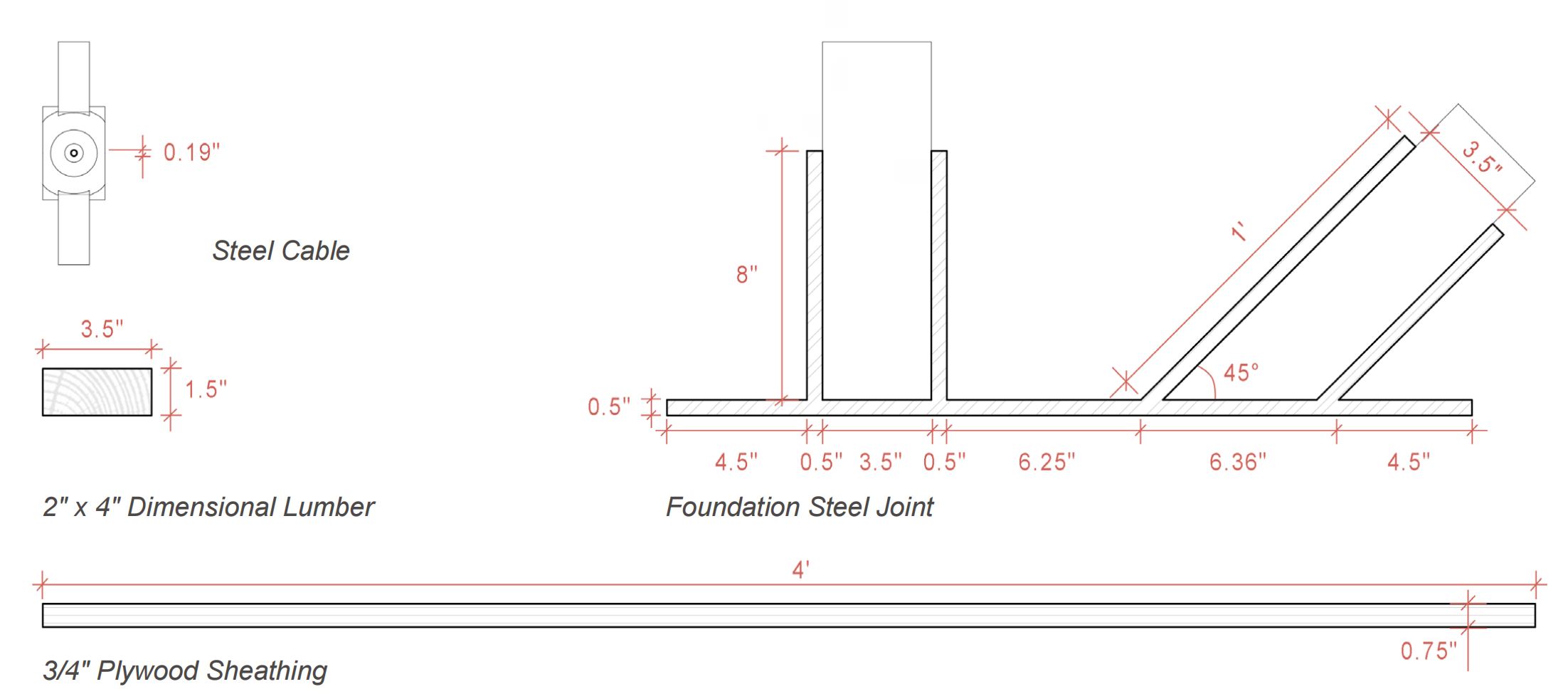
At the foundation, prefabricated steel connectors are used for the connections.
Key Joints
Joint Model 1Joint Model 2
Joint Model
Visual Inventory of Structural Elements
The scheme strives to minimize both the number and types of components, and attempts to push the dimensional limits of the members. The 2×4 timber is an extremely slender section, yet through repetition and stacking it becomes the sole structural logic of the primary trusses, using delicate members to form large trusses that lift the expansive roof.
figure