Homeland and Vocation

Homeland and Vocation

Urban and Neighborhood Design Studio
Individual Work
Community Complex
Site: Greenpoint, Brooklyn
Area: 23000m²
2023.10-2023.12

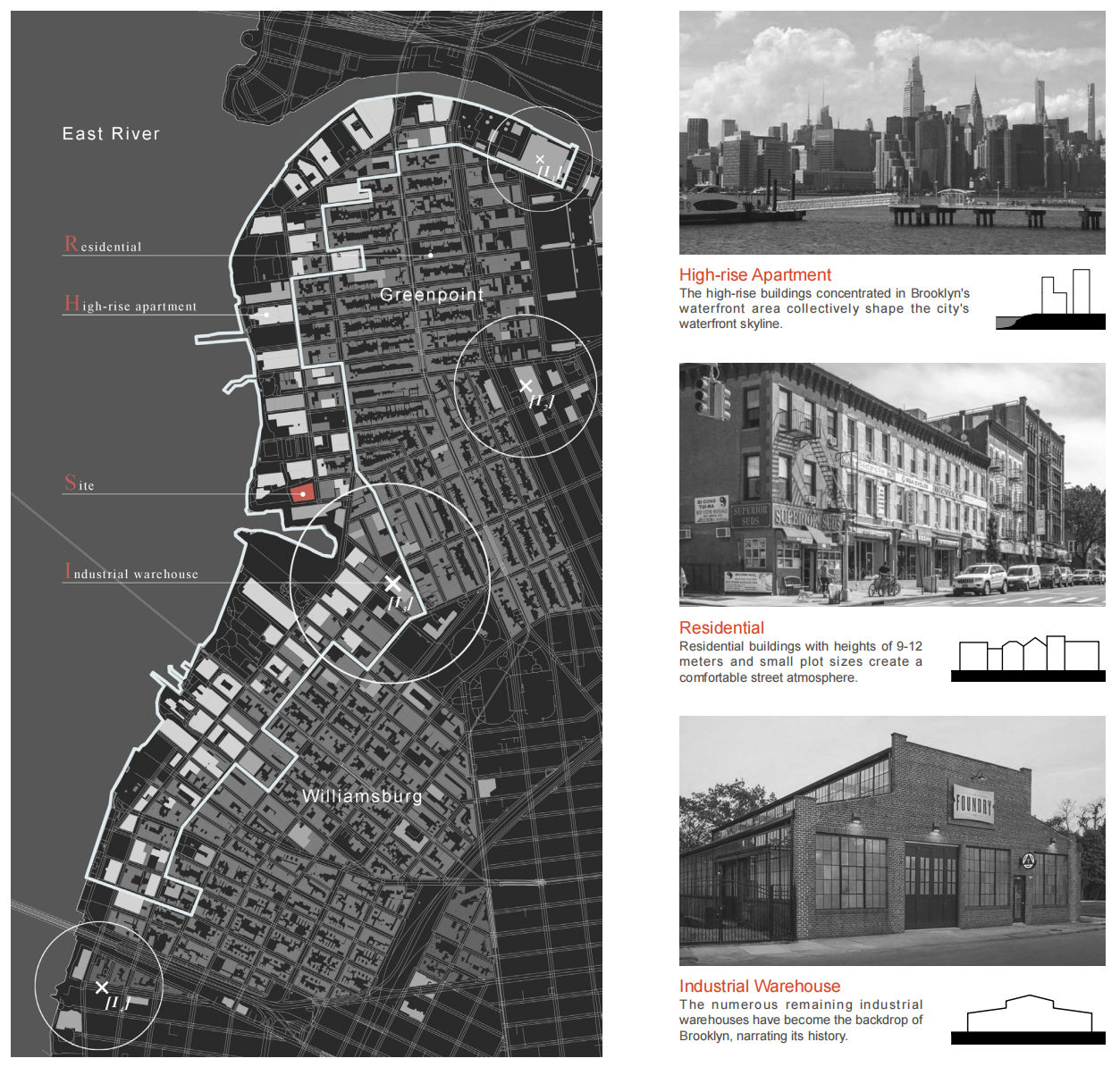
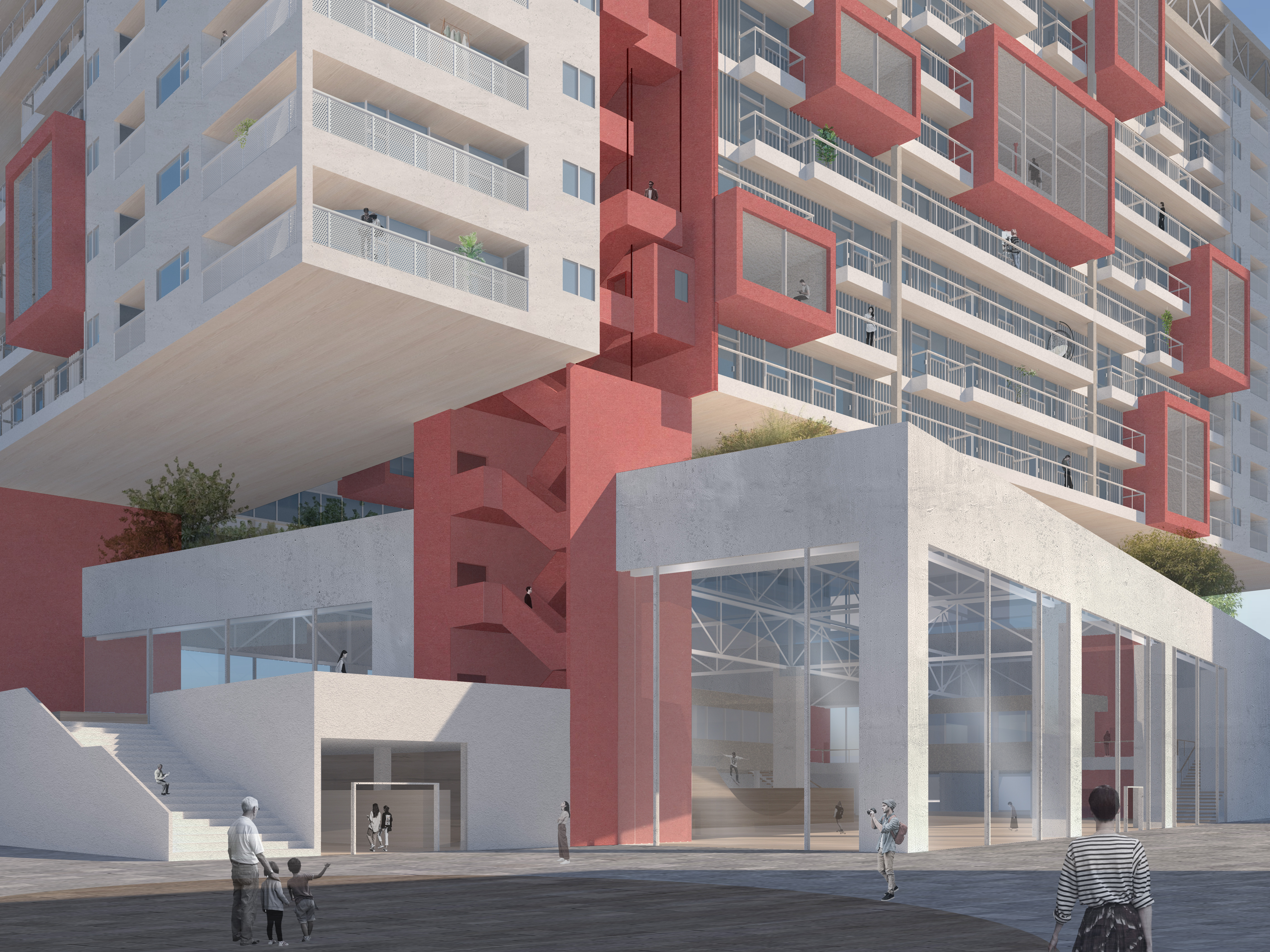
As the former industrial powerhouse, Brooklyn's Greenpoint neighborhood is characterized by its bustling workplaces and numerous industrial relics, which form the city's foundational backdrop. Throughout the city's evolution, many factory buildings have been preserved, while newly developed residential areas and internal courtyards simultaneously create comfortable street spaces and leisure areas for residents. These elements present a certain degree of contrast. Unlike some central districts, Greenpoint faces Manhattan across the East River. The site is strategically located along the waterfront, where newly constructed high-rises are shaping a new waterfront skyline. This design primarily focuses on bridging the geographical and historical gaps that have emerged within the city.

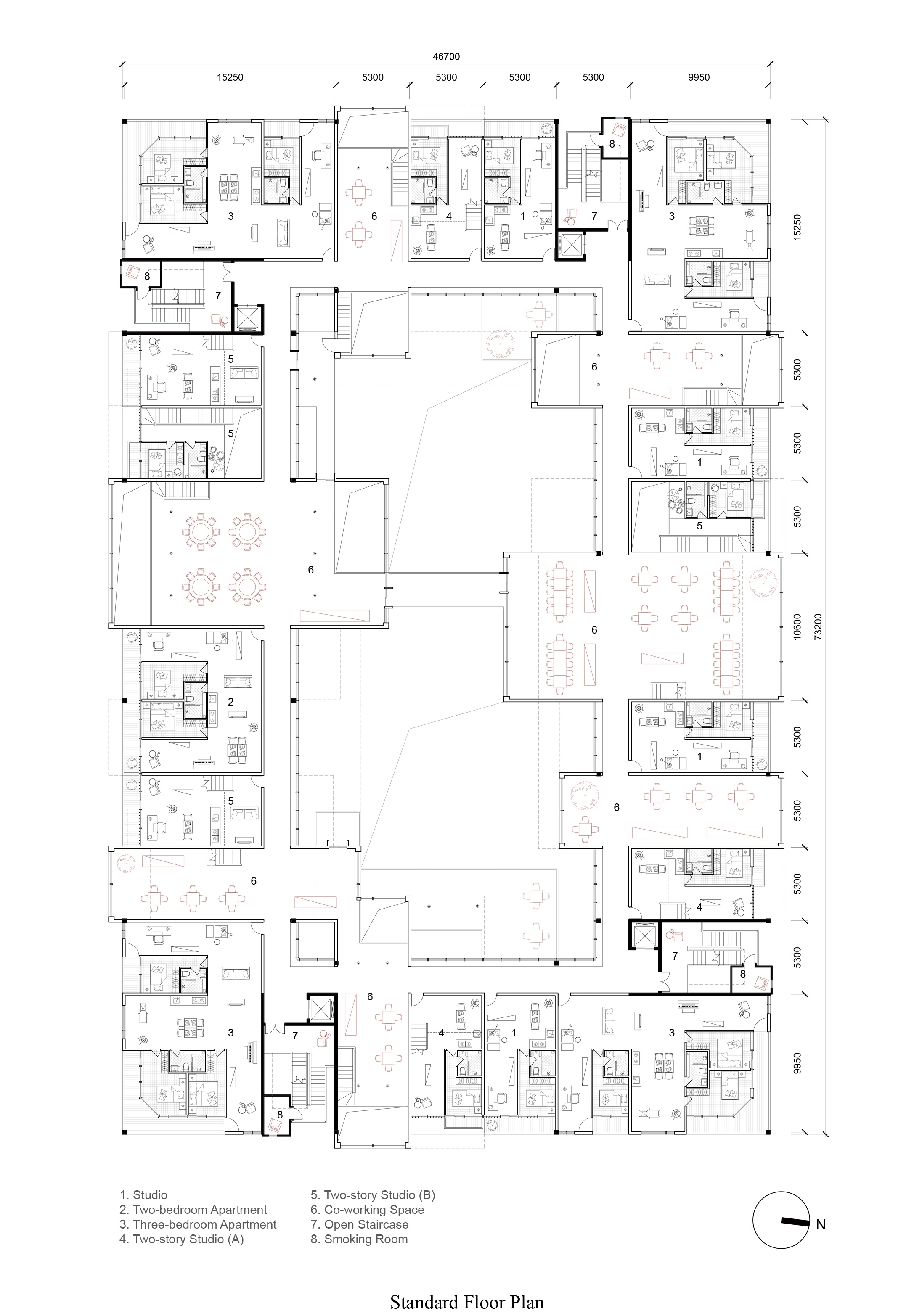
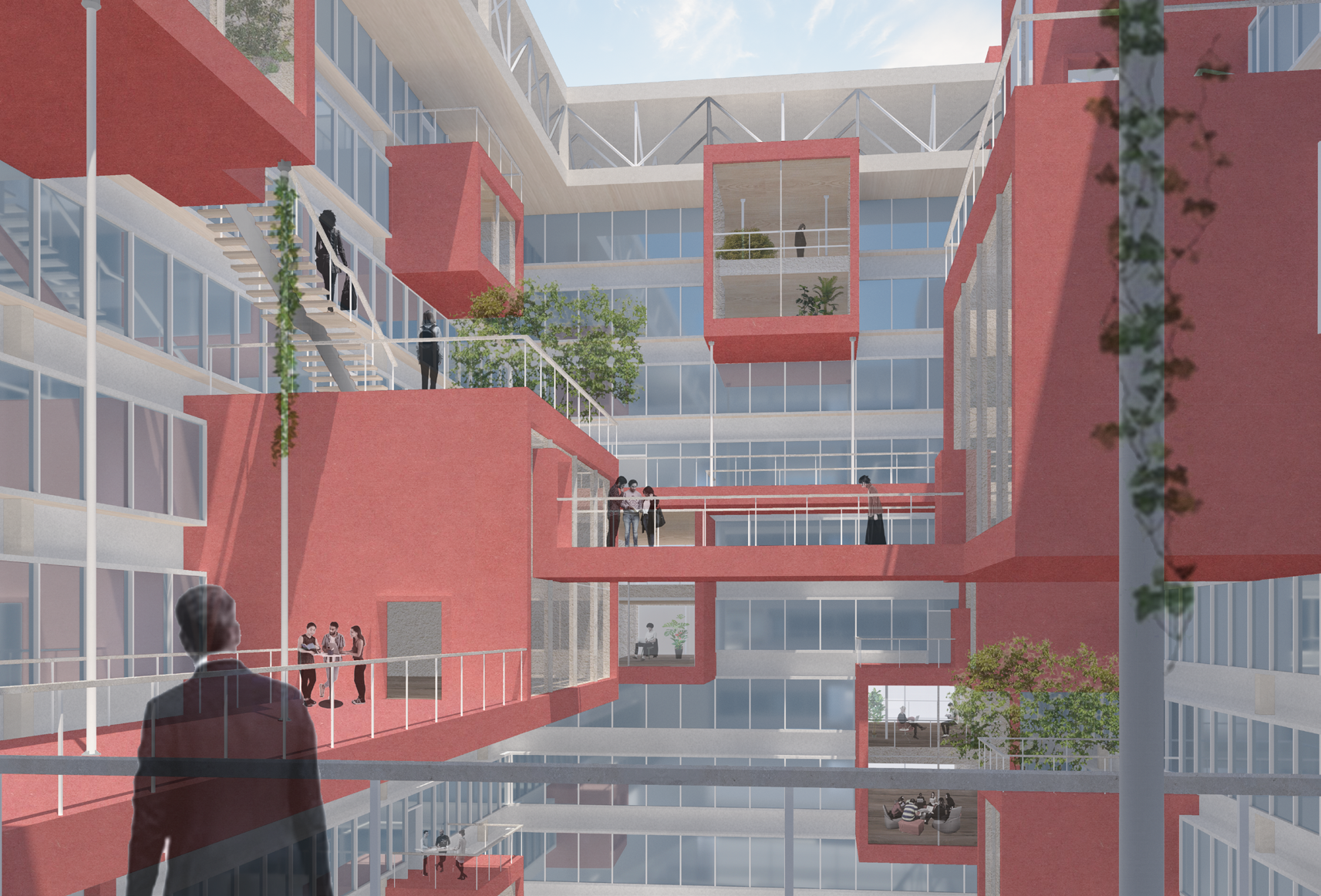
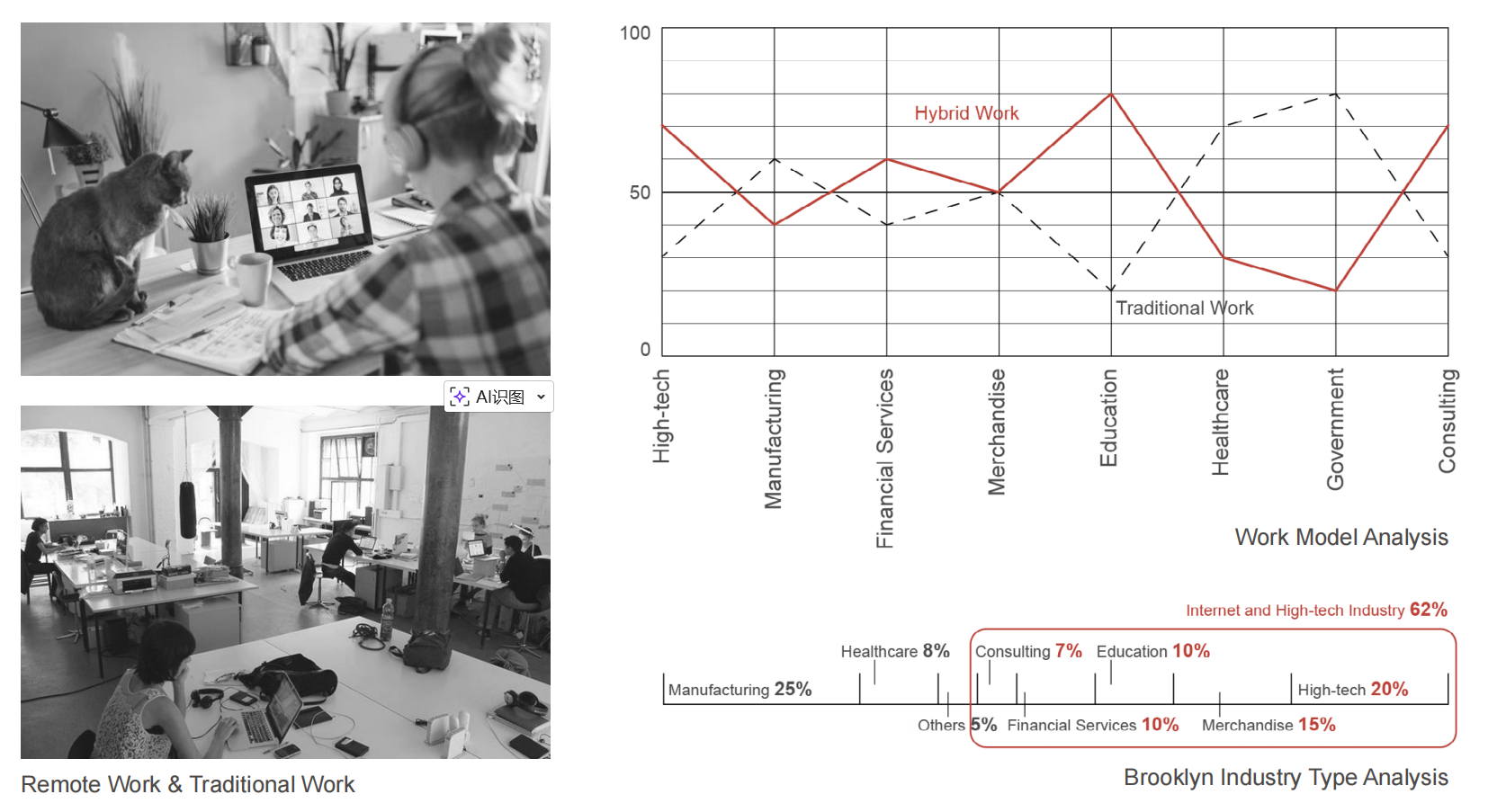
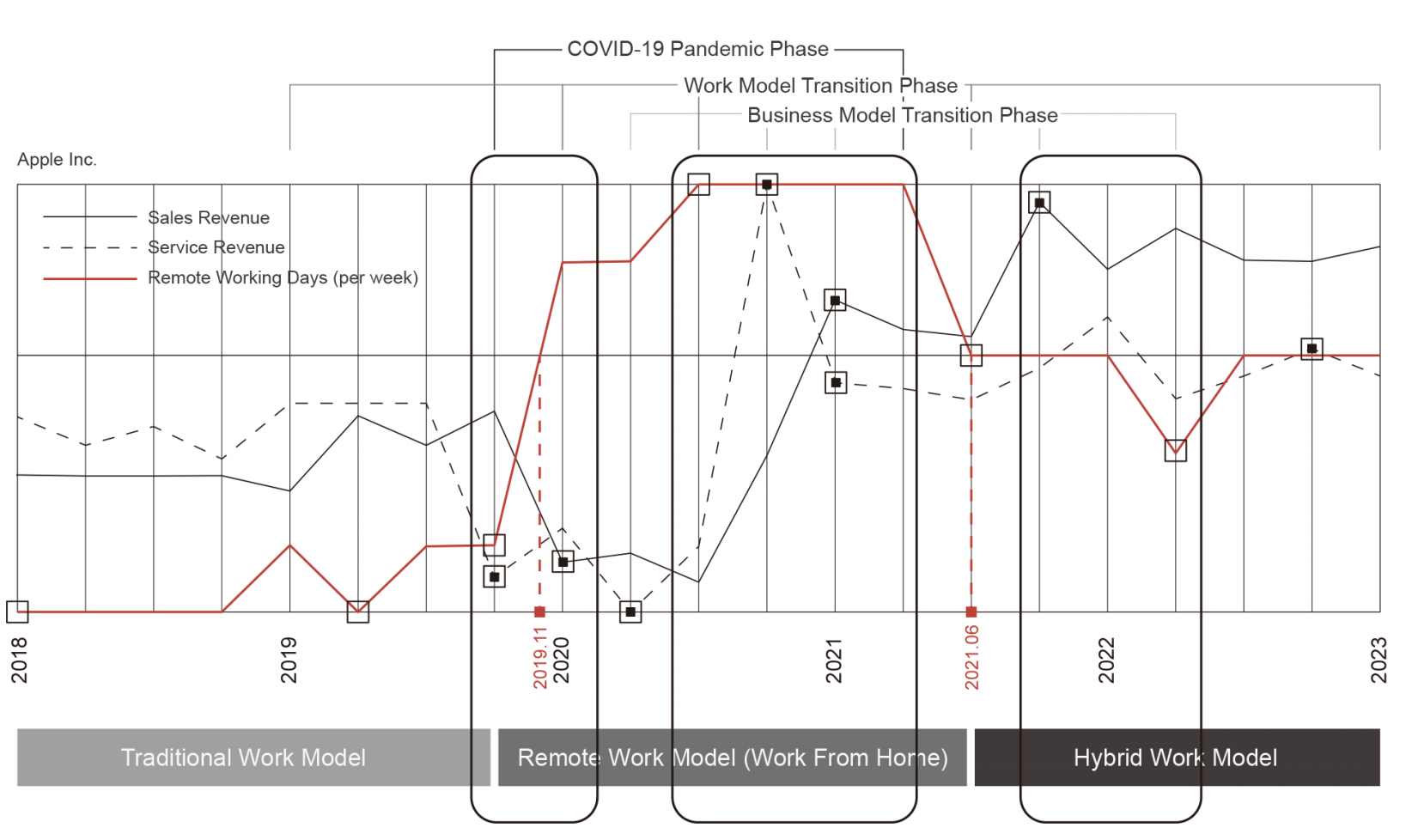
Focusing on the evolving relationship between residential and work functions, and in response to the development of post-pandemic office models—namely the emergence of hybrid work arrangements—communities that are autonomous, self-sustaining, and incorporate work modules will become community development models conducive to home-based work. In my design, I explore how to redefine people's lives by segregating work and residence, thereby establishing new living spaces. Additionally, by layering residential modules with consistent logic but varying expressions, shared workspaces are created on a larger scale to enhance community interaction and work efficiency. Simultaneously, the city's architectural history is integrated into the design, facilitating transitions between low-rise and high-rise structures, bridging industrial facilities and residential areas, and connecting different communities. Simultaneously, it establishes two distinct types of community social spaces: 'public open spaces' and 'private open spaces'.
Work TypeThe Rise of the Hybrid Work Model
The Rise of the Hybrid Work Model
Waterfront Areas and Building Typologies
figure
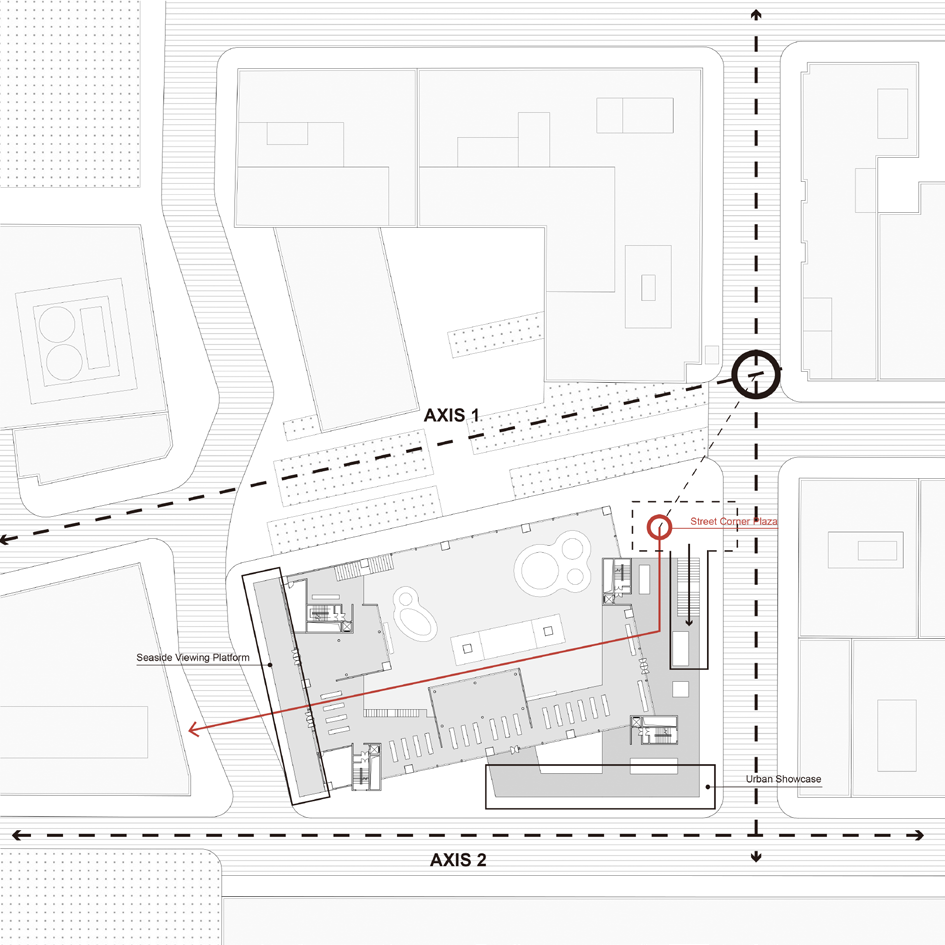
Urban Axis and Outdoor Space
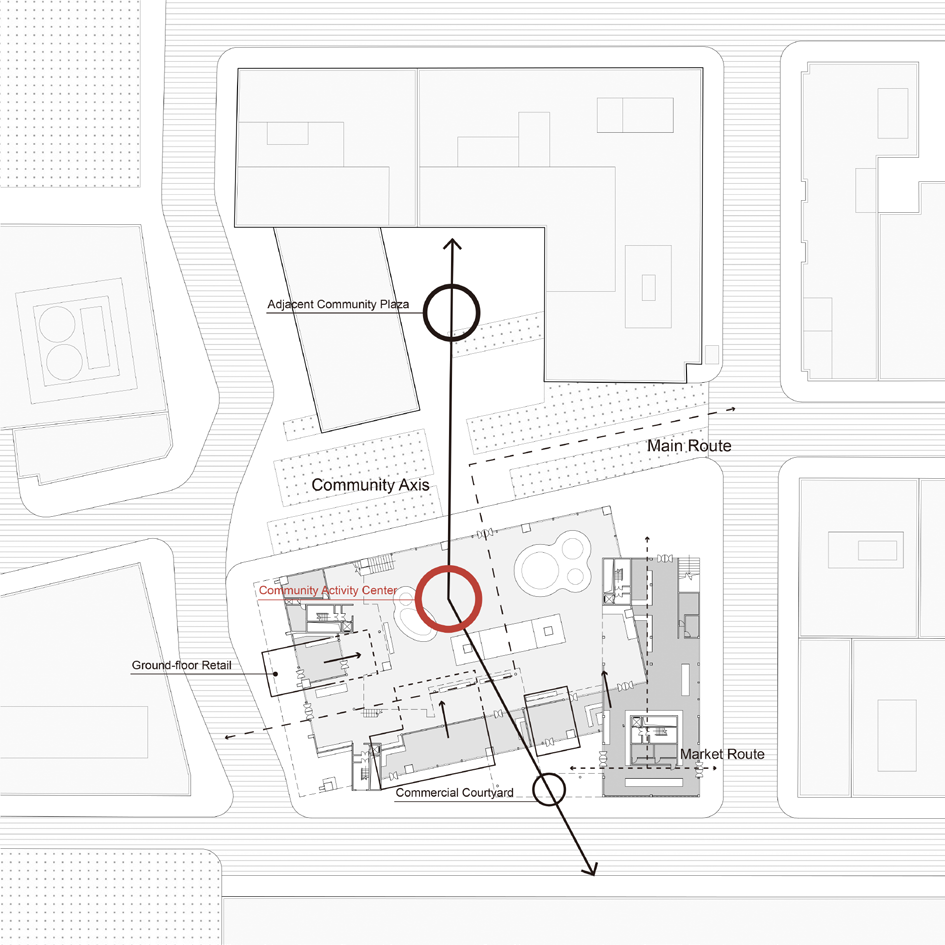
Circulation and Community Center
step1
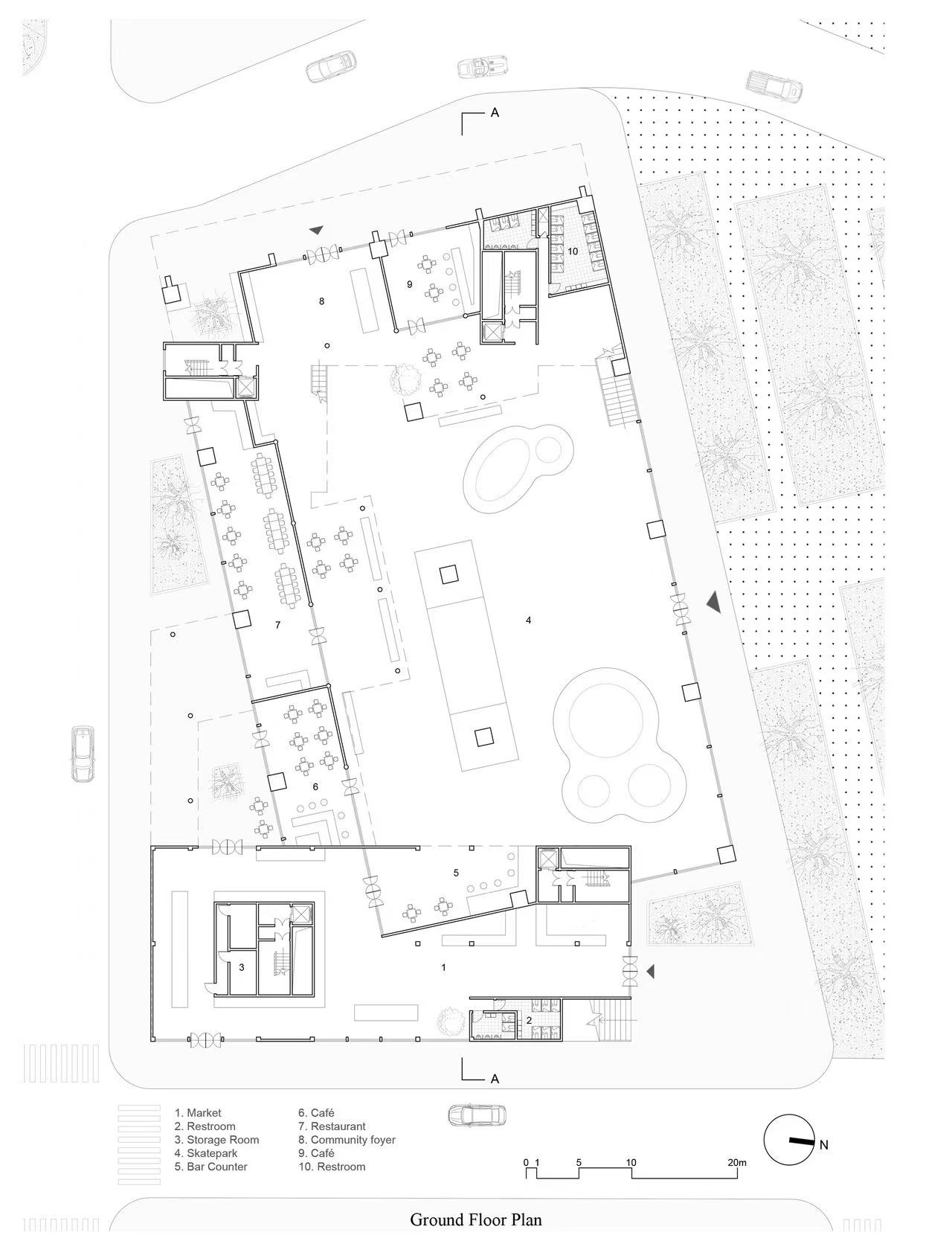
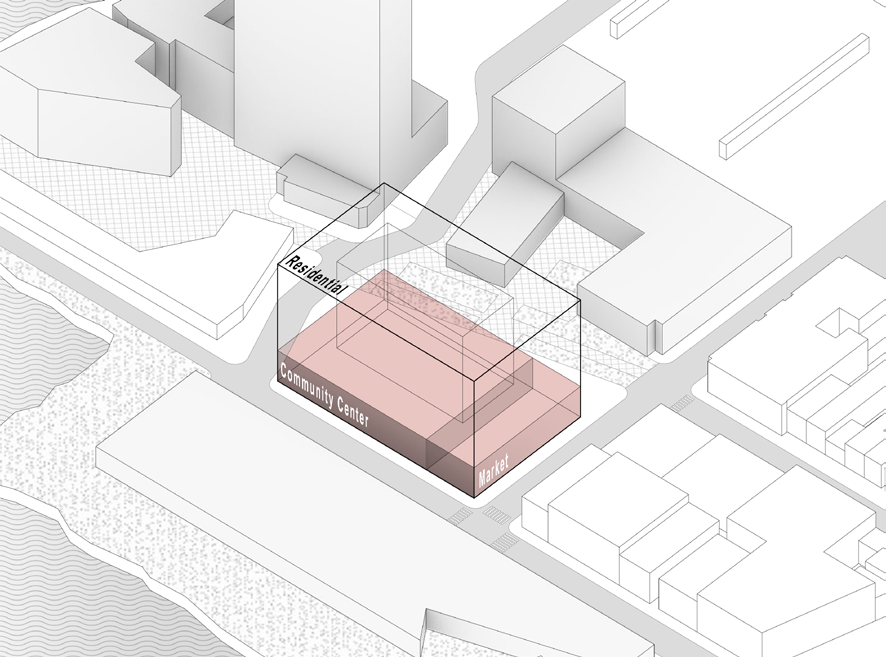
Based on the size of the site and the composition of the basic population, divide the space into three primary functions: community center, market and residential with public functions placed on the ground floor.
step2
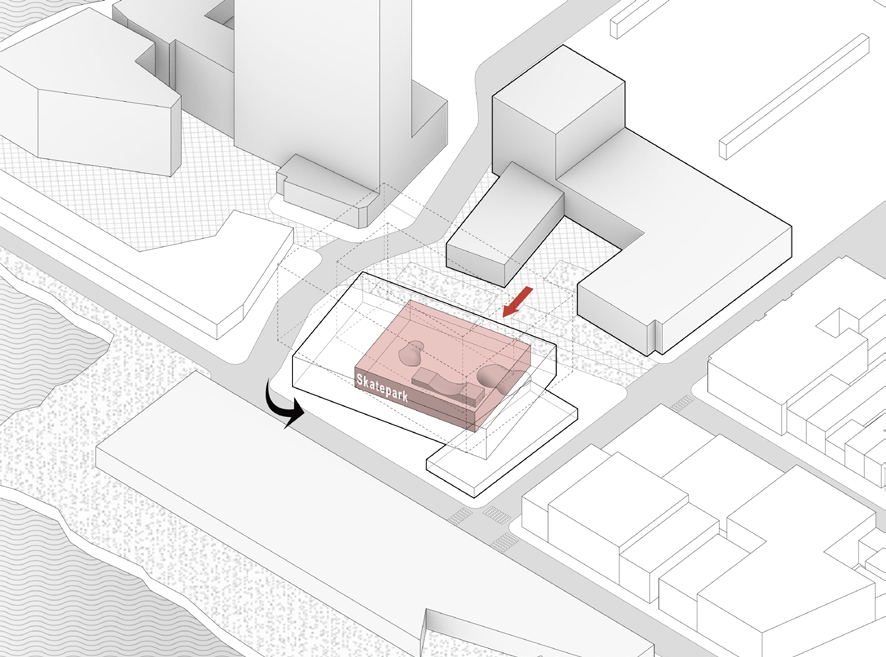
Rotate the community center mass on the ground floor to align with the axis of the northern community courtyard and pedestrian pathway, creating a north-south oriented community activity space that connects the two blocks.
step3
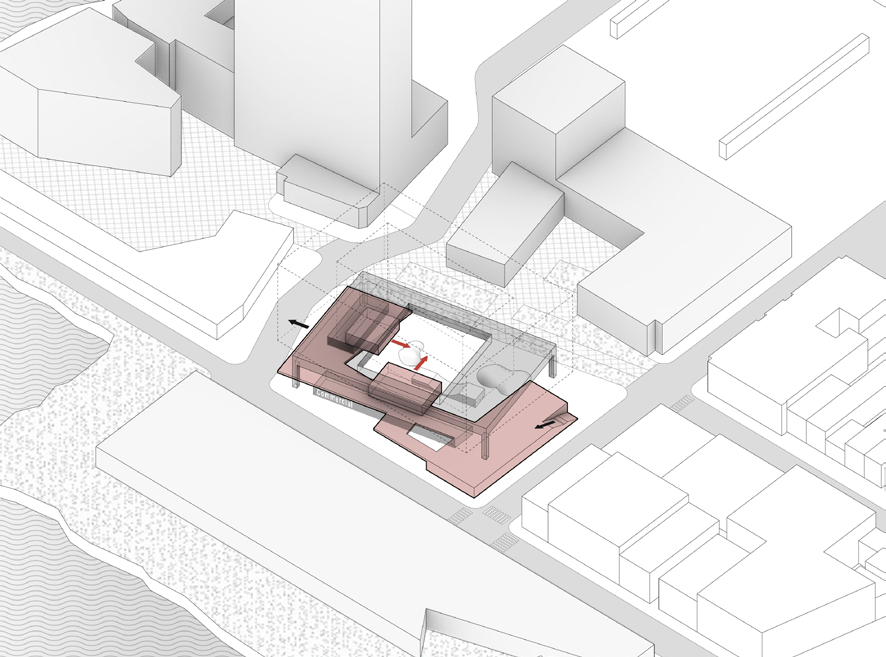
Utilize the terrace atop the market as the starting point for the circulation flow, guiding the urban street traffic to the second-level platform, which leads to the observation Platform. Define the boundaries of the community center using commercial spaces and functional boxes.
step4
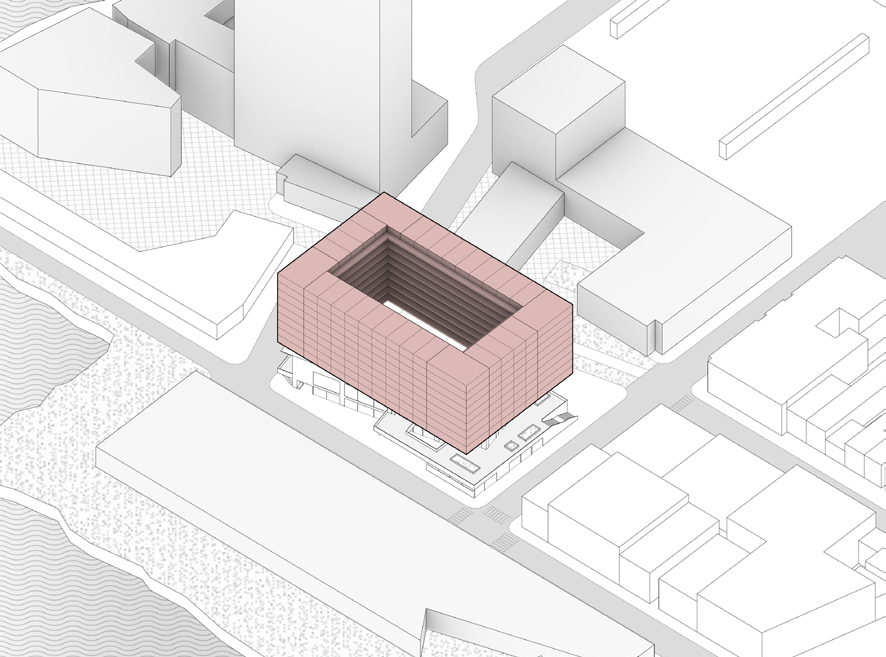
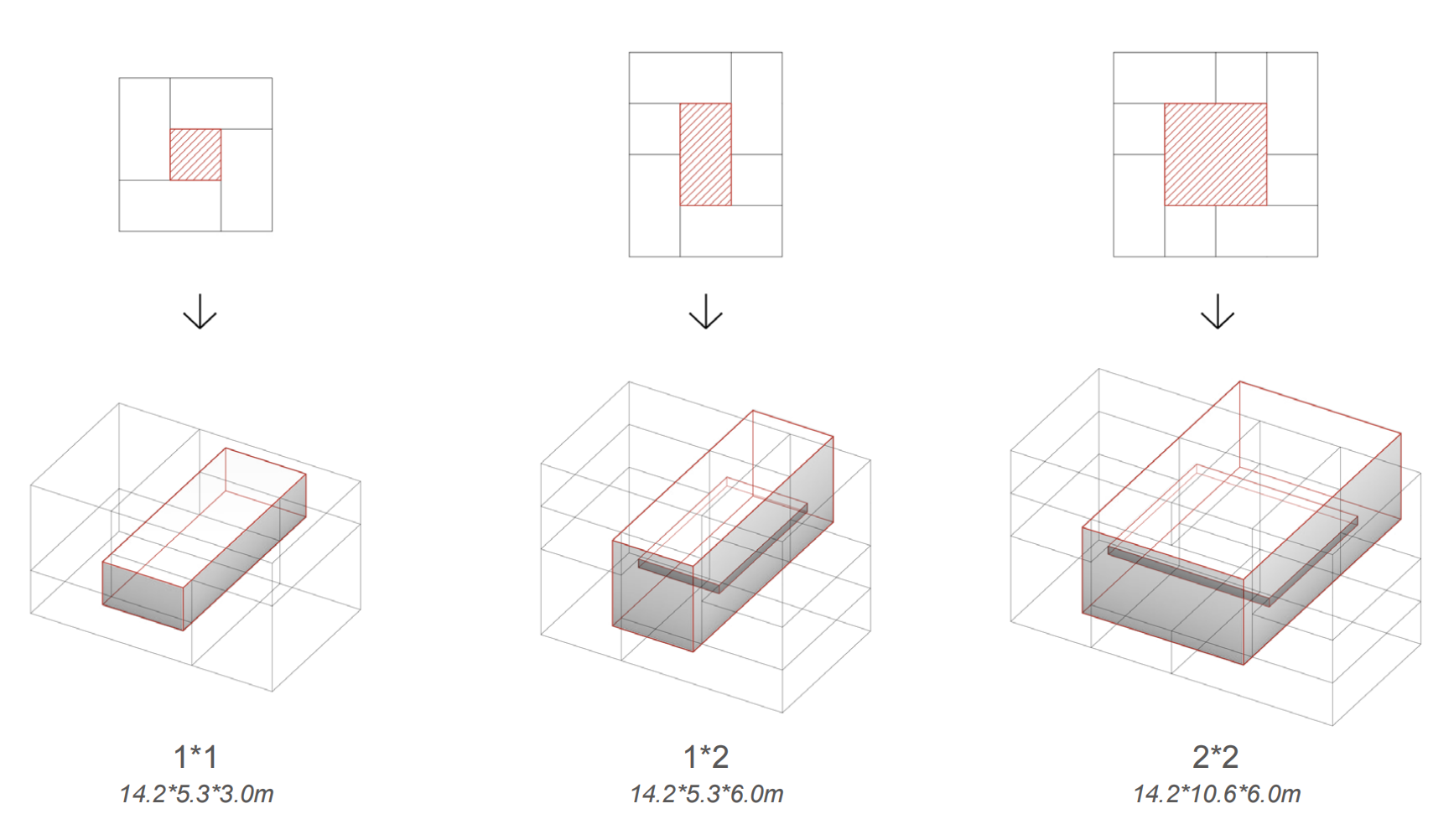
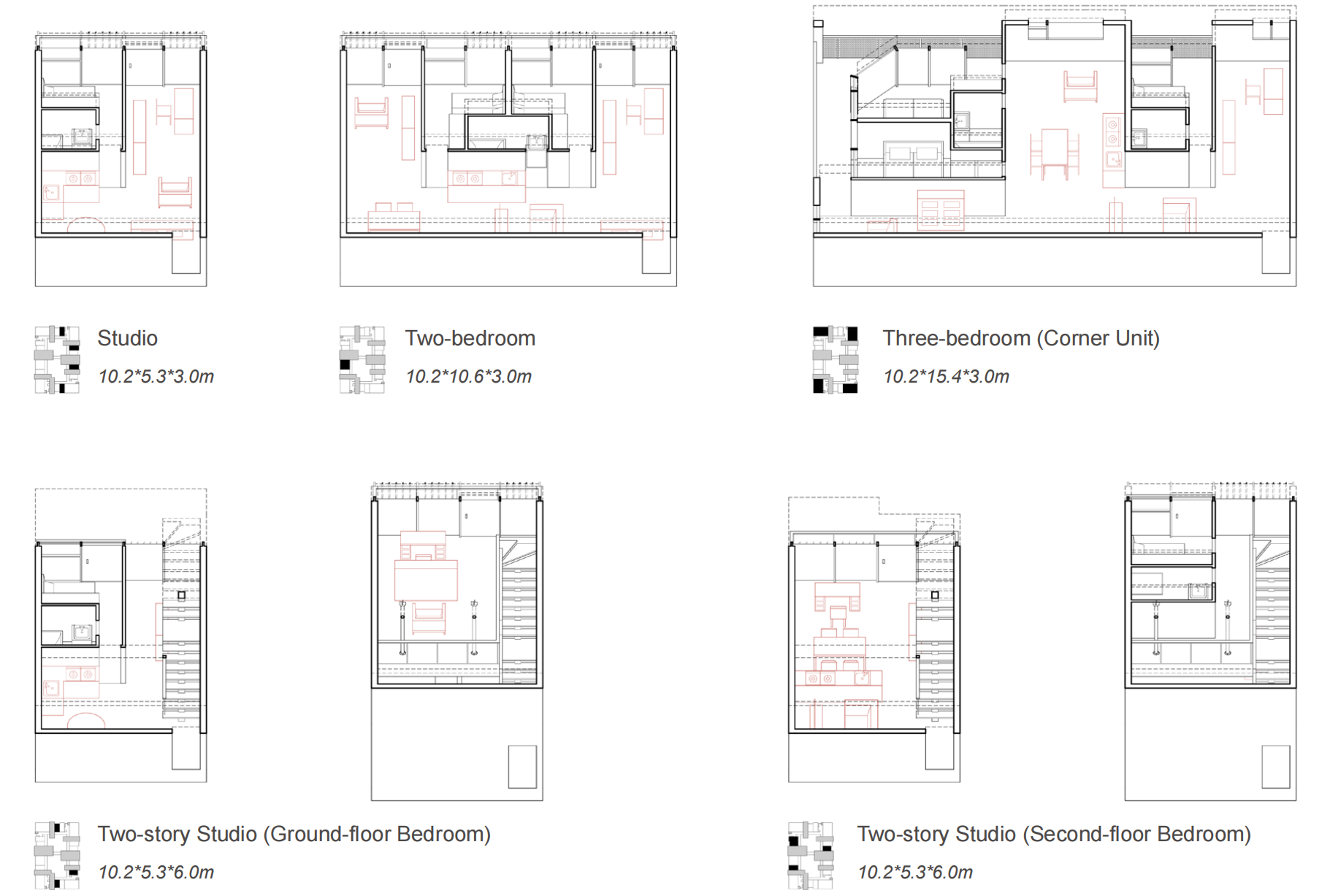
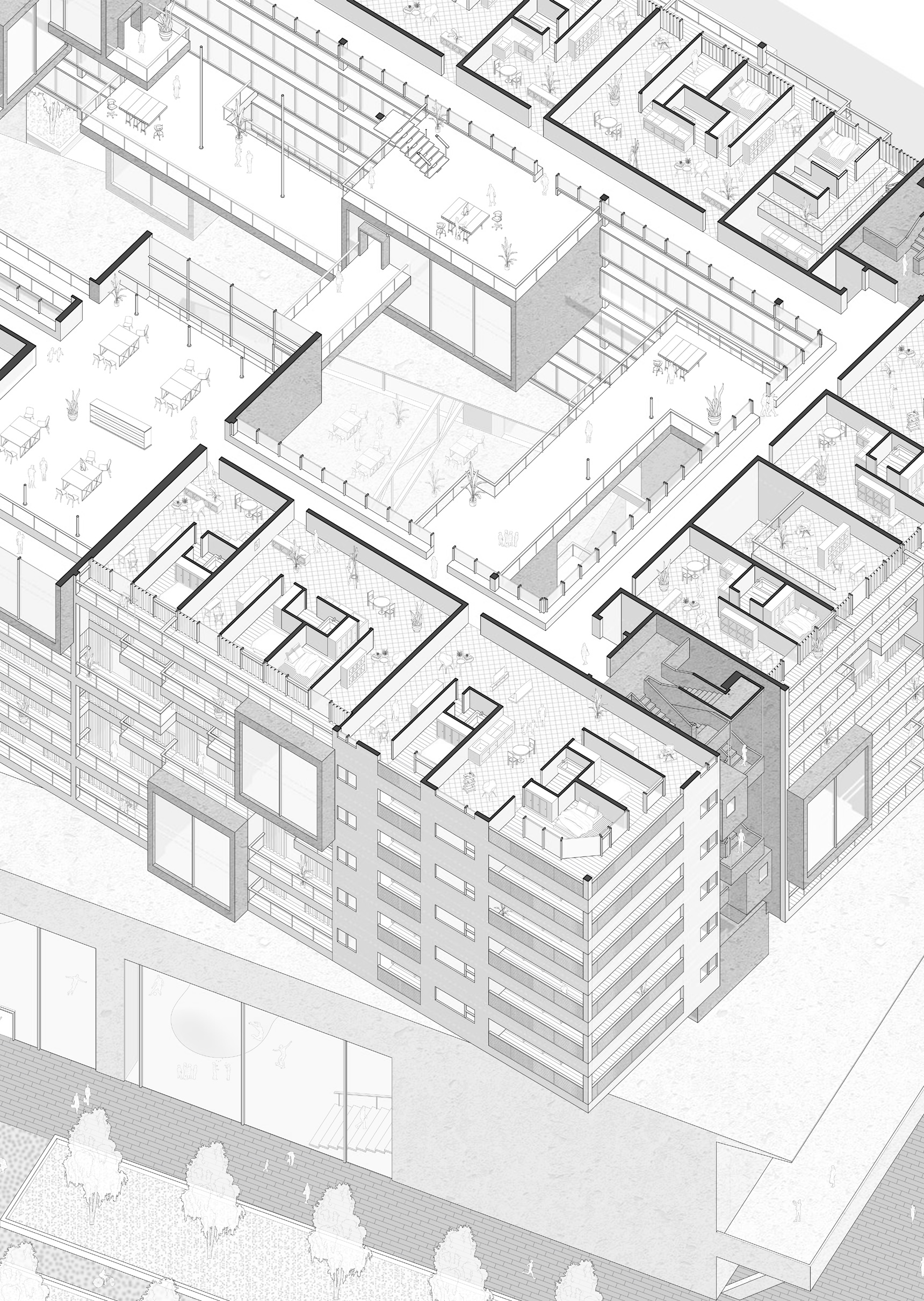
Divide the upper residential volumes into modular units, forming two types of modules: standard modules and corner modules, to create diverse apartment layouts. Internally, incorporate a corridor and a light-filled atrium to enhance circulation and natural illumination.
step5
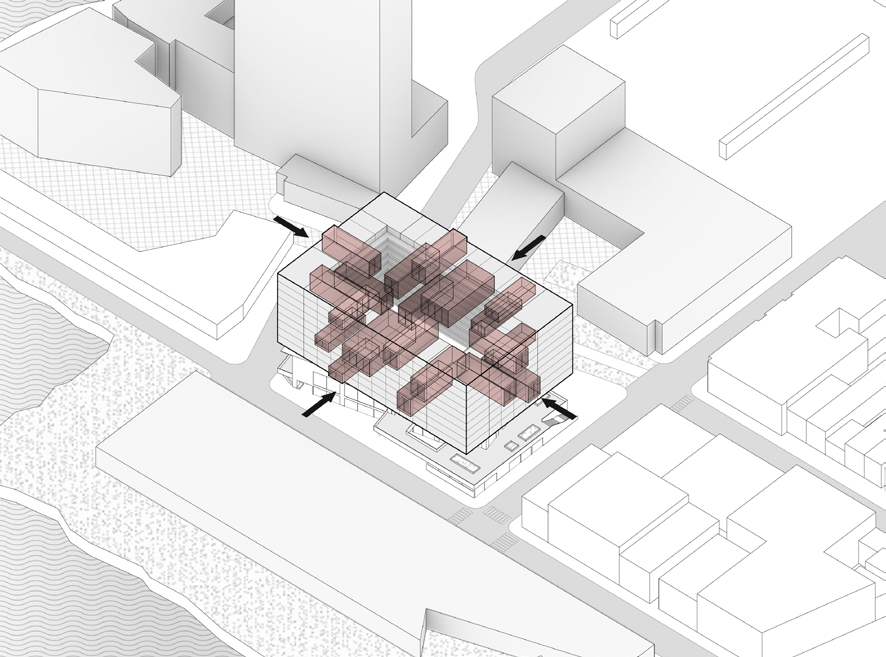
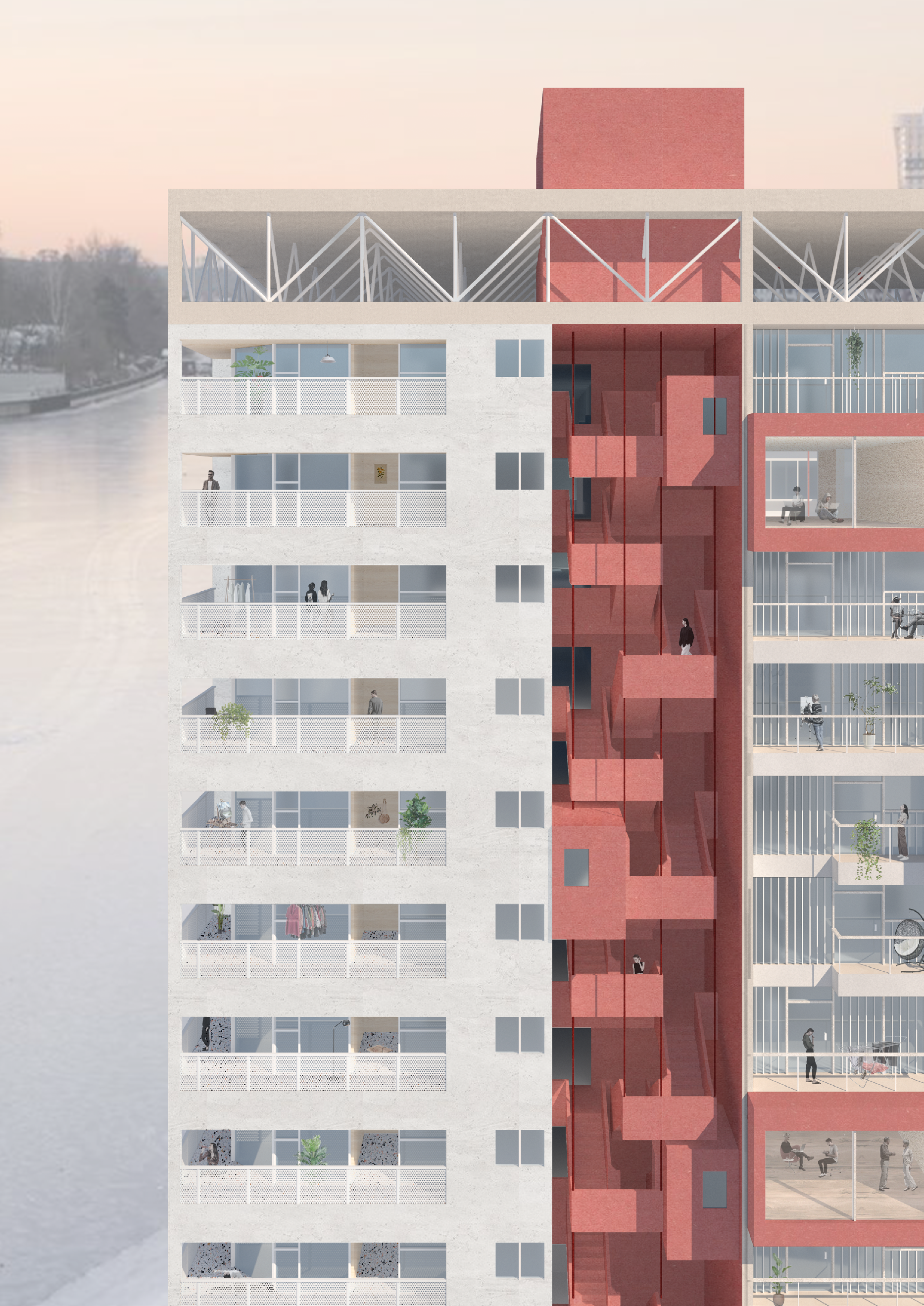
Remove some residential modules and replace them with shared work modules of varying sizes. This approach not only creates diverse and highly accessible live-work spaces but also helps shape the building’s facade.
step6
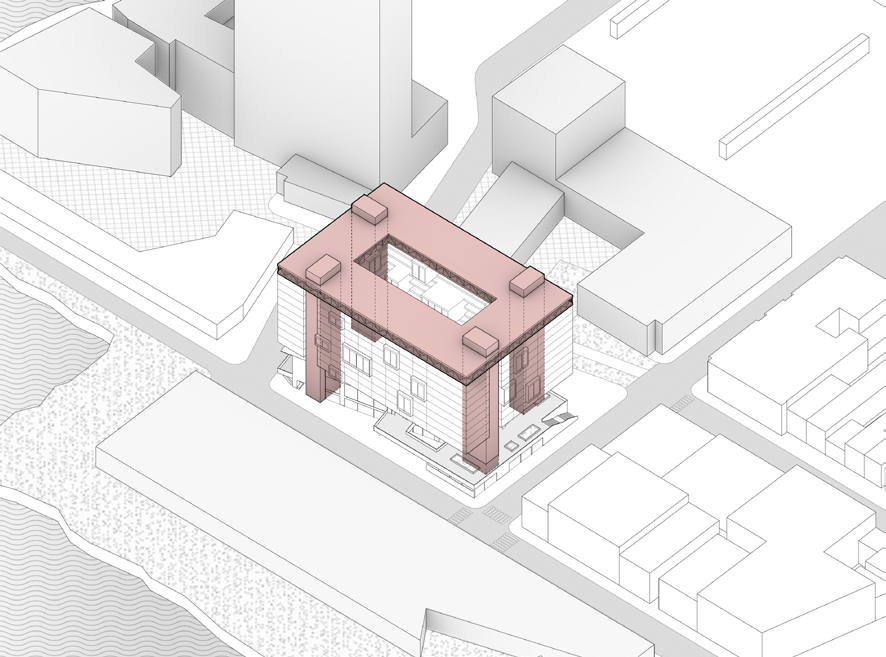
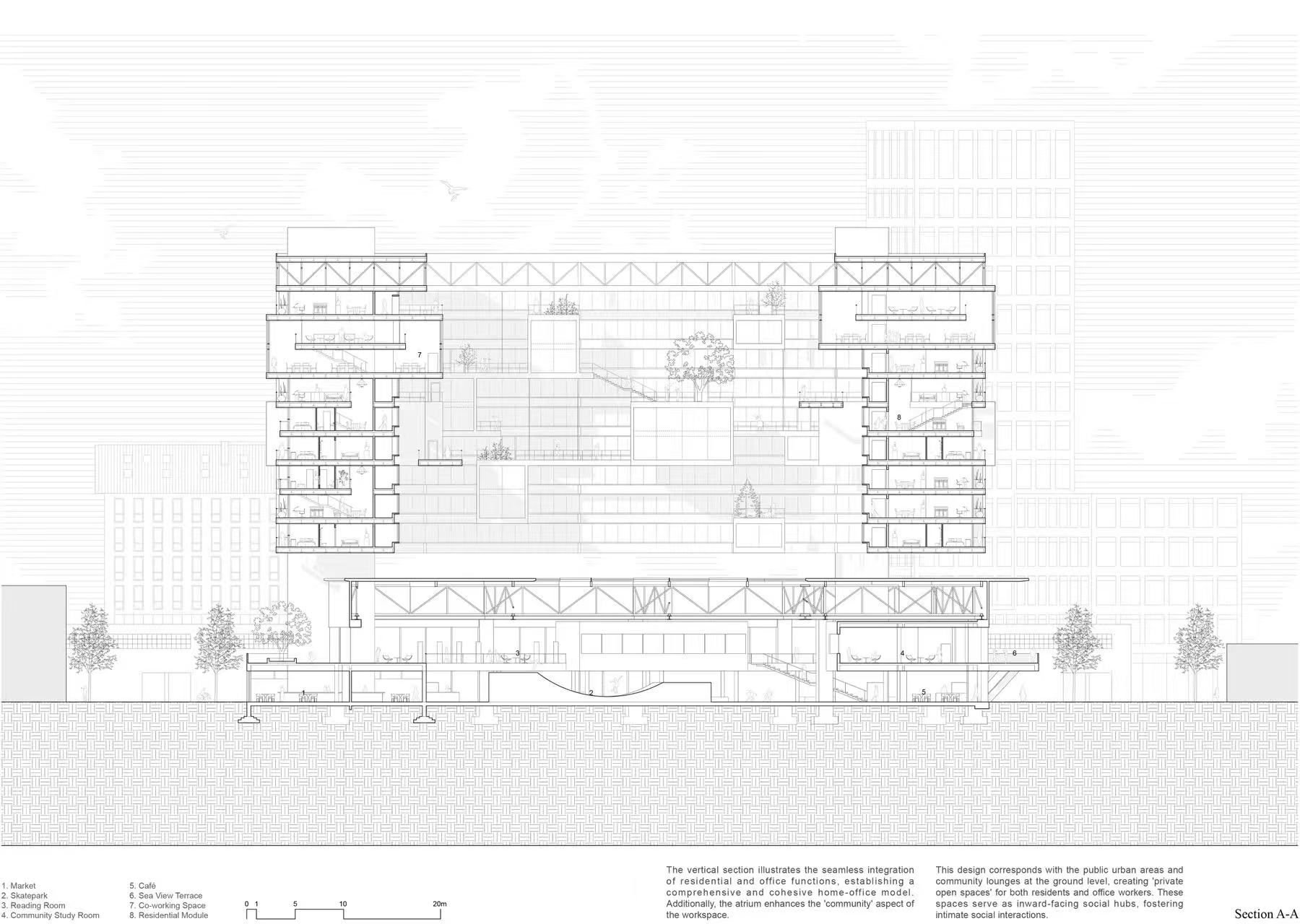
To minimize the structural impact of the residential section on the ground-floor public space, adopt a core-tube and truss system. Prefabricated residential modules are suspended from the top down, creating an open and transparent large space at the ground level.
Design Process
Co-working Space Composition Strategy
Apartment Type
Apartment Type
figure
Facade
Facade
Residential and Working Zone Delineation
Sky Courtyard
Sky Courtyard
Section A-A
Section A-A
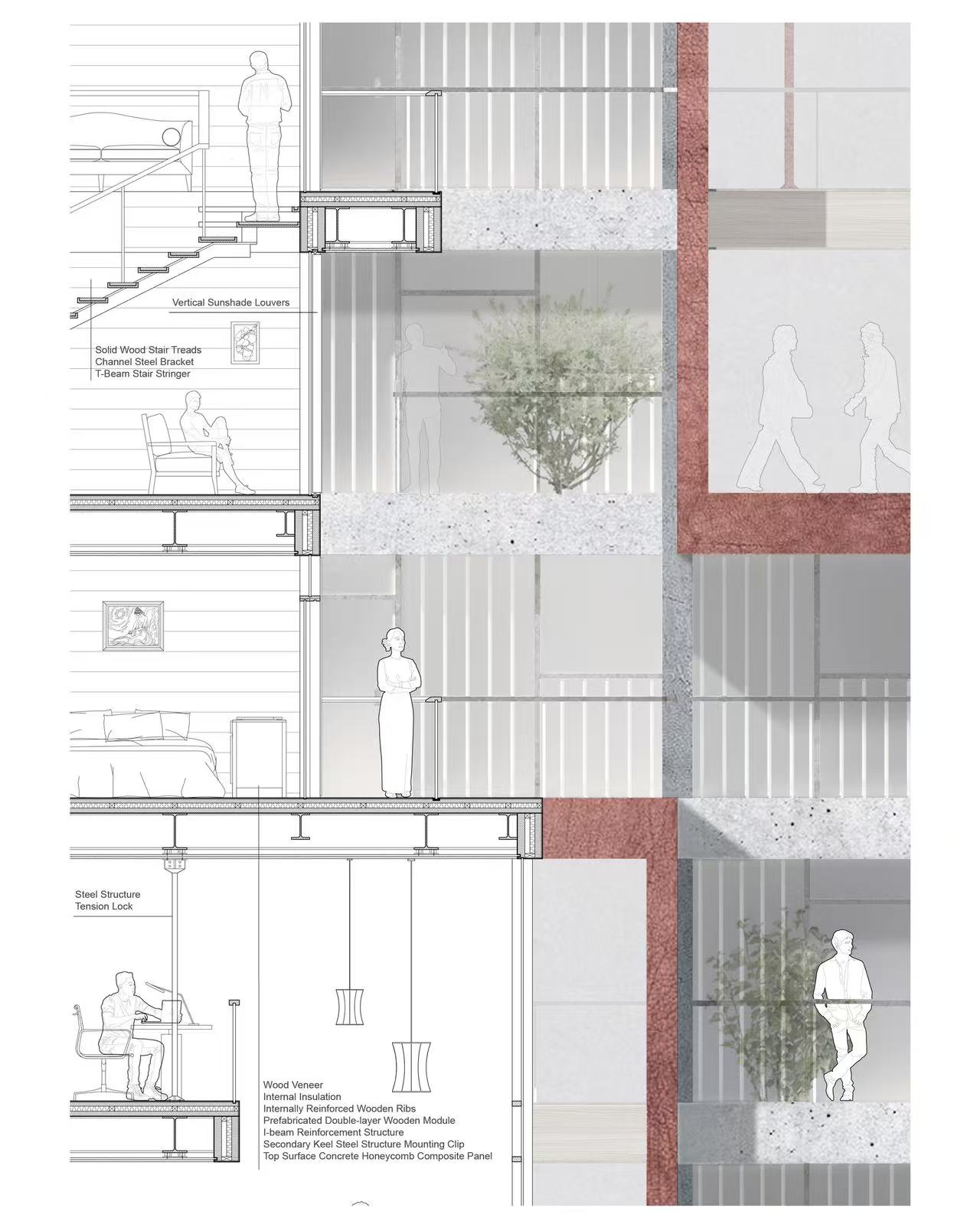
Construction Details
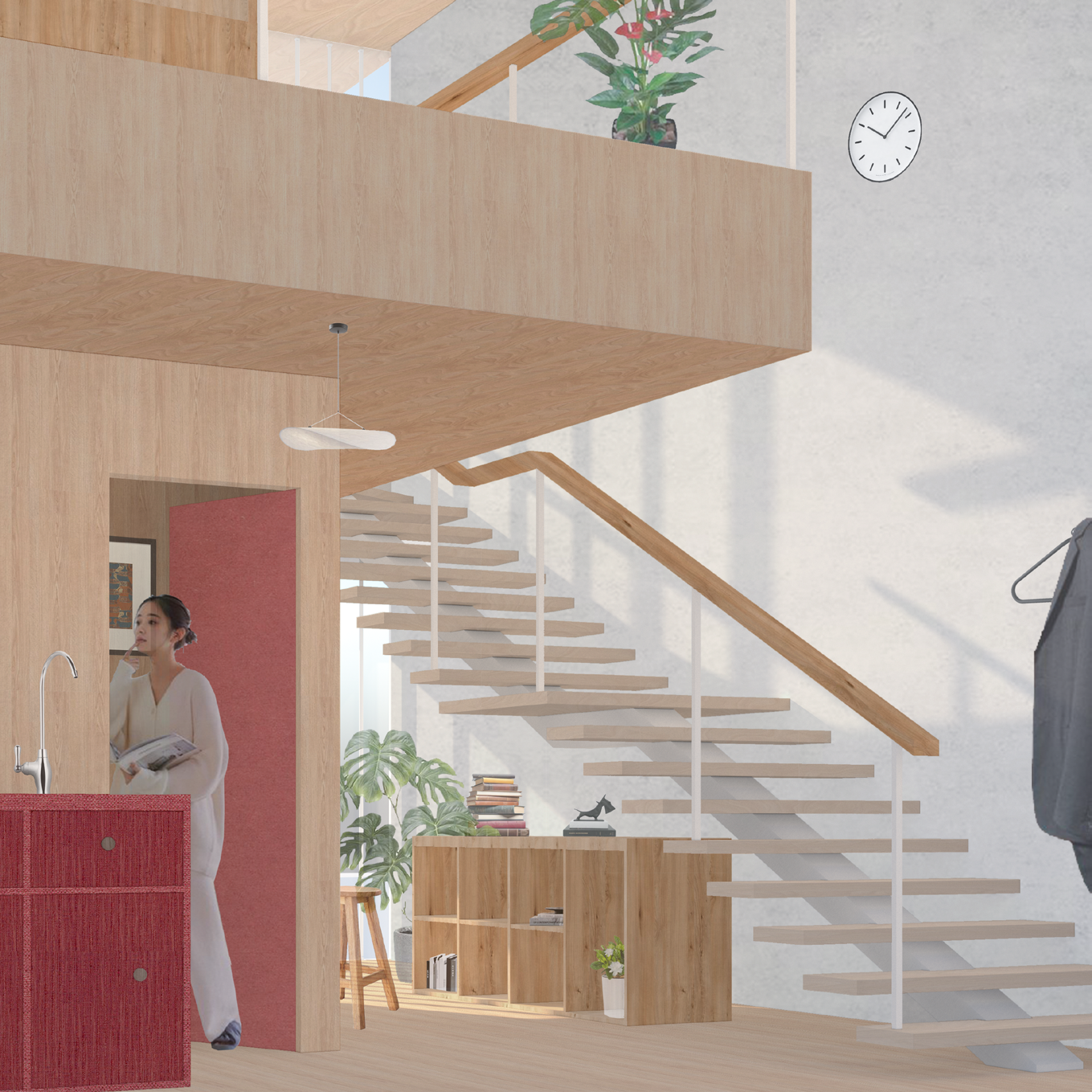
Residential Interior
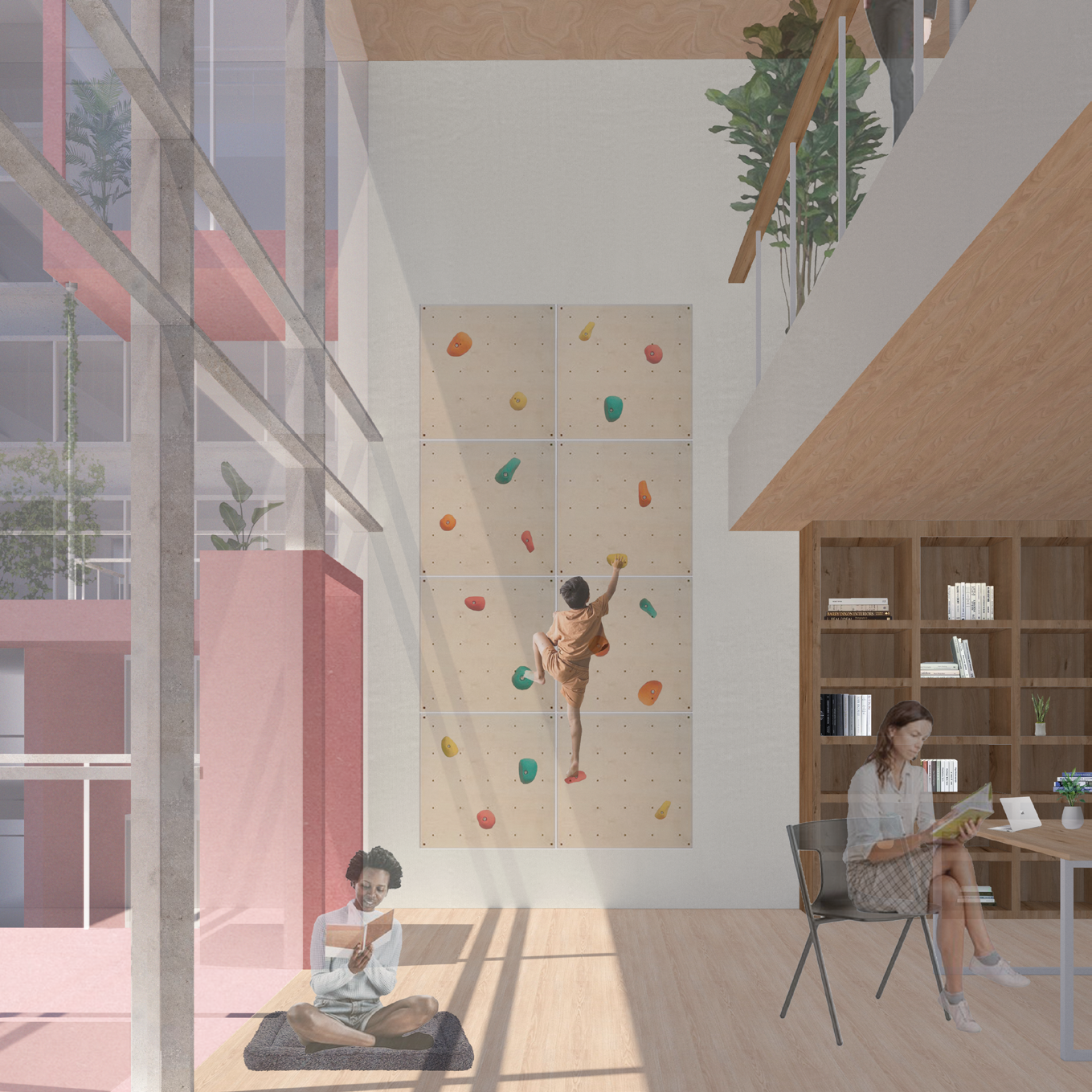
Co-working Space
Co-working Space