The Echoes of Mines

The Echoes of Mines

YAC Meditation Mine Competition
Individual Work
Mine Pit Ruins Museum
Site: Allihies, Ireland
Area: 1000m²
2024.04-2024.06

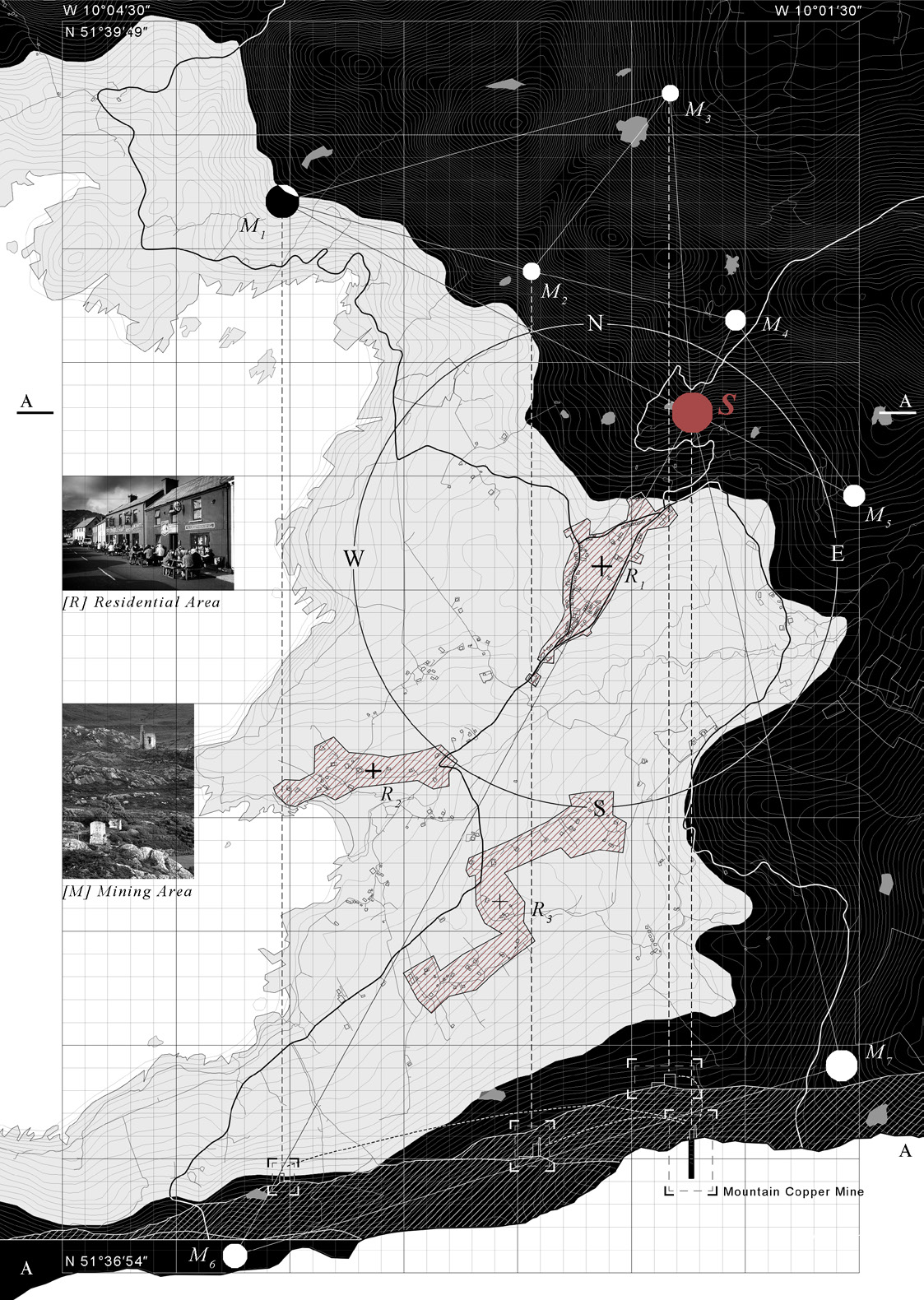
Located atop the mines in Allihies, a cluster of structures tells the story of the Irish once delving into nature's mysteries. Massive stone ruins resemble emptied engines, their colossal cracks defying gravity.

This design's site rests upon a mining relic nestled amidst three colossal pit craters halfway up the mountainside, featuring architectural elements reminiscent of chimneys, crumbling walls, cave mouths, and numerous courtyards. Grounded in the intention to transform it into a modern, functional tourist hub, guiding urbanites to immerse in the beauty of natural surroundings and tranquil industrial ambiance, I sought to bridge mining memories with museum exhibits and natural elements.

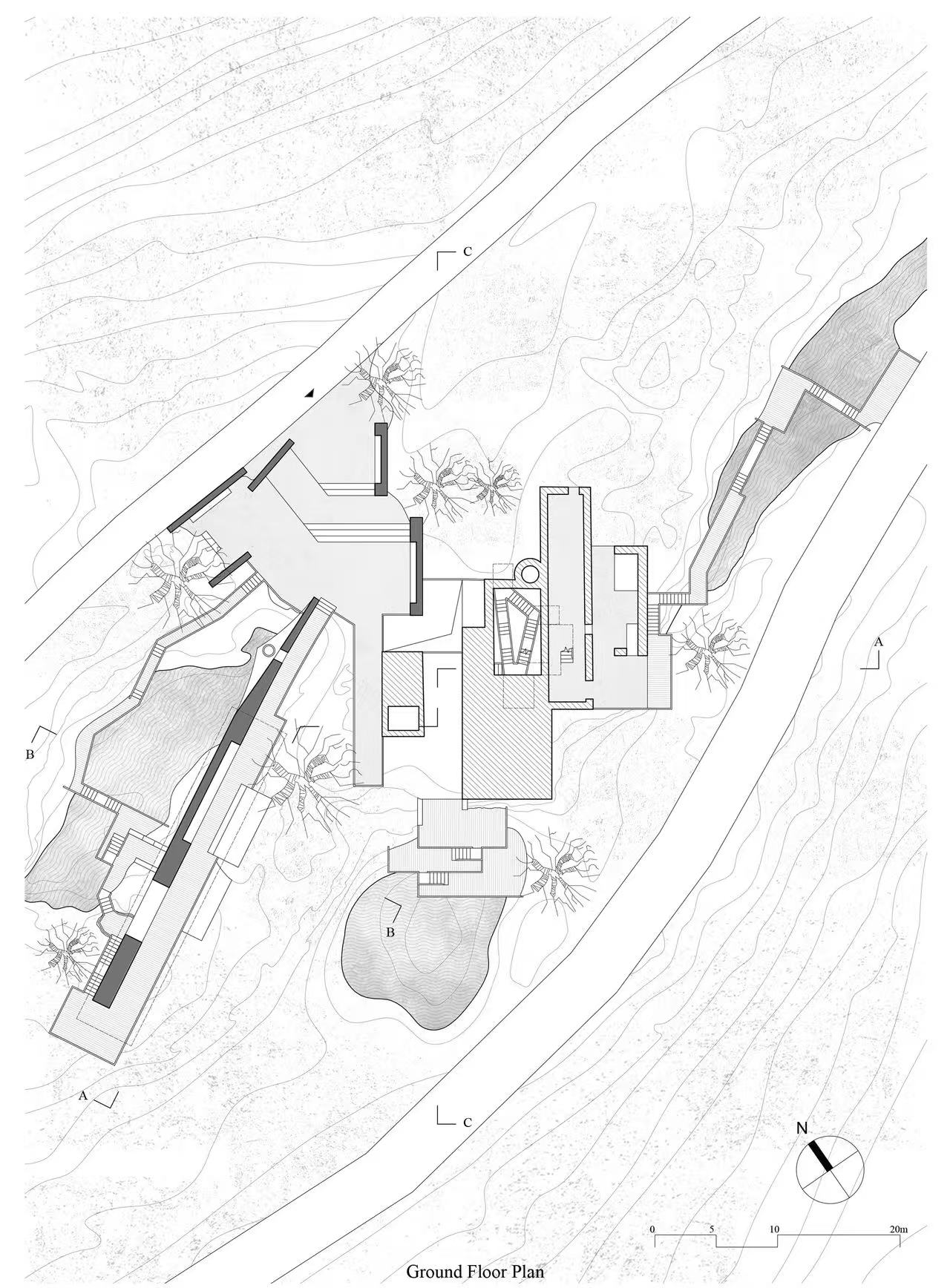
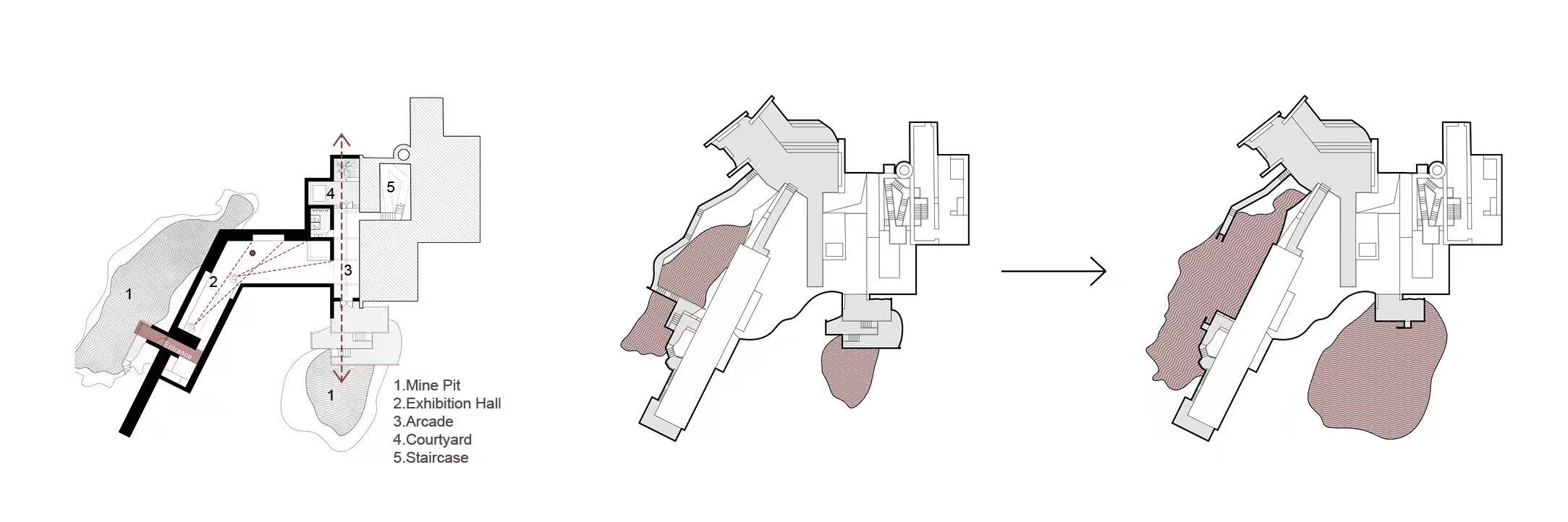
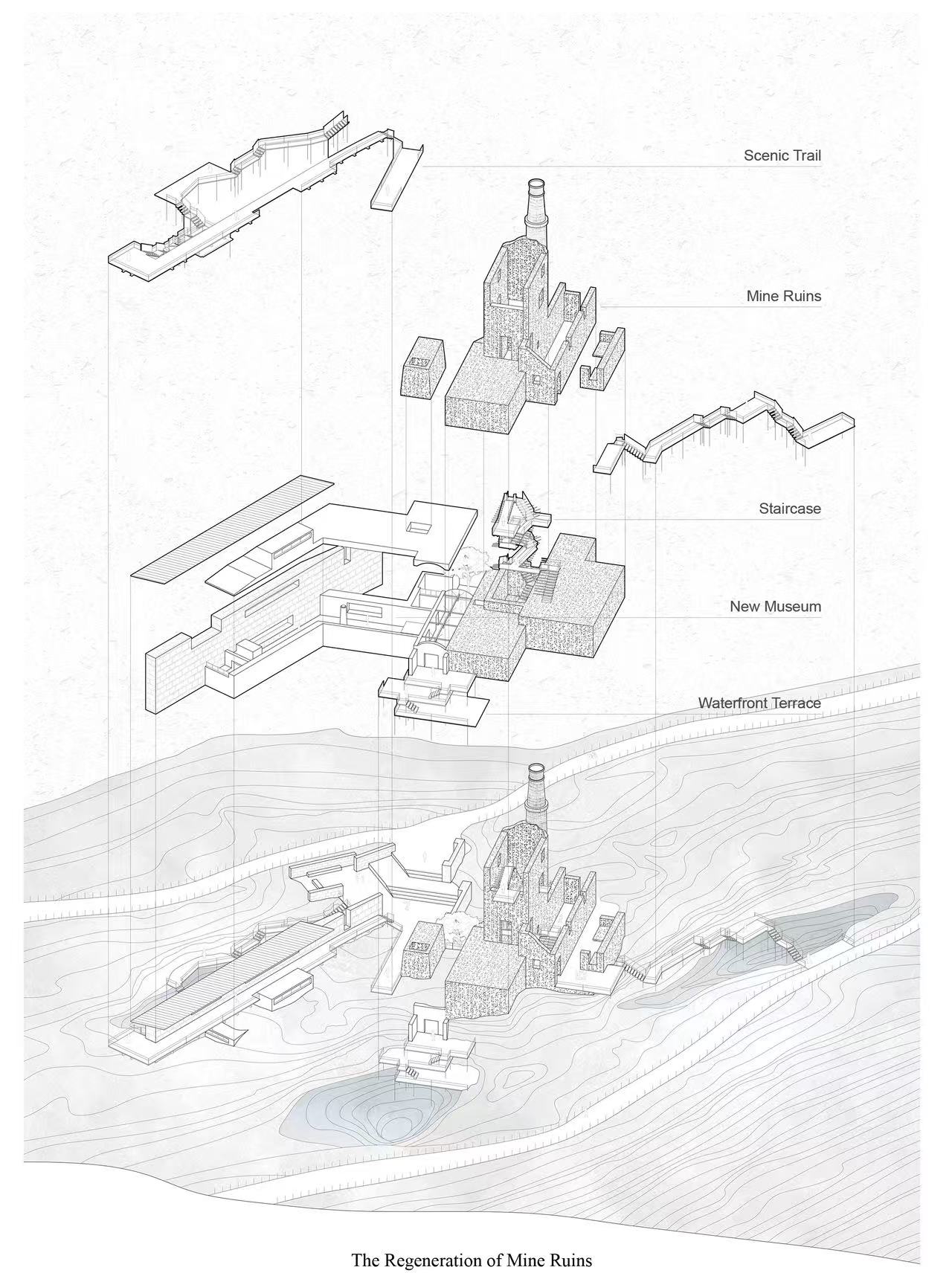
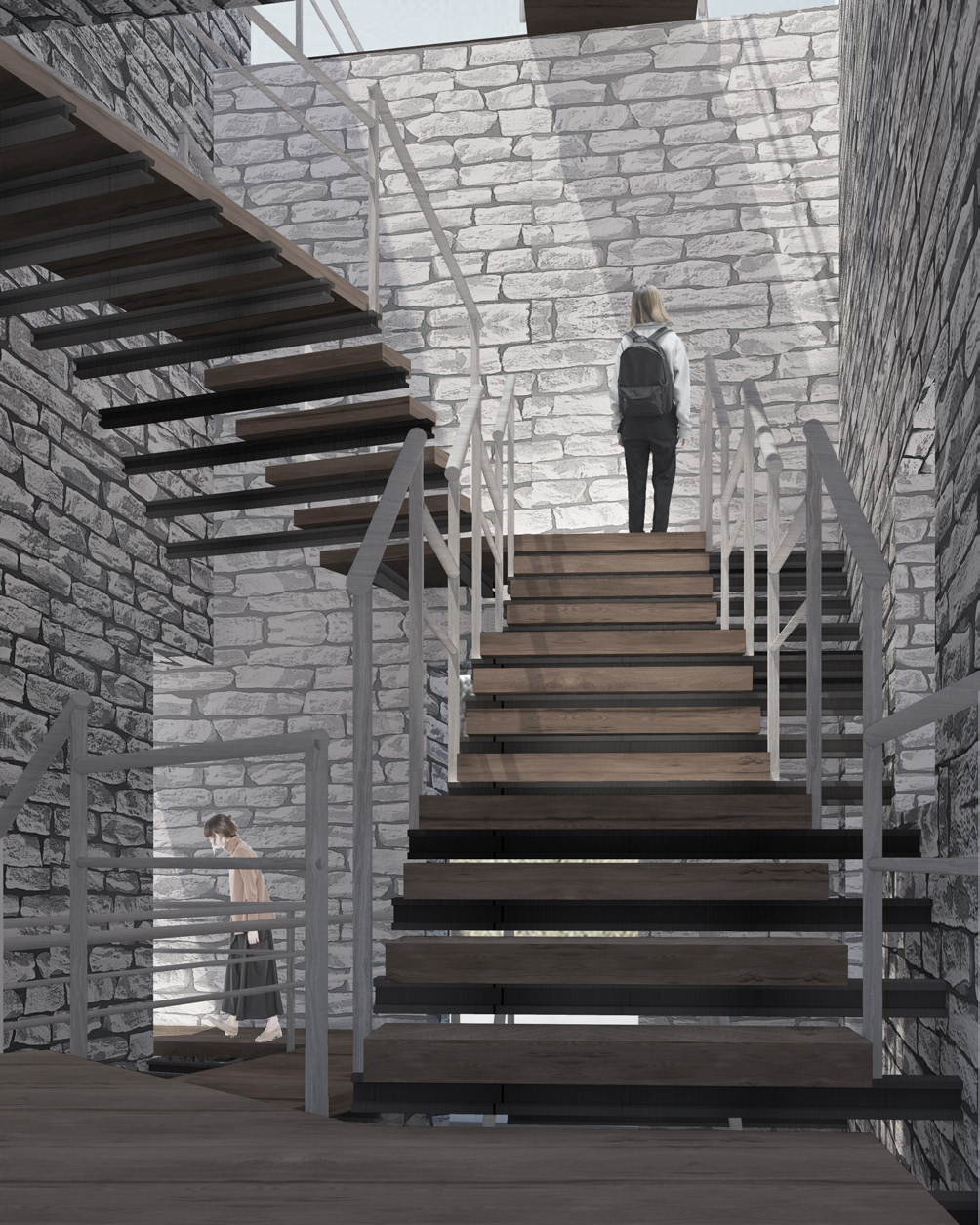
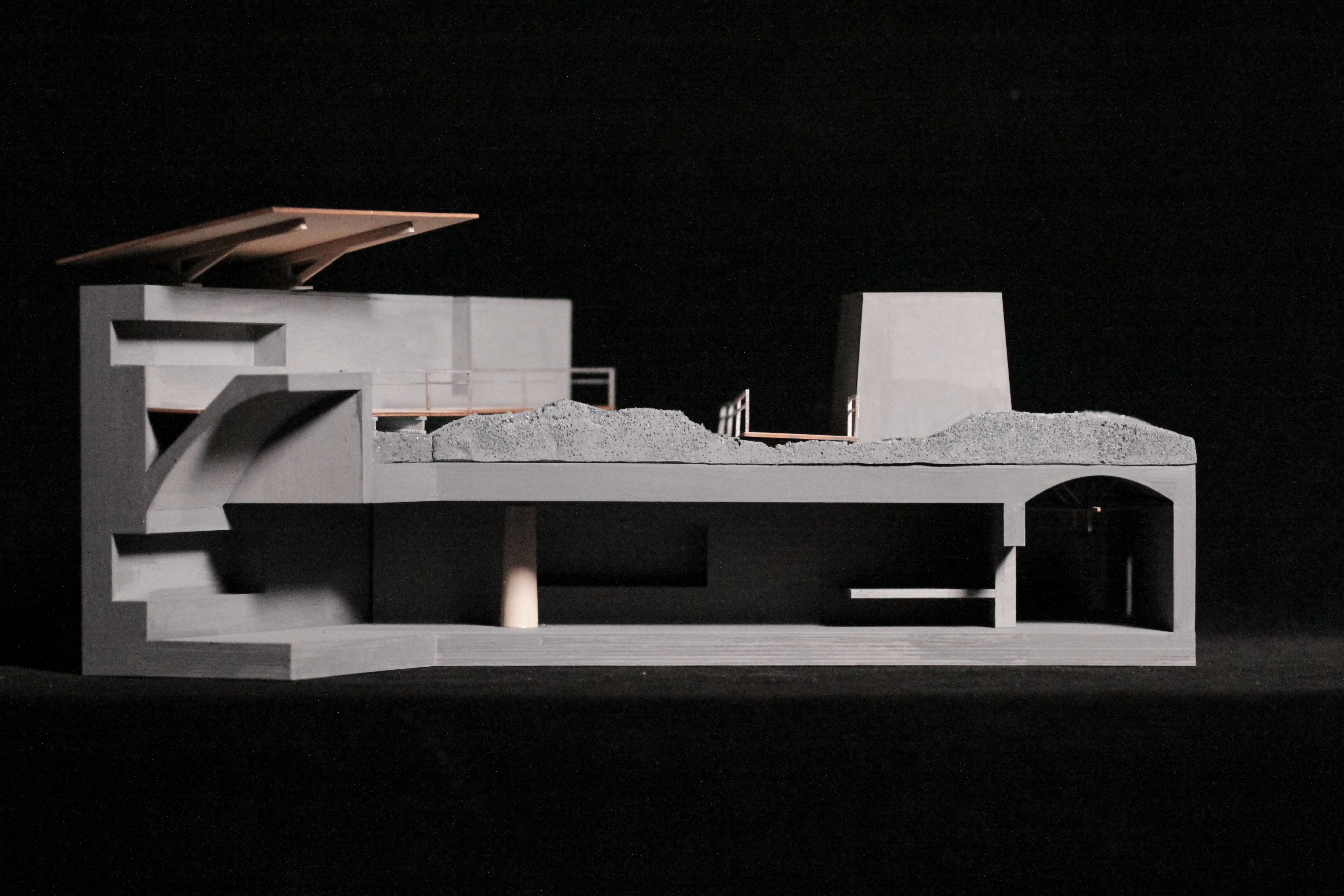
To preserve the vertical volume of the original site without compromising its integrity, a horizontal, lengthy landscaped pathway was adopted, with the museum layers buried underground. Vertical circulation shafts were embedded directly into the relic walls, intertwining upward ascent with gradual landscape unveiling, concealed within ancient structures.

Recognizing its interaction with nature, I envisioned the mine pit as a convergence point for underground spaces. Once filled with water, it transforms into a new natural landscape, evolving with seasonal rainfall to create a temporally narrative meditation space, emphasizing the passage of time and people's encounter with various highlights underground, while observing symbolized mining tools to stir the place's local memories.
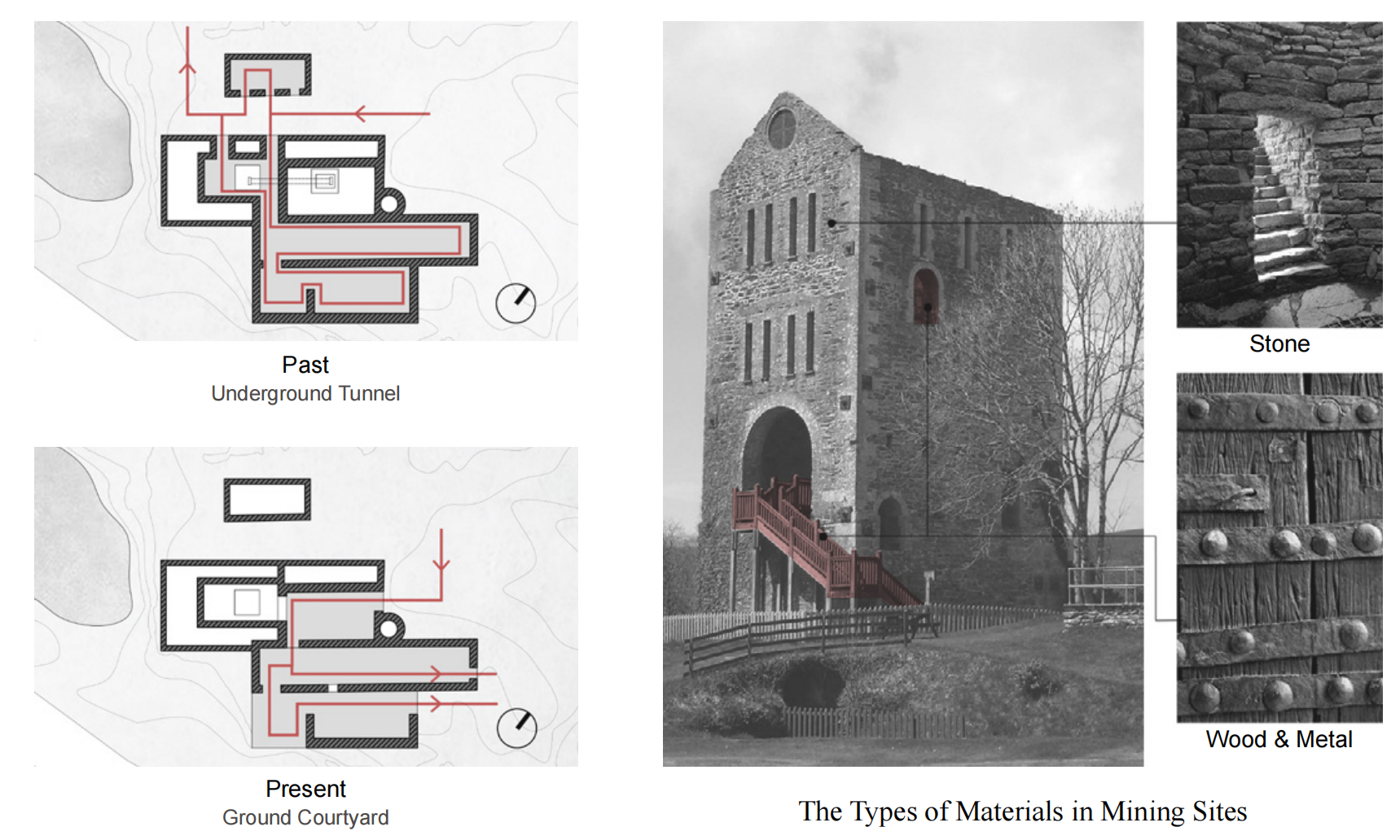
Mining HistoryThe Types of Materials
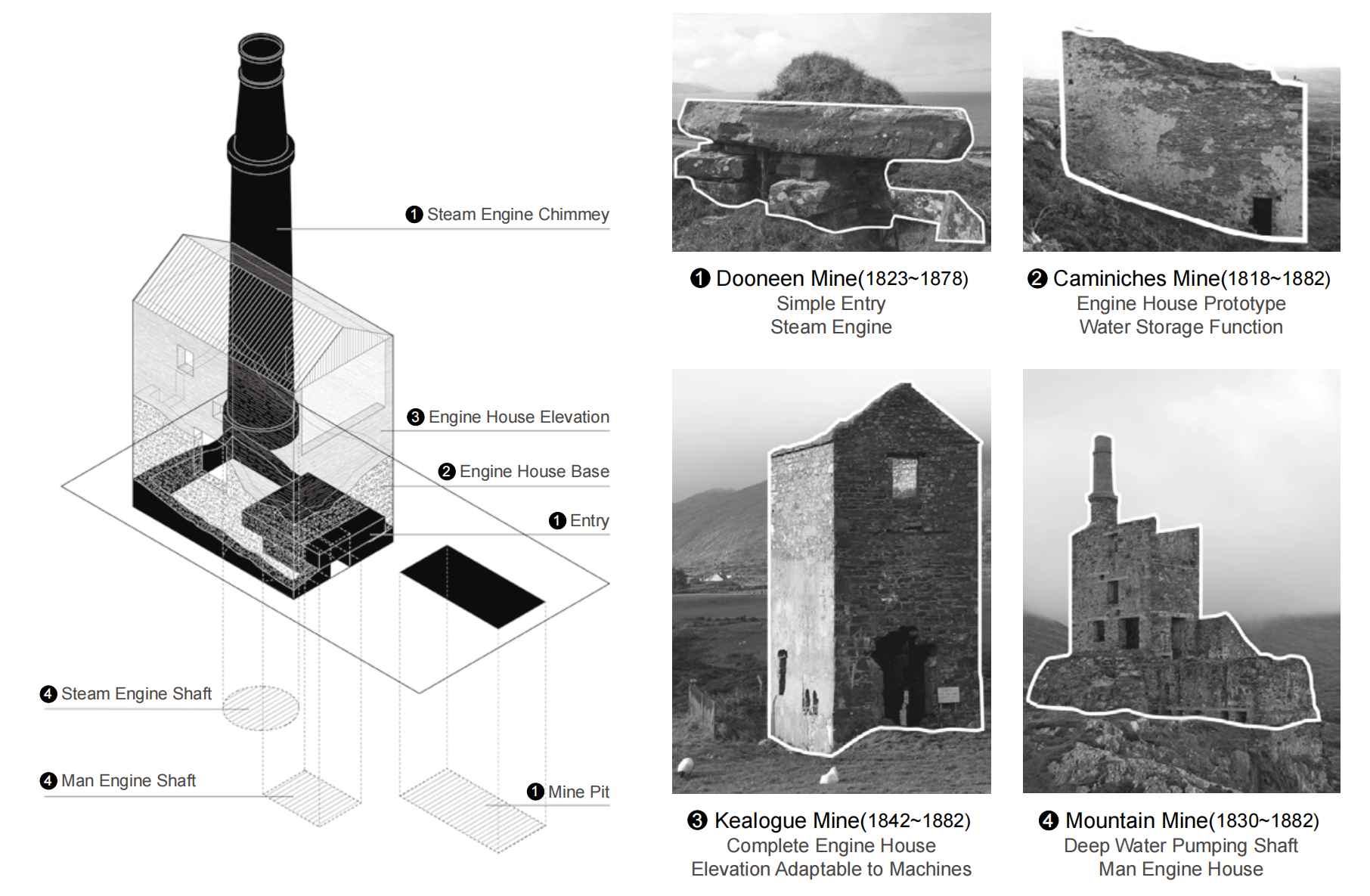
The Mining Development History of Allihies
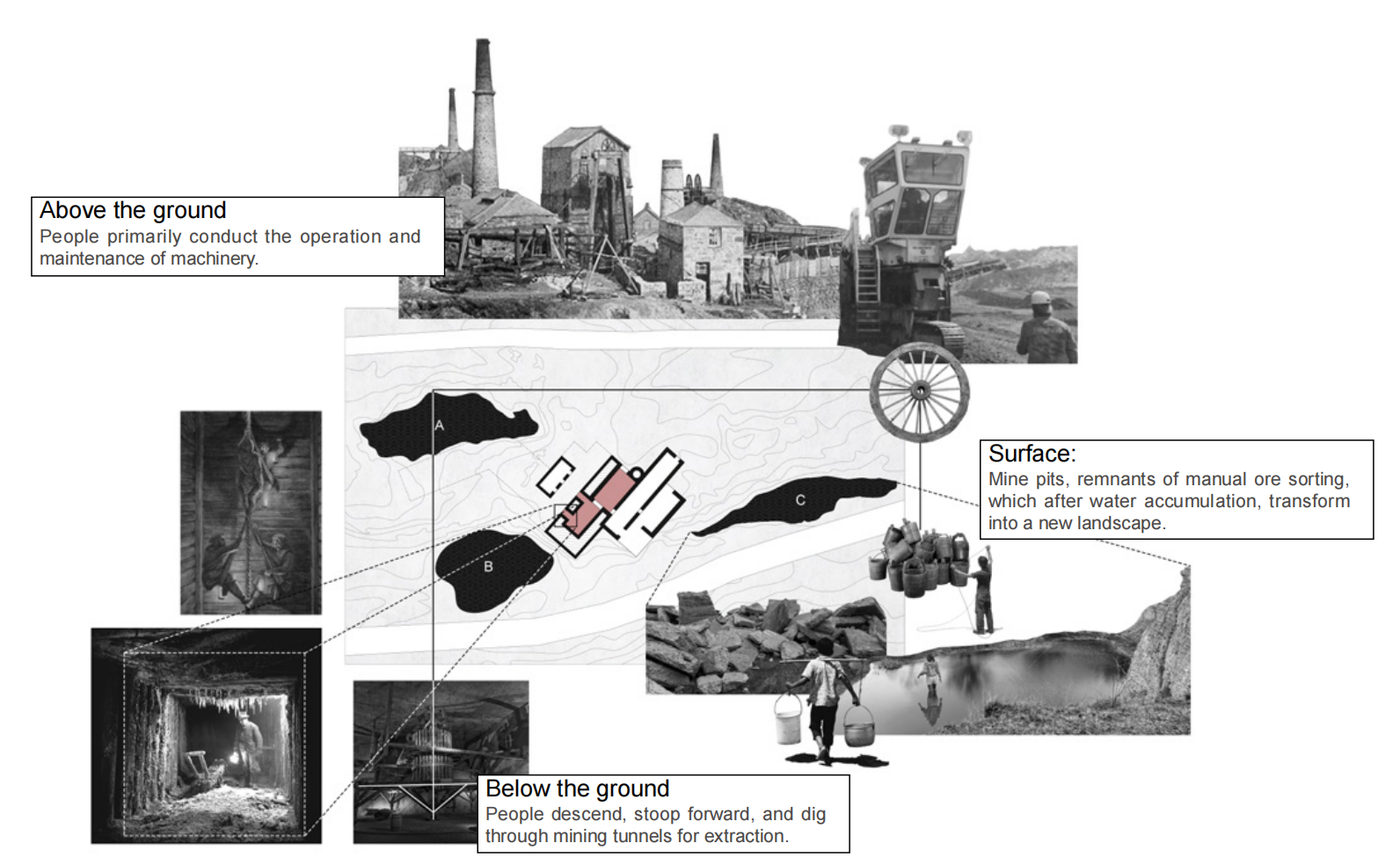
From basic and essential spaces, it gradually evolved into a systematic mining industry. Human exploration against gravity, both above and below the ground, led to the development of vertical engines erected over the mines. Mapping the construction from different periods onto the same space allows us to glimpse the unchanging core of the mine's development.
Industrial Machines, Human Settlements and Mountains
Local Mining Restoration and Industrial
Spatial Translation of Mining
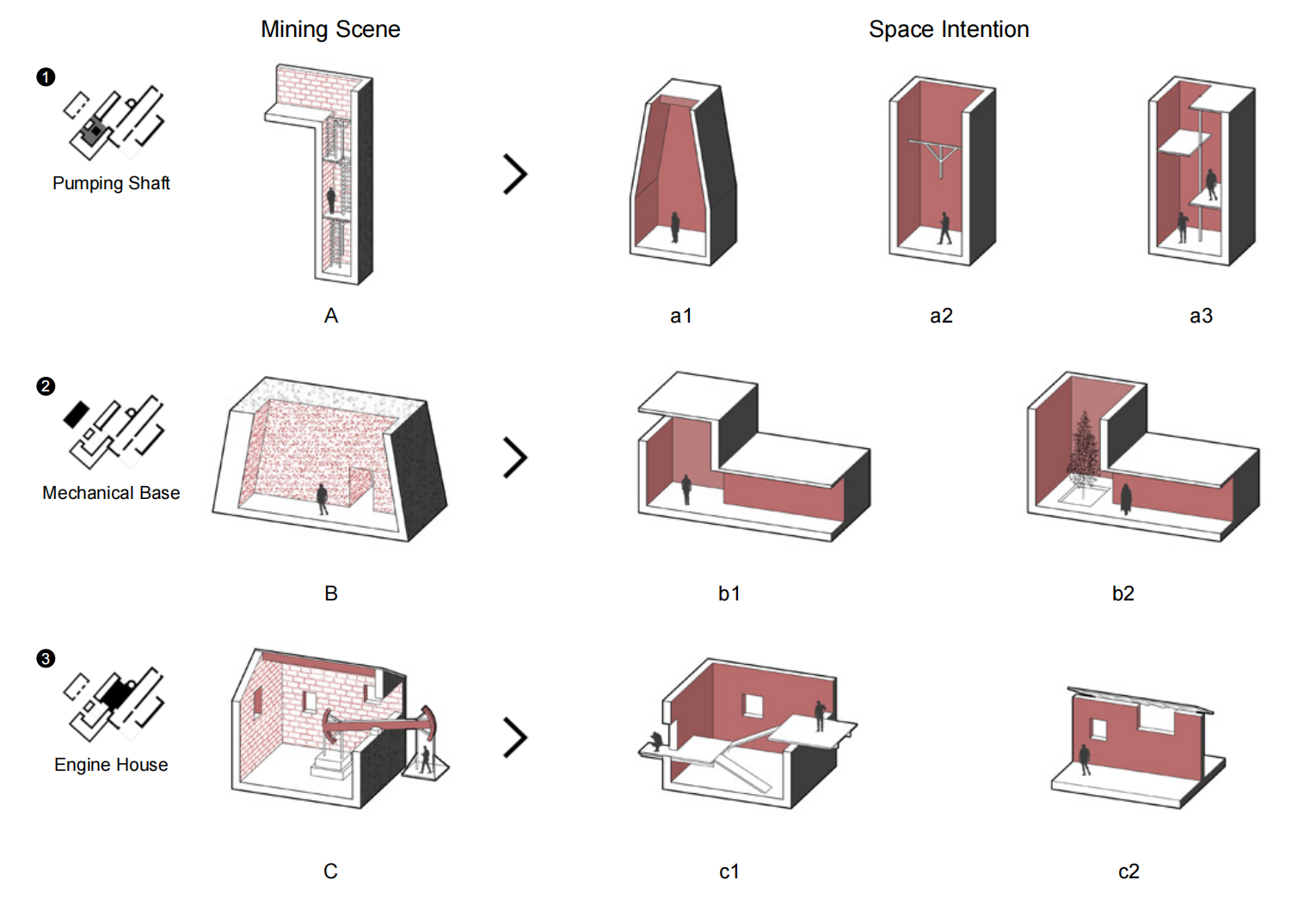
Abstract spatial elements are extracted from the original mine space to find a narrative logic for the construction of the new space. Multiple new spatial images can be derived from the same original space. The old and the new engage in dialogue and collision, returning to the locality of the architecture and collective memory.
figure
Subterranean Spatial Analysis & Quarry Time Narrative
figure
figure
Section A-A
Section A-A
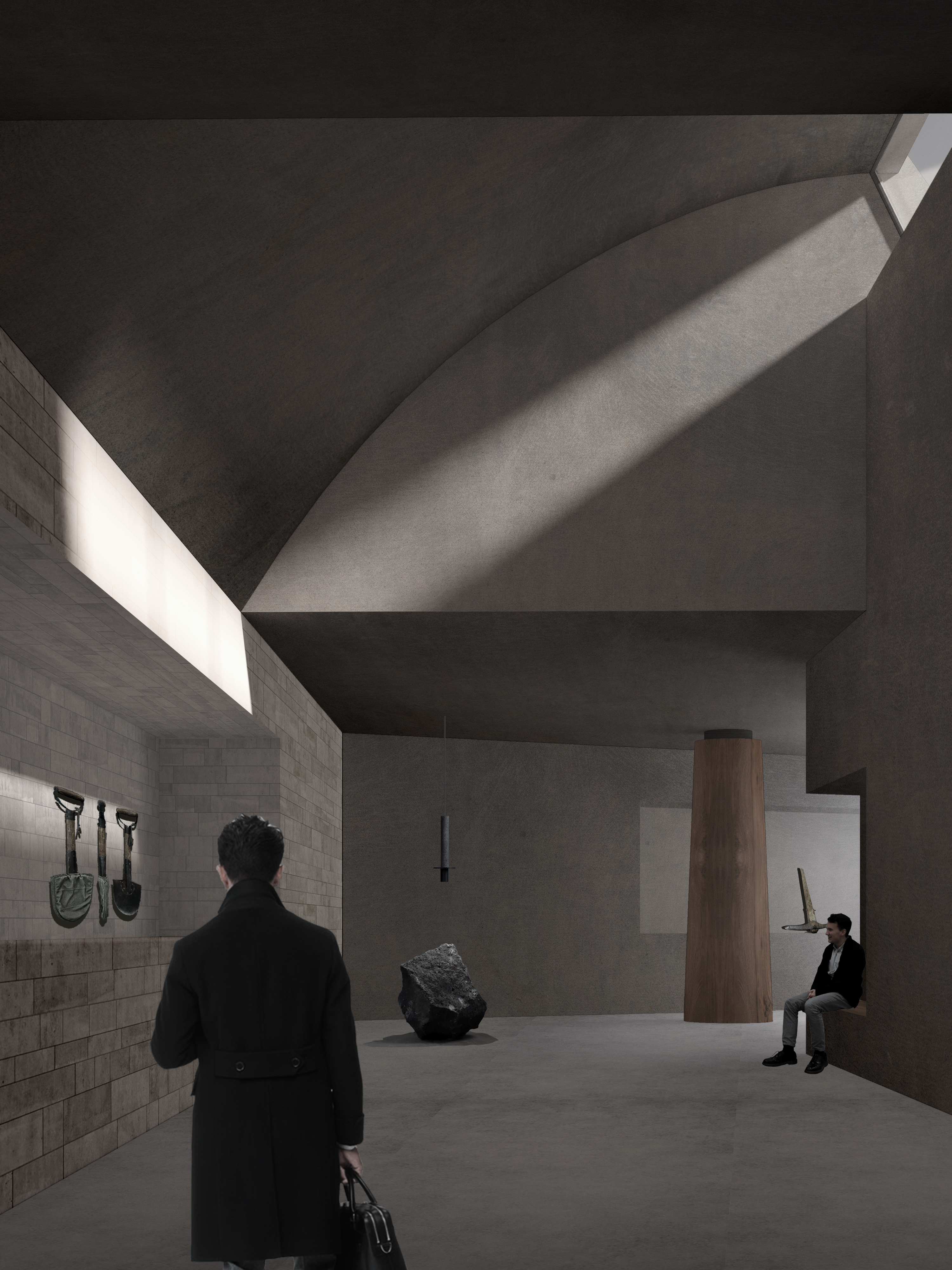
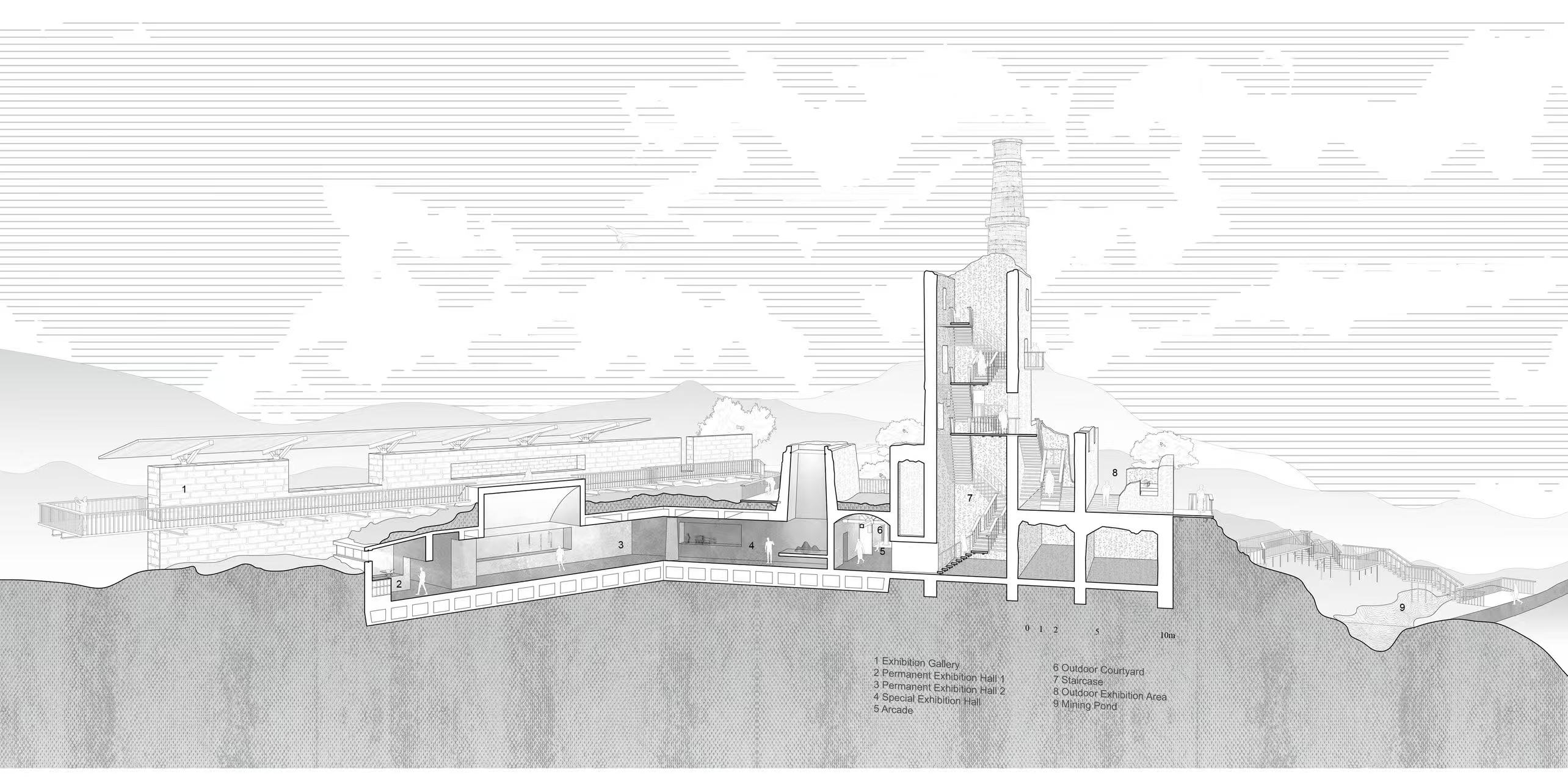
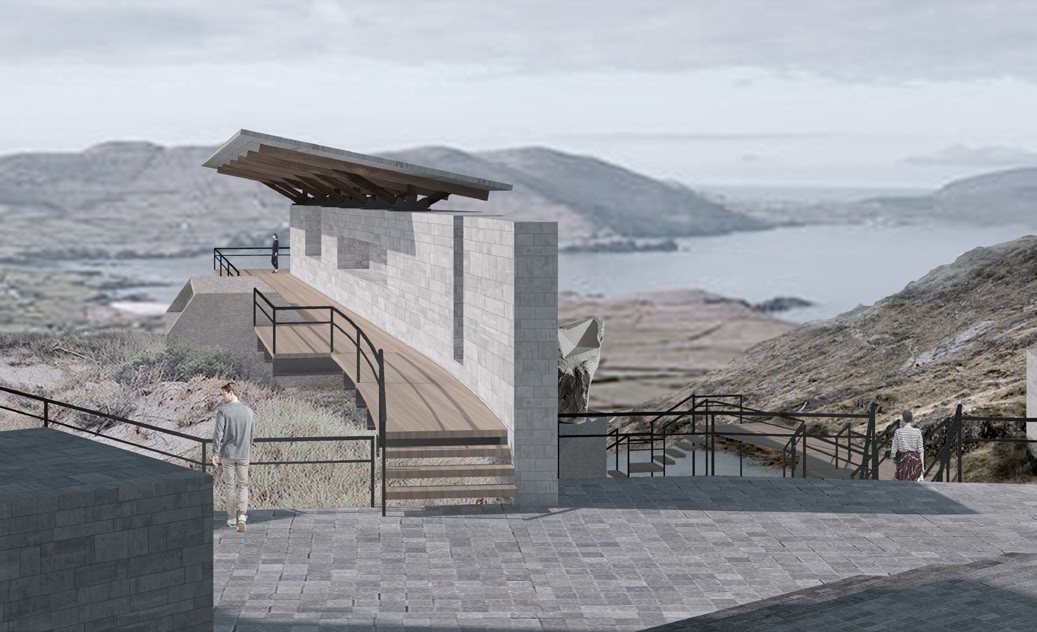
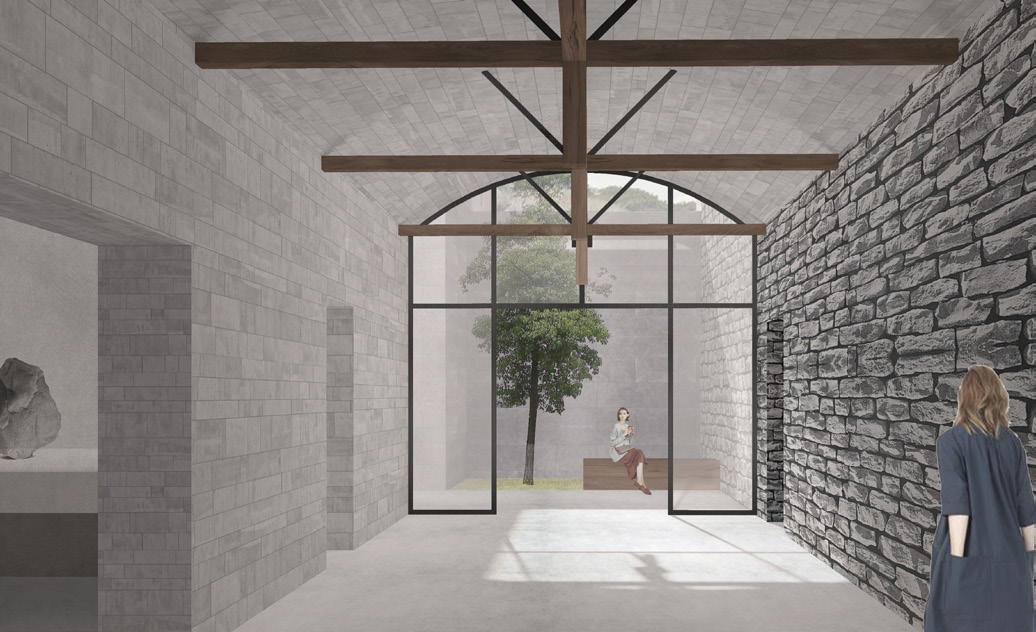
The gently sloping pathways extend, unveiling the sea and fields before one's eyes like an unfurling scroll. Within the dim space, slanting highlights, illuminated arches, or direct beams of light indicate different directions. Arches and wooden trusses attempt to symbolize mining elements. Spiraling upward and encircling the mining pond, the pathways serve as the endpoint for scenic viewing. As the horizontal sections unfold, the underground horizontal exhibition halls are revealed, contrasting yet complementing the vertical mine relics. This design ensures excellent visibility while minimizing obstruction and alteration to the relics themselves. The humble approach preserves the sense of power inherent in the vertical mine shafts. Visitors experience the transition between darkness and light, engaging in a dialogue with century-old mining memories and physically experiencing the process of entering the mine.
figure
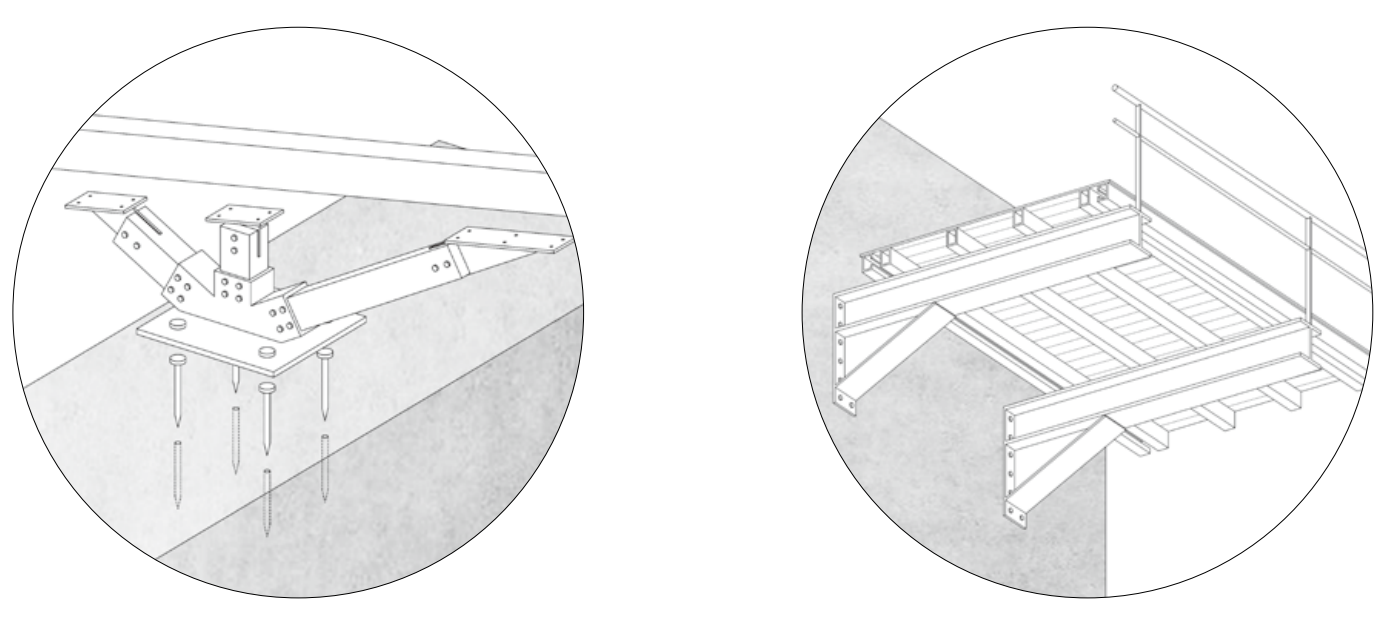
The staircase adopts a cantilevered steel and wood structure, ensuring a complete and clean vertical shaft space. The use of steel and wood materials creates a dialogue between history and the present with the old stone. As people ascend the triangular spiral staircase, they can occasionally peek at the surrounding scenery through openings in the ruins or directly reach the open outdoors, blurring the boundary between the interior and exterior.
figure
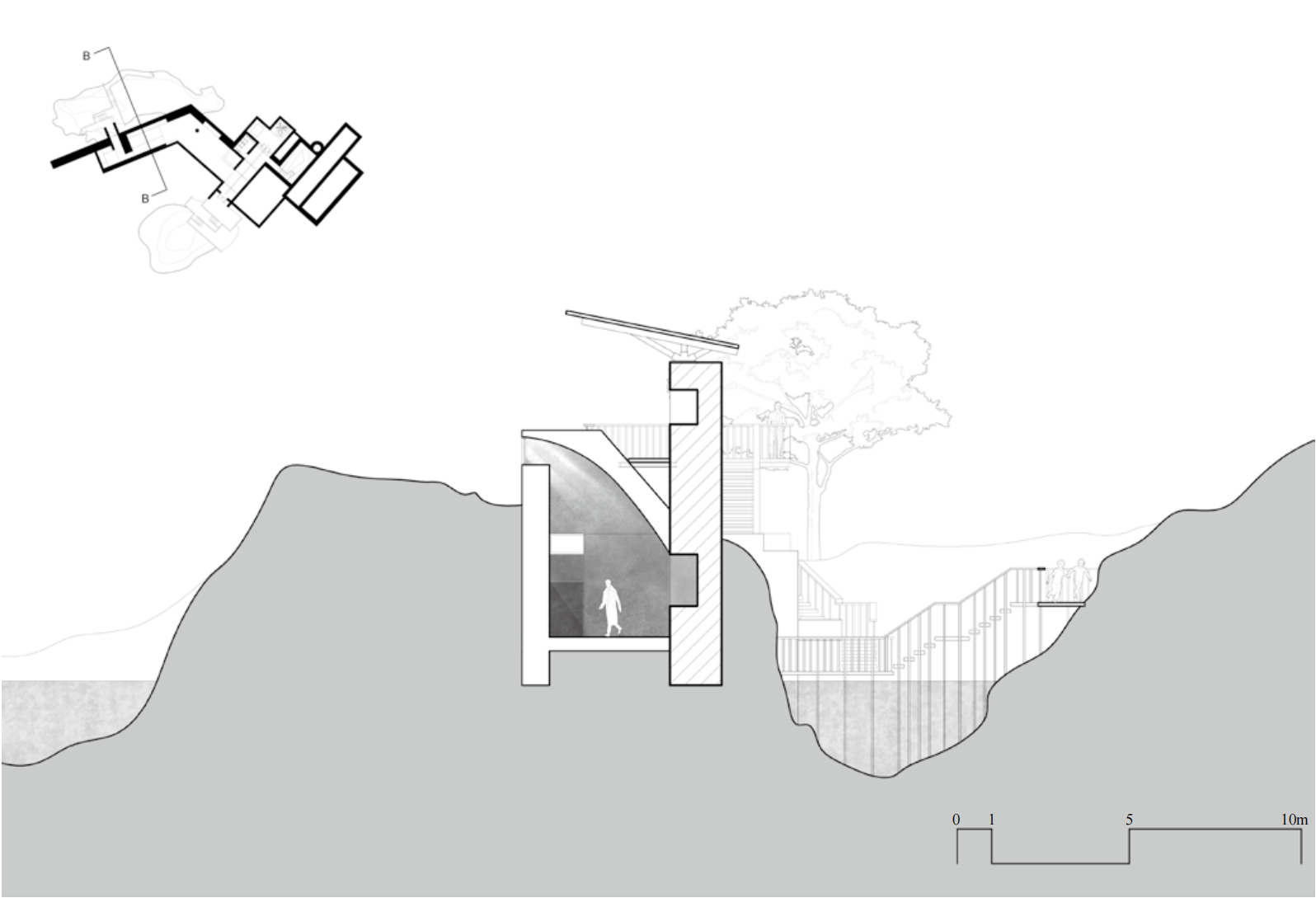
Section B-B
Section B-B
The museum entrance creates a contrast between the above-ground and underground spaces. The above-ground area offers an expansive view, while the underground area is dark and illuminated by natural light. Exhibits are embedded within the walls, echoing the act of excavation.
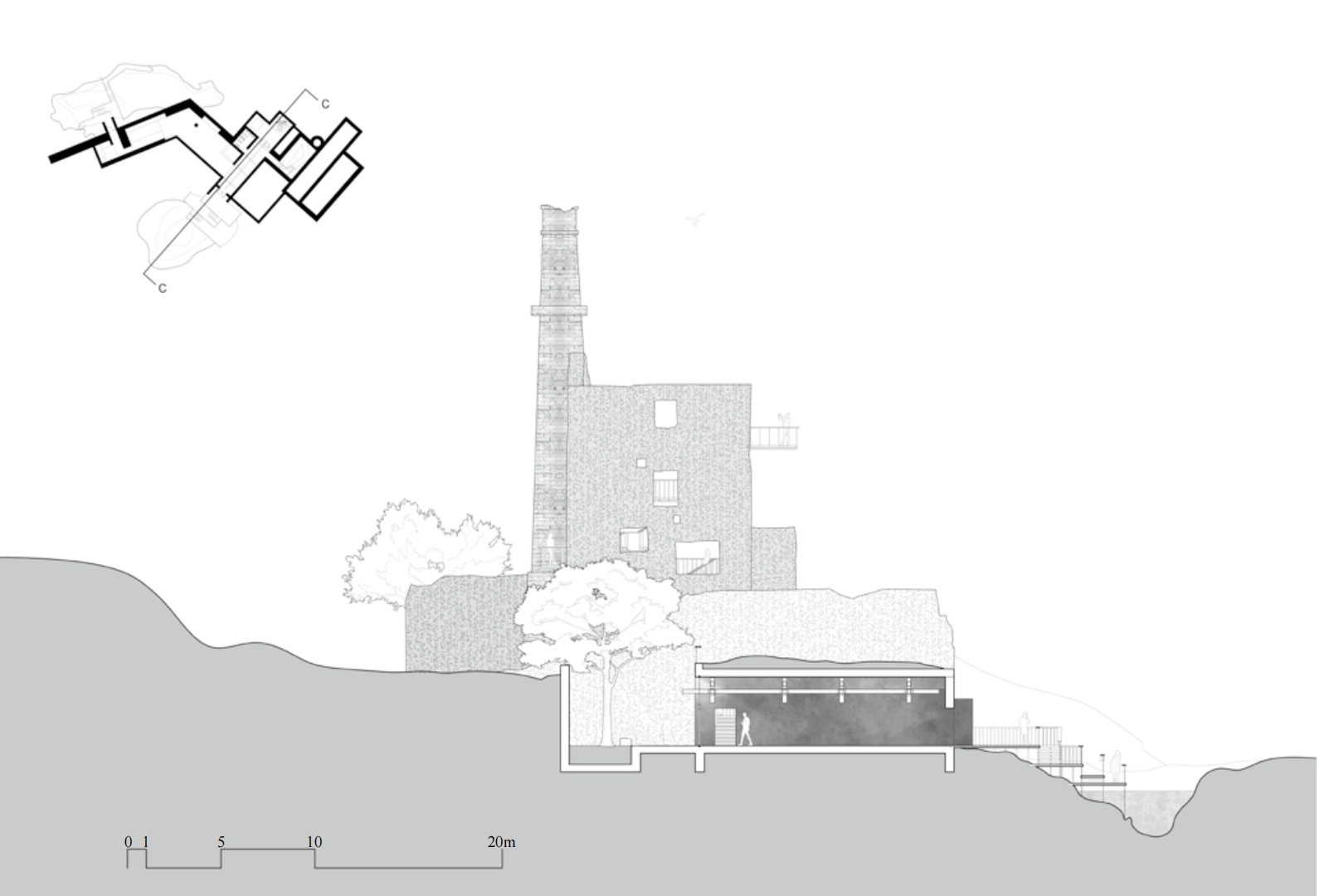
Section C-C
Section C-C
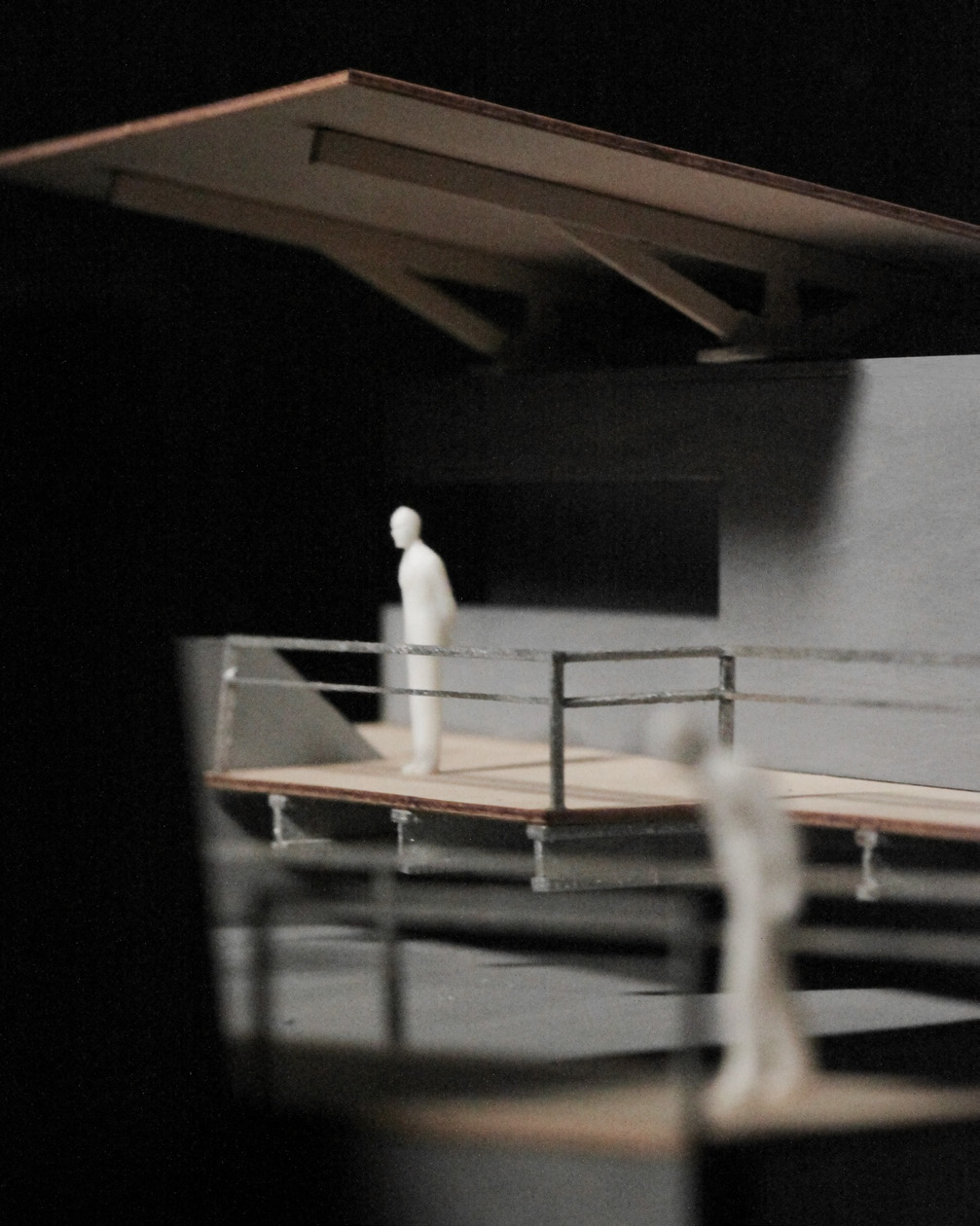
The axial narrative the transitions from the indoor courtyard to the outdoor mine pit.The steel-wood truss structure at the top of the corridor abstractly recreates the construction of historical mine shafts.The waterfront platform is submerged with the rising and falling tides of the mine pit lake, narrating the changes over time.
figure
Construction Details
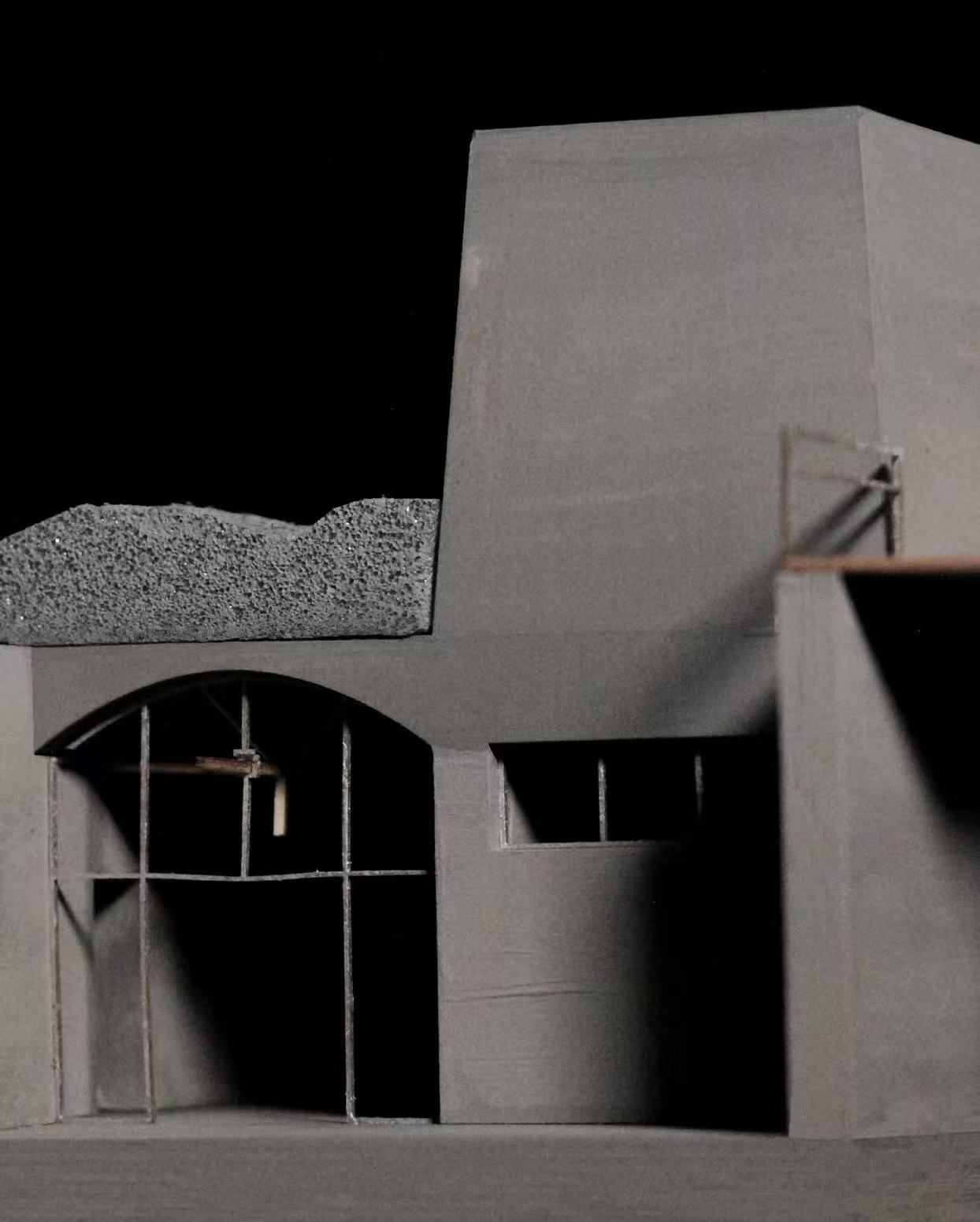
Model 1Model 2
When responding to the unique history and site of the mine pit ruins, the architecture not only includes sculptural, commemorative spaces that invite people to pause but also incorporates flowing, traversable spaces that interact with the vast natural environment. Inside the building, we observe the light from above, sense our position, or see the hanging trusses overhead, evoking memories of mining history. Simultaneously, we move forward—past the corner columns, the varying directions of flowing light, the courtyards, the rising and falling mining pools, and the pathways extending towards the sea level. In the flow of time and space, we can still experience stories of tranquility and eternity.