Tower of Samsara

Tower of Samsara

'Death + Architecture' Competition
Individual Work
Vertical Cemetery
Site: Tokyo, Japan
Area: 28000m²
2024.08–2024.10

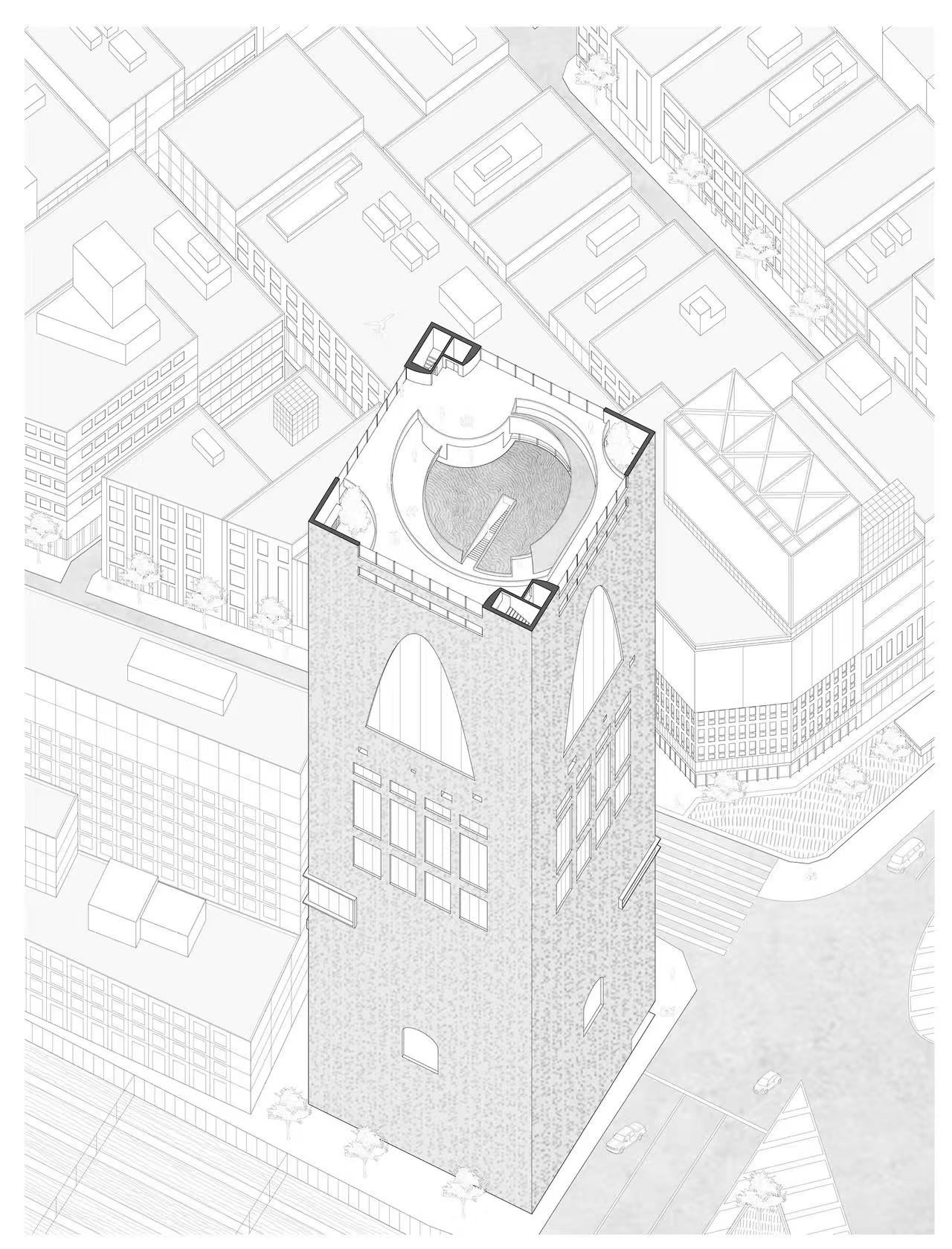
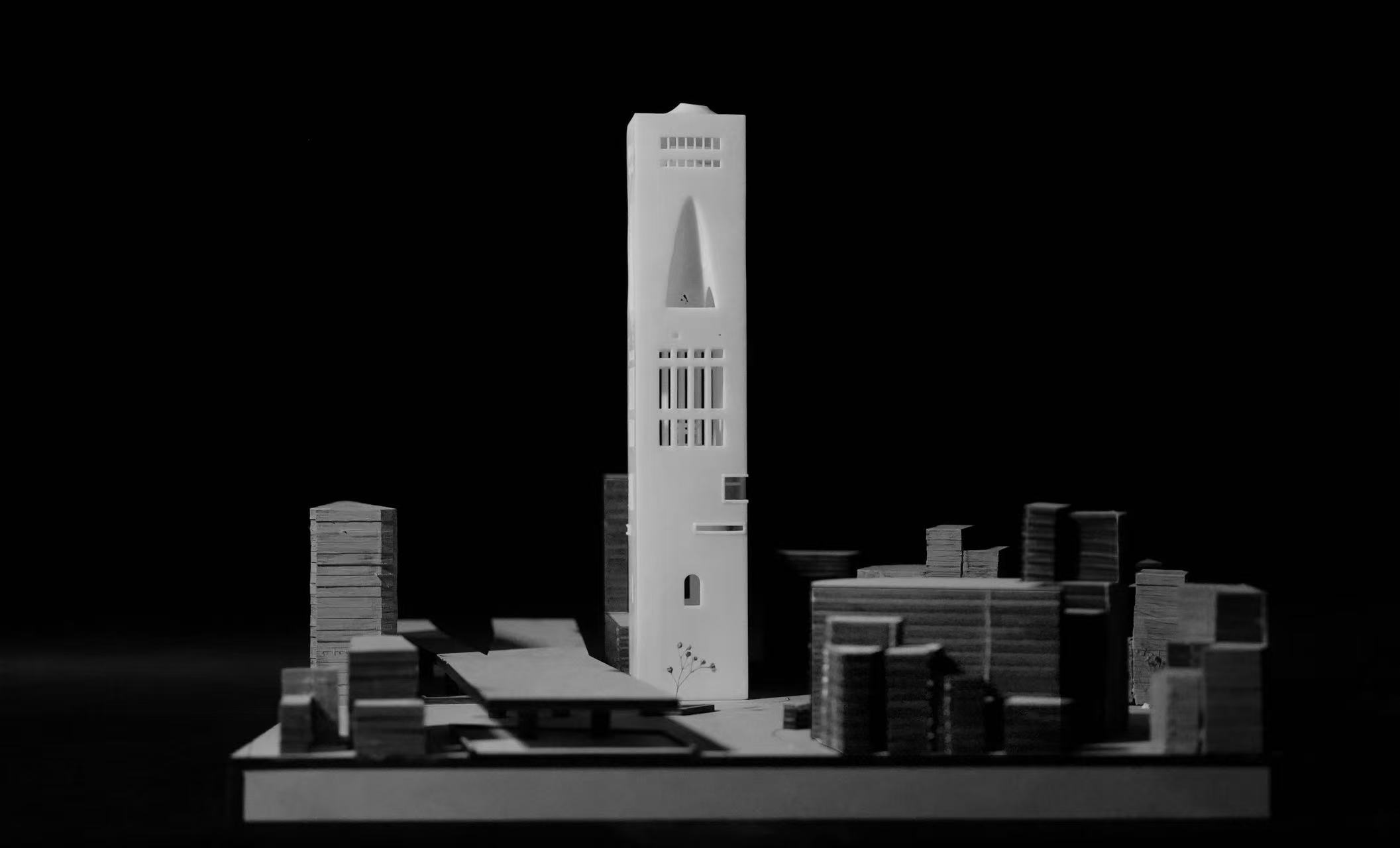
Located in the heart of Shinjuku, Tokyo, and positioned at the center of pedestrian flow, this skyscraper stands out due to its unique functionality. Establishing such a vertical cemetery in the center of Shinjuku serves to save burial land in Tokyo while also erecting a monument addressing themes of life and death within the urban landscape.

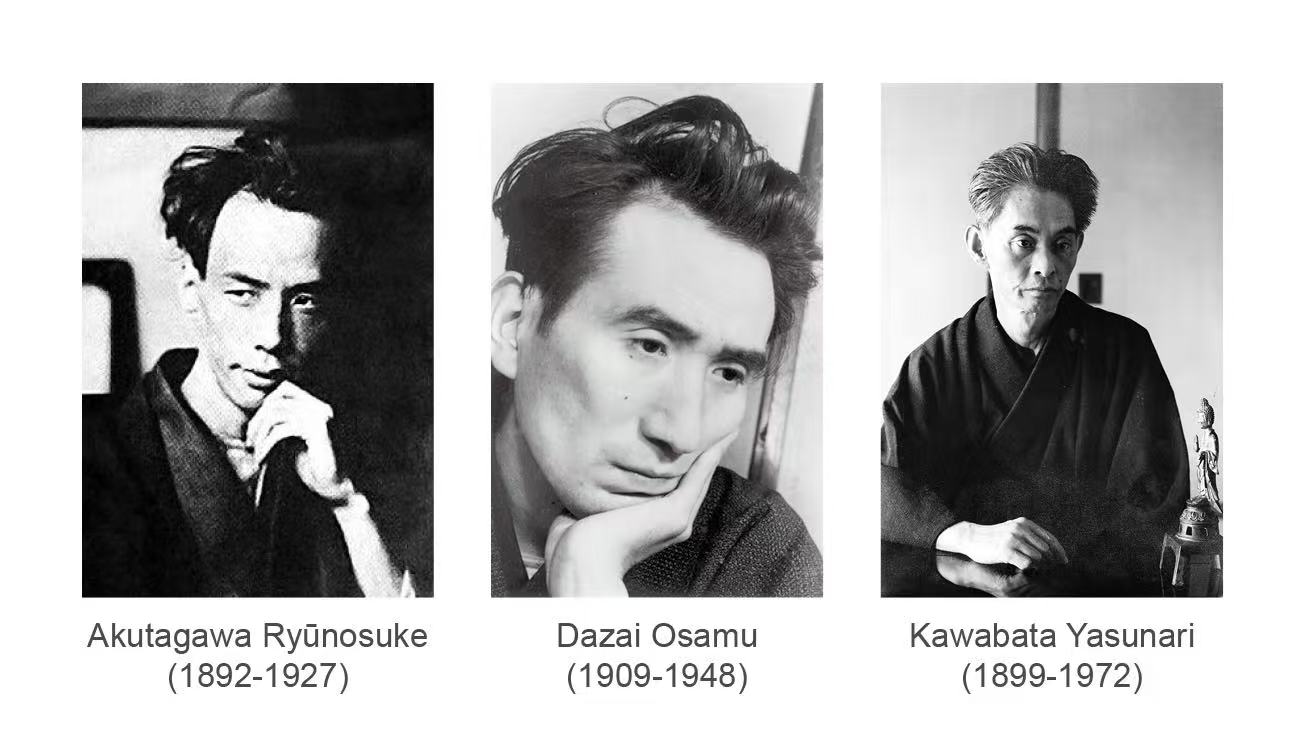
Exploring the themes of life and death in urban life in Japan has a distinct regional character. In my preliminary reflections, I noticed that Japanese writers often exhibit a strange yearning for and even idealization of death. This is closely linked to their cultural background, where an unstable geopolitical environment, social indifference, and personal loneliness contribute to a connection between destruction and beauty. This reflects the contradictions in Japanese social life: on one hand, there is a desire to escape loneliness and seek spiritual solace, while on the other, the soul seems to be moving toward death.

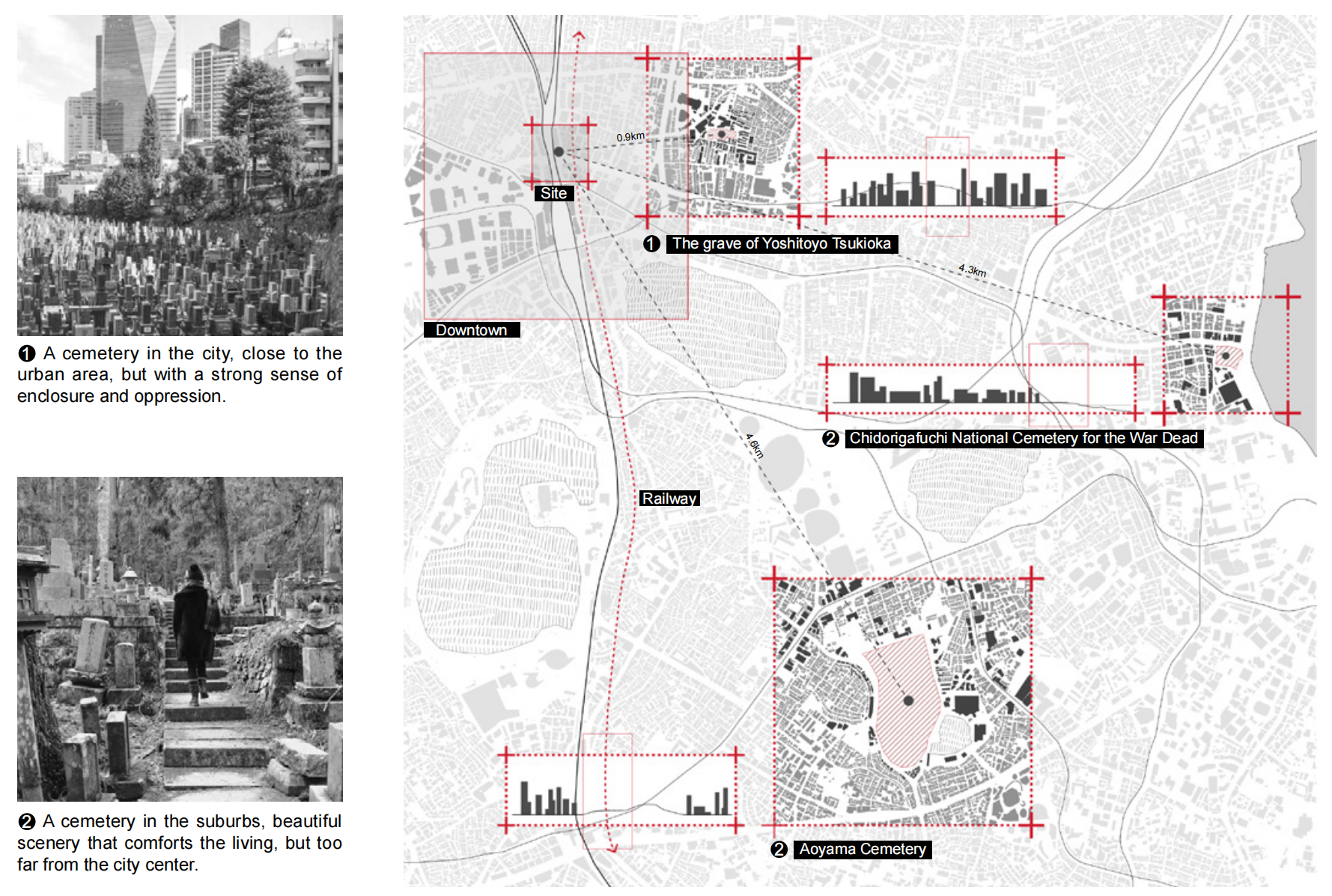
Therefore, how can architectural language respond to such social phenomena and the contradictory feelings of loneliness and struggle among the Japanese? As Kevin Lynch pointed out, landmarks play a crucial role in shaping urban imagery. By landmarking cemeteries, we can enhance the presence of death in daily urban life, transforming them into functional monuments that are more commonplace. By positioning them prominently in the city center, remote or confined burial areas can be redefined, reducing travel distances while simultaneously providing a space for solace for the lonely living in the city.
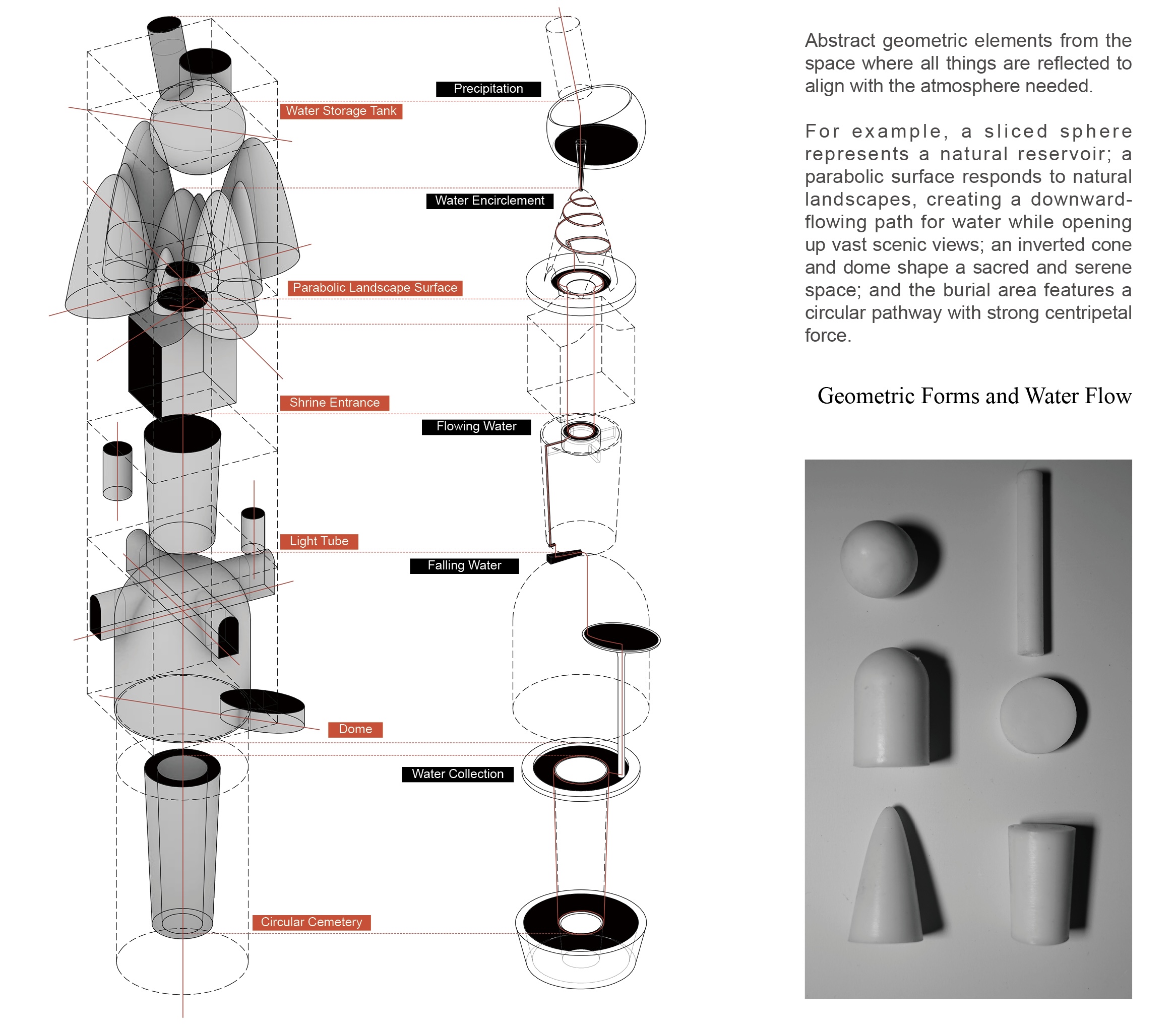
Concept Diagram
Concept Diagram
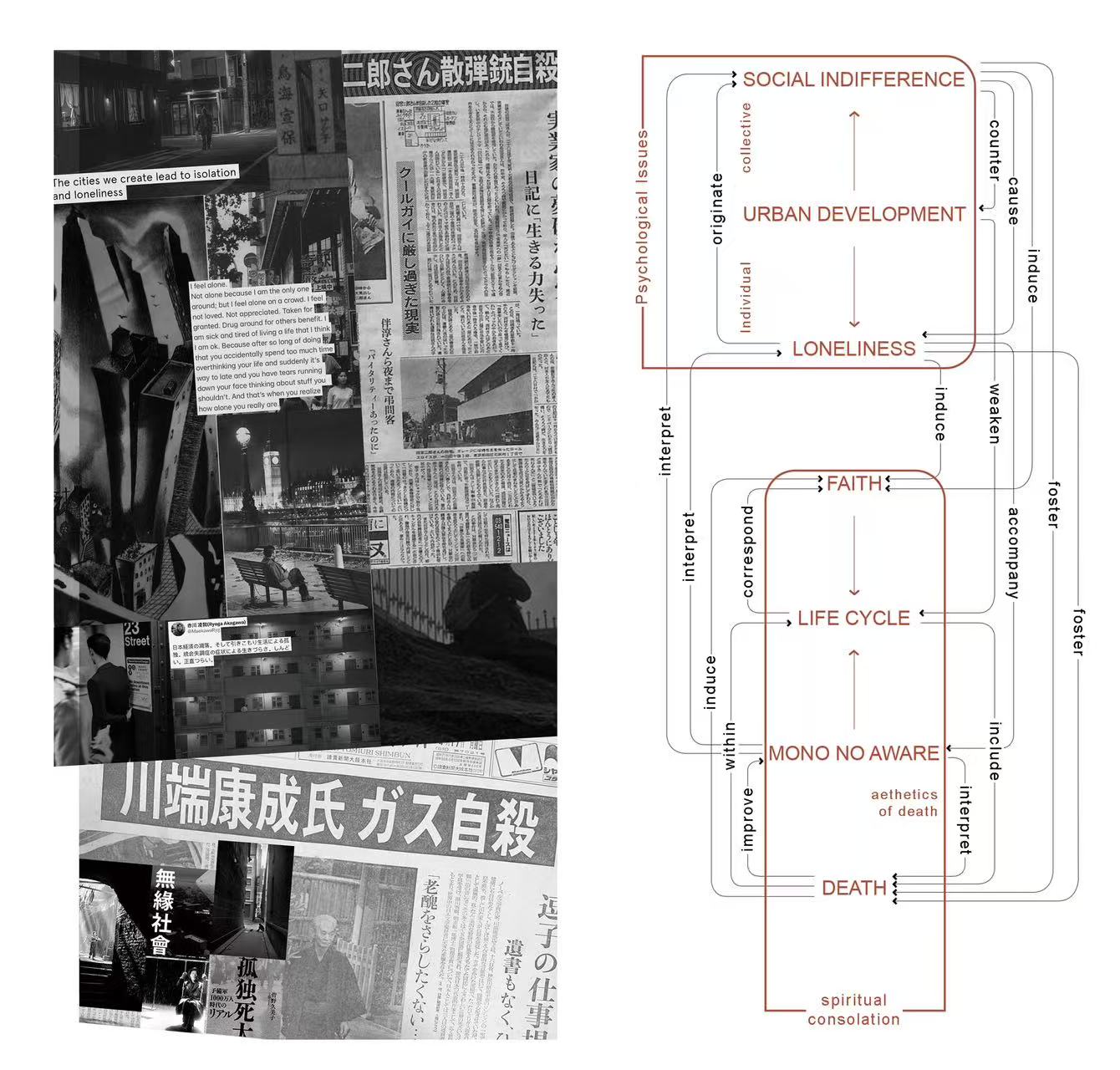
In Japanese society, due to the rapid urban development and social indifference, numerous cases of solitary deaths and suicides have emerged. By examining the various elements that link the widespread sense of loneliness among the Japanese and their understanding of death, it becomes clear that the new type of cemetery we need must not only reshape the psychological landscape of high-density cities but also provide a place of spiritual consolation for those who are lonely.
Japanese People's View of Life and Death
Japanese authors have extensively depicted their views on life and death. When they mention death, there is an inescapable motif: the sense of loneliness that Japanese people experience in social connections, blood relations, and geographical ties, or the portrayal of humble individuals existing in a state of unease and instability. Additionally, when describing death, they imbue it with a unique aesthetic beauty that often reflects the natural life cycle, which is also characteristic of Japan's 'mono no aware' aesthetics.
The Drawbacks of Traditional Cemeteries
The Role of Vertical Cemeteries in the City for the Lonely
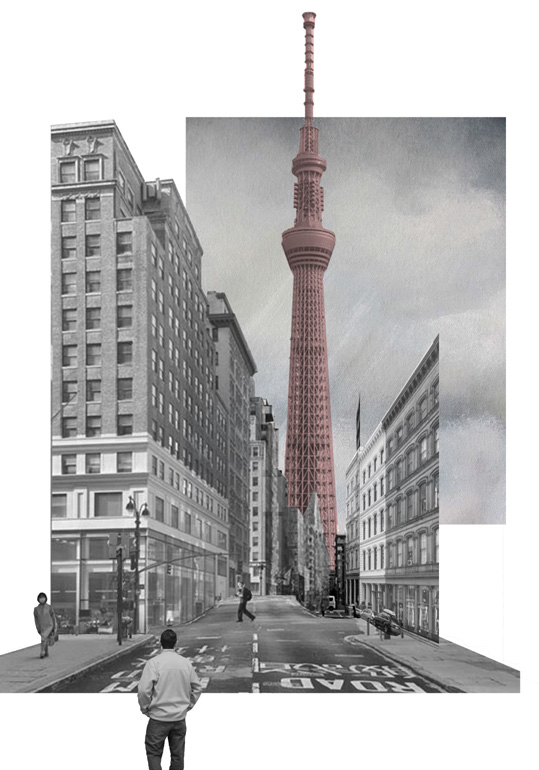
Vertical cemeteries not only save land area for burial space in Tokyo but also shape the meaning of death in the city through their monument-like forms. Unlike traditional flat cemeteries, these structures are more easily situated in city centers, creating visual focal points along different streets. With their unique significance, they become spiritual totems and urban icons for the lonely individuals living in Tokyo—signifying that death is a part of the city and life. These spaces serve as places of communication between the deceased and the living, providing shelter for the departed while offering solace to the living.
figure
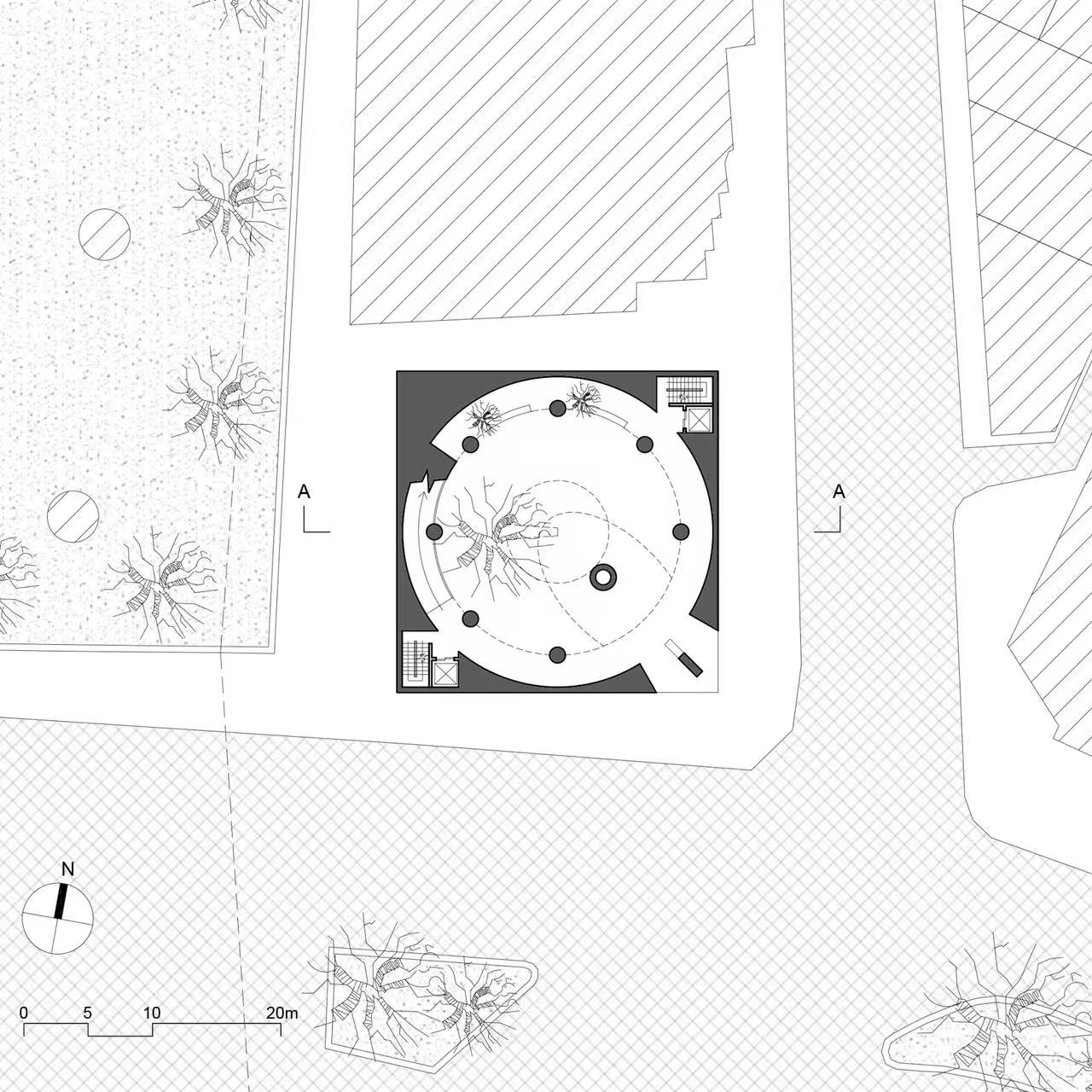
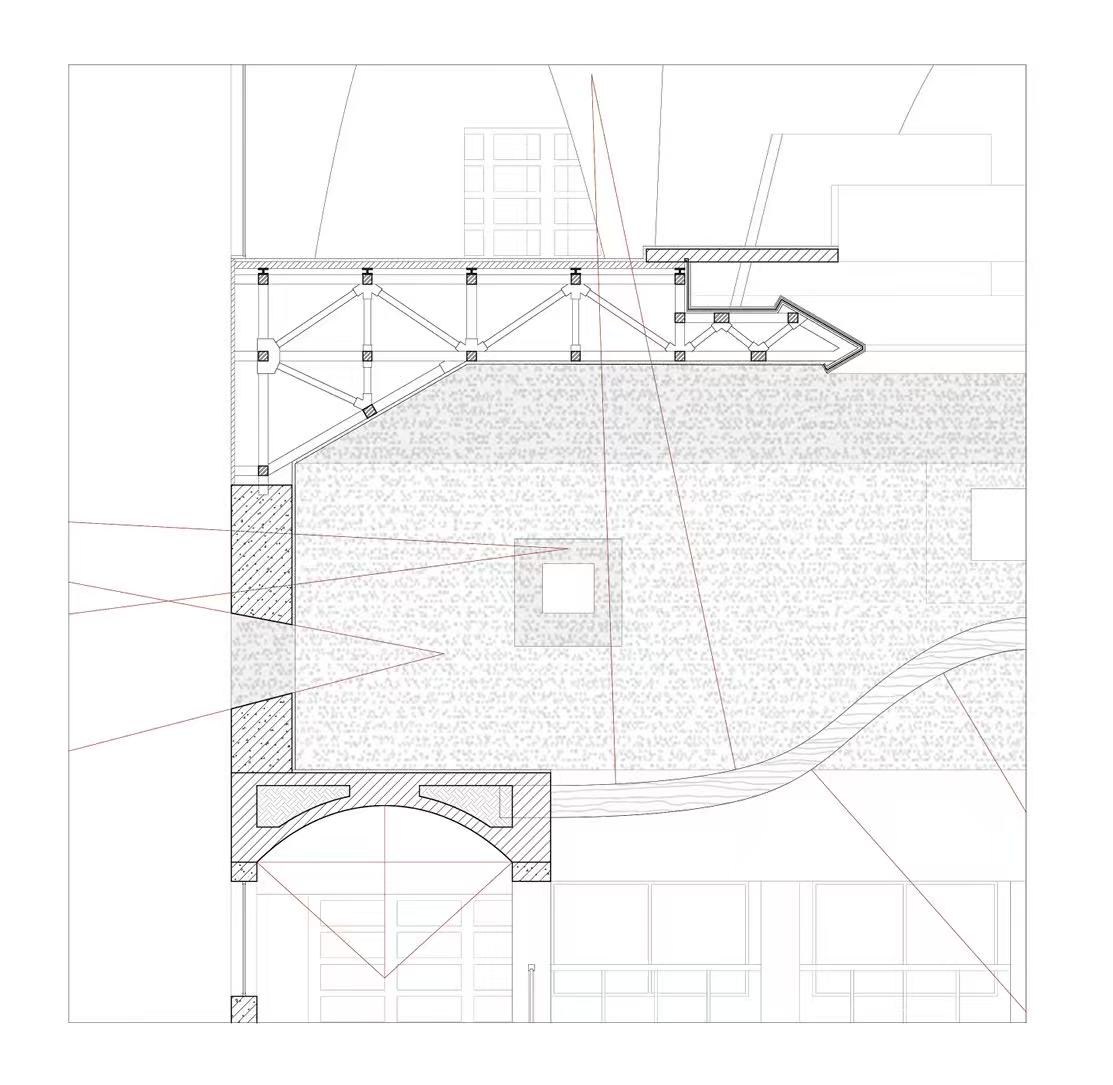
Ground Floor PlanSection Details
Ground Floor Plan and Section Details
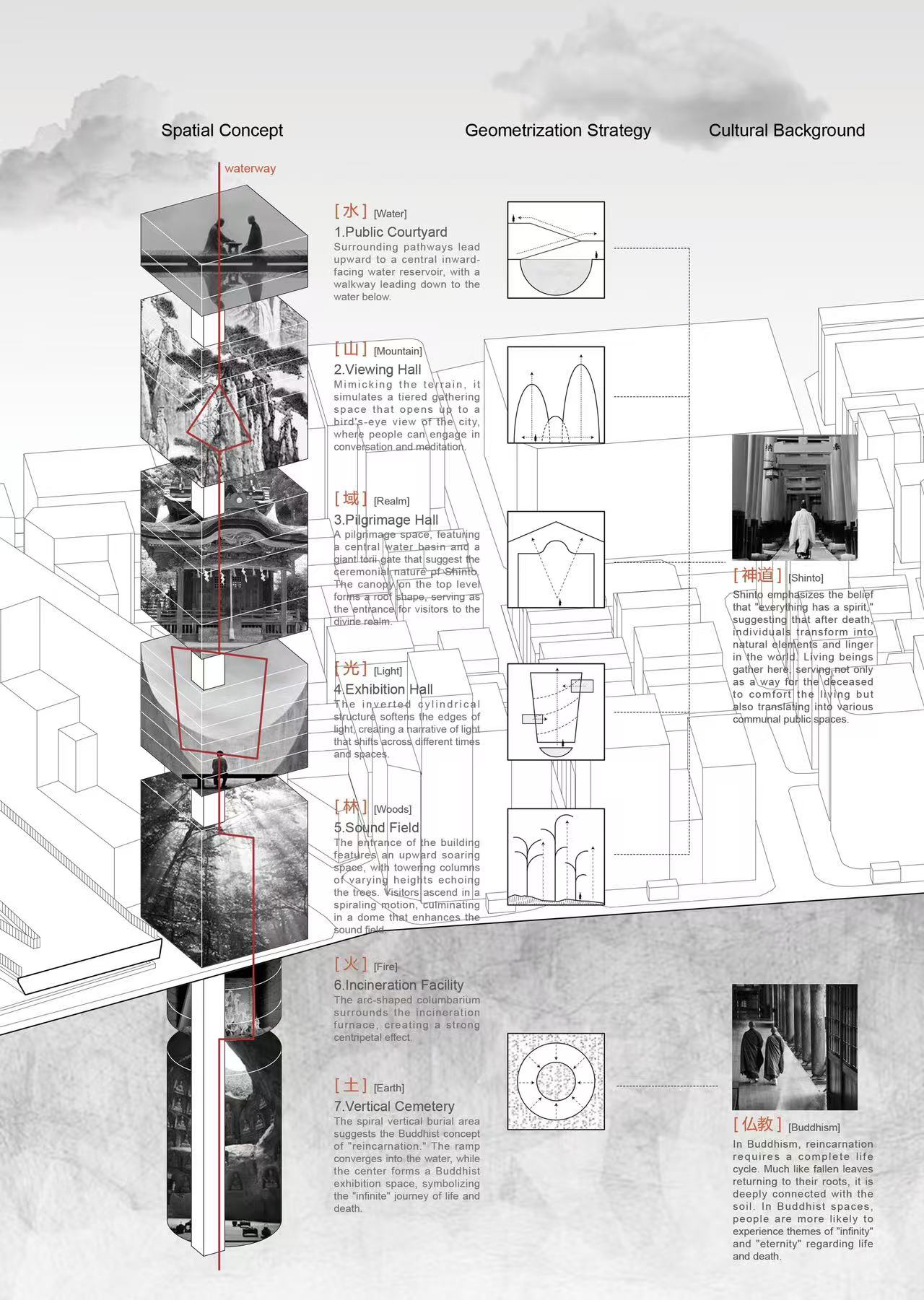
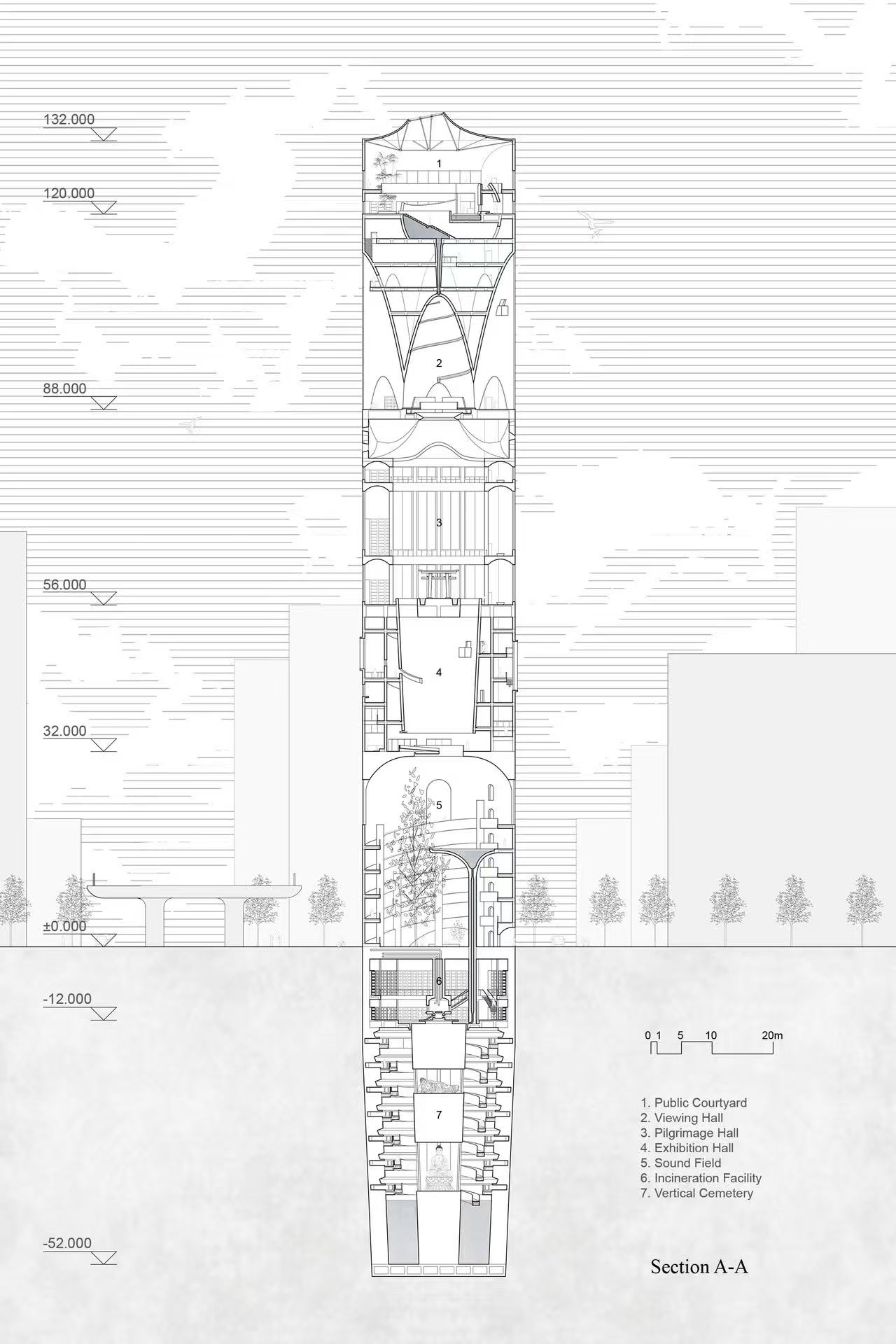
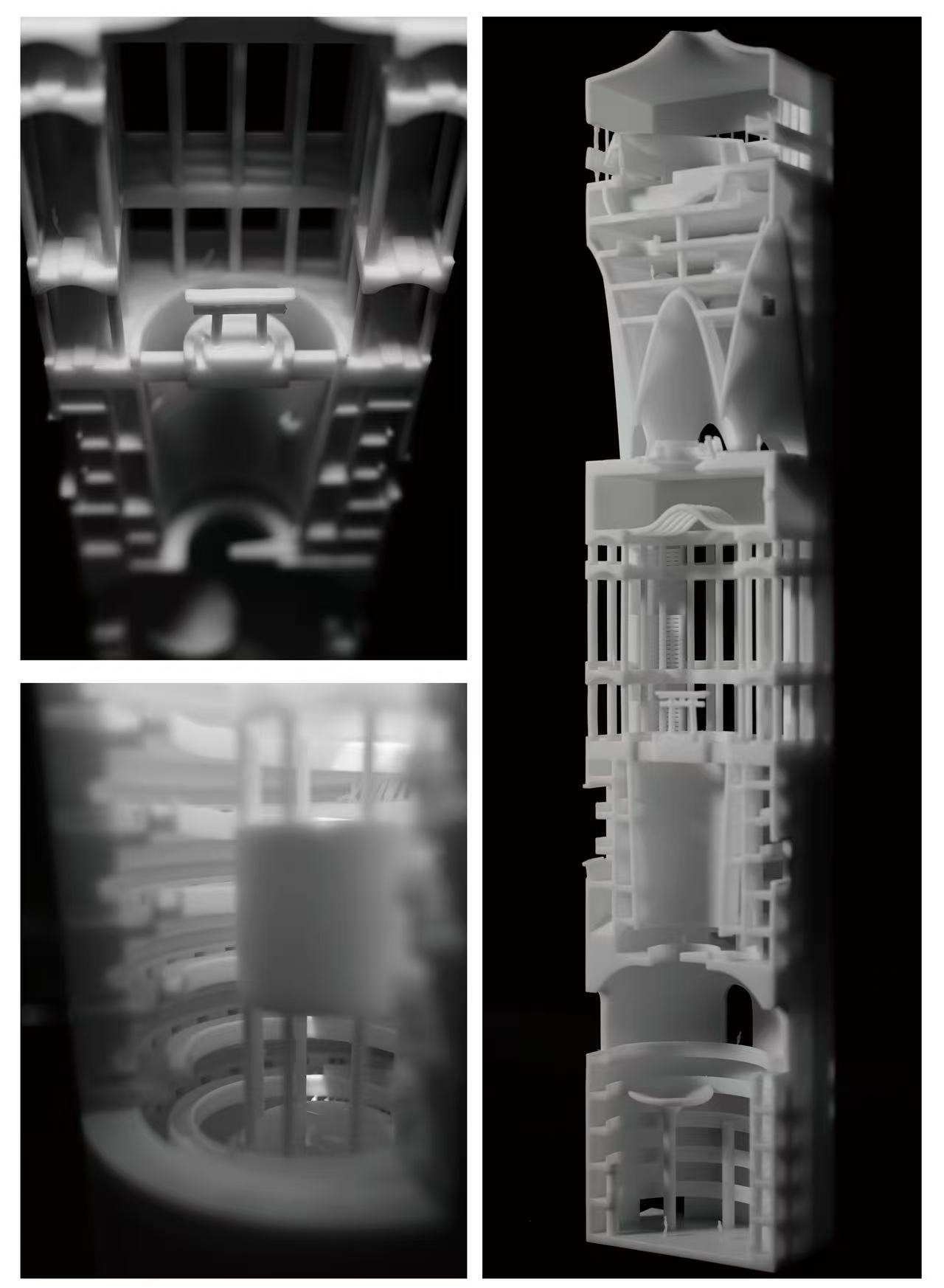
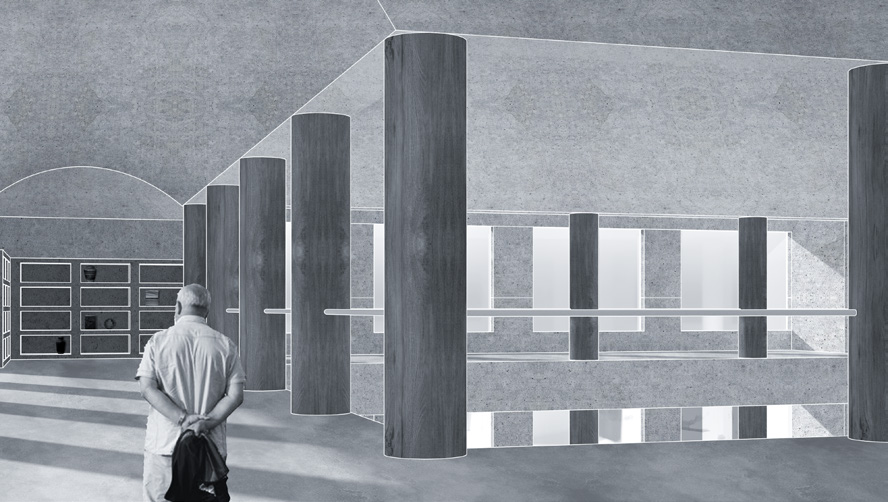
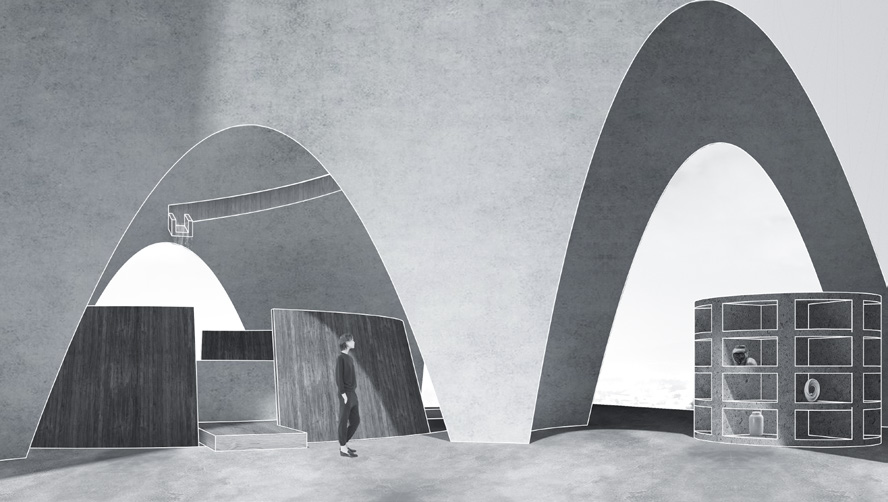
The junction between the pilgrimage hall and the viewing hall uses a truss structure due to the inability to place supporting columns, with all four sides resting on load-bearing walls. In the upper section of the pilgrimage hall, wooden beams support a truncated pyramid shape that opens the wall, allowing light to penetrate through the thick walls into the core worship area, providing precise control over the direction and focus of the light. The lower level, where visitors move, features arcades that delineate the resting and worship areas.
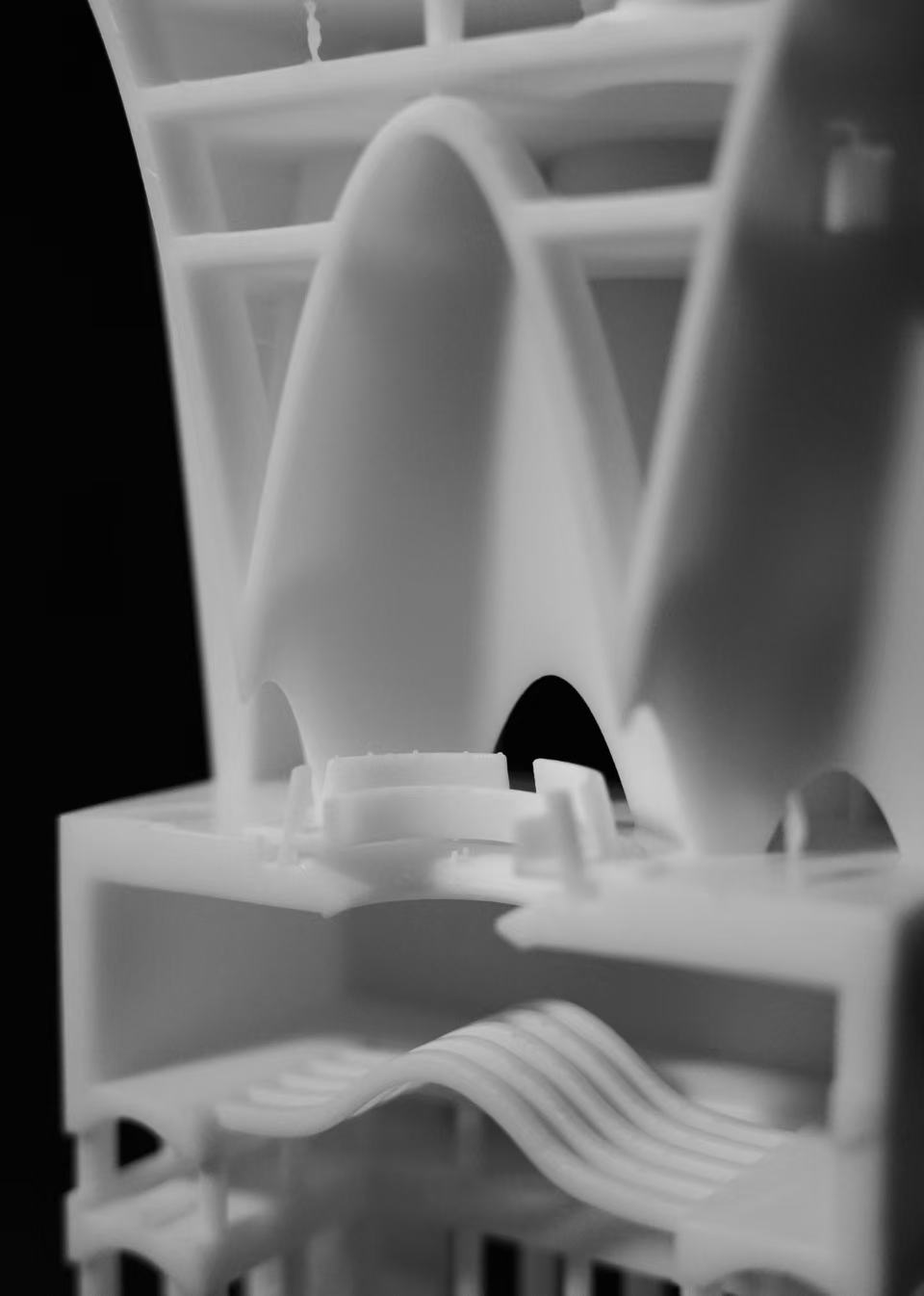
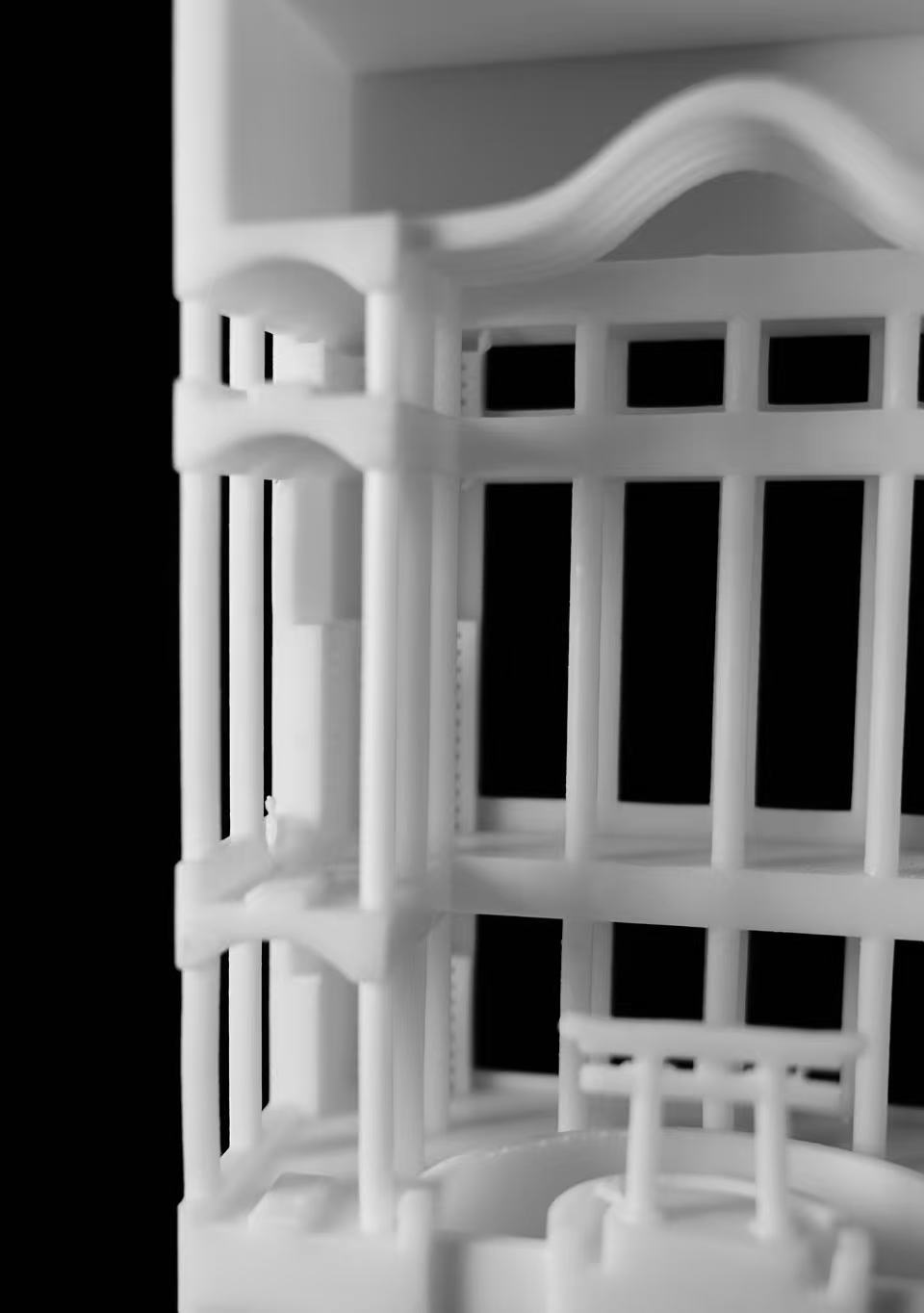
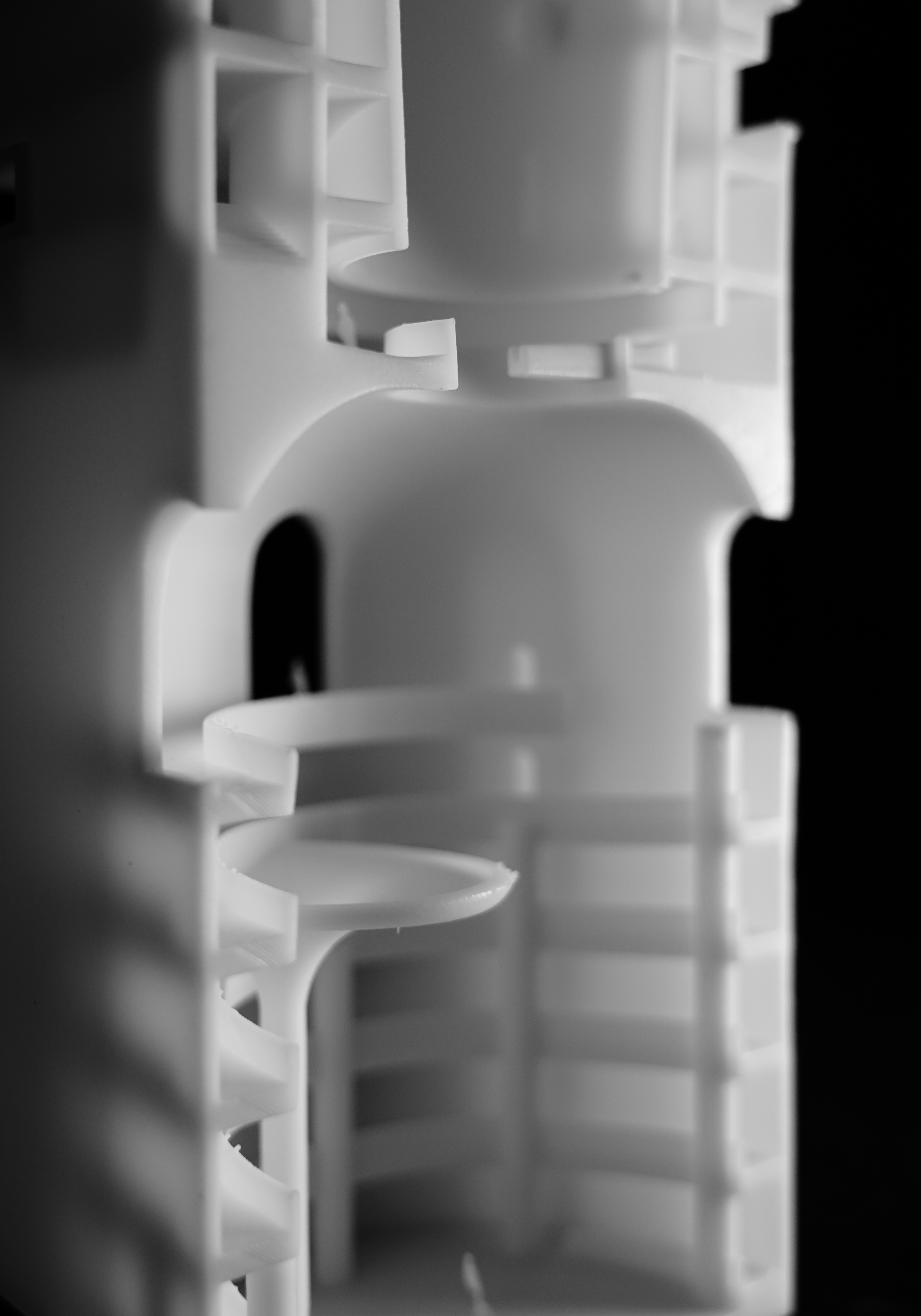
Model 1Model 2Model 3
figure
figure
Public Courtyard
Public Courtyard
figure
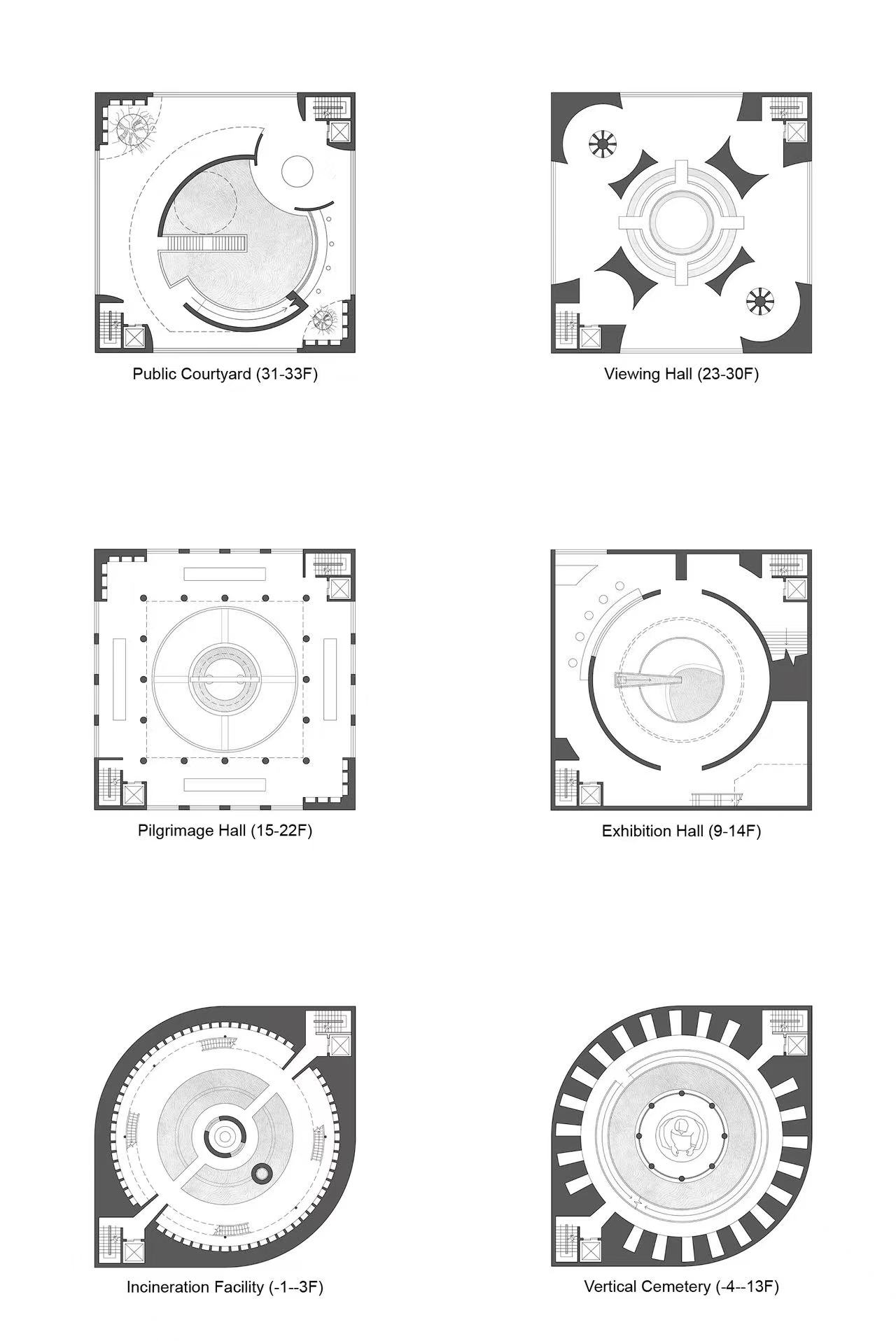
The composition of the plane primarily consists of circles and squares, forming a series of spatial scenes involving corridors, atriums, courtyards, and niches. The above-ground portion exhibits more public attributes, primarily through its tall and expansive atrium spaces, or outward-facing scenic views with asymmetrical floor plans. In contrast, the underground cemetery features a strongly centripetal circular layout, with a solemn, strictly symmetrical floor plan and vertical, unidirectional connectivity.
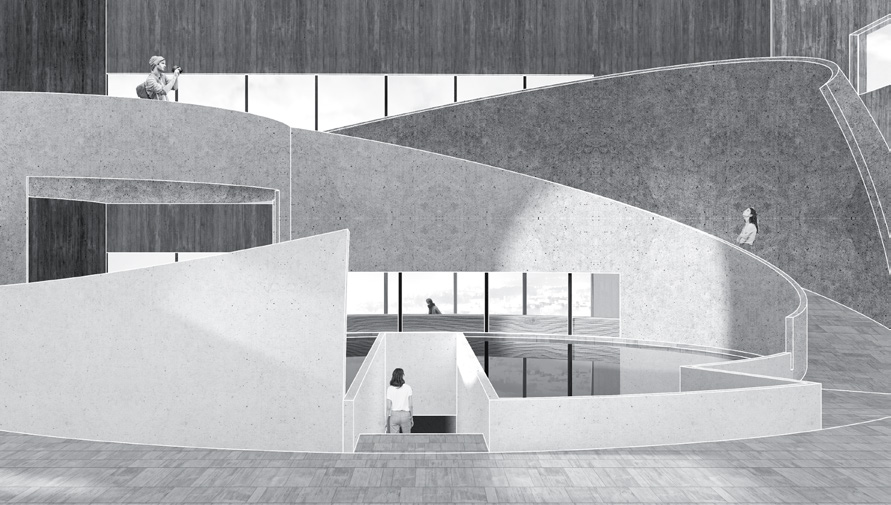
Exhibition Hall
Exhibition Hall
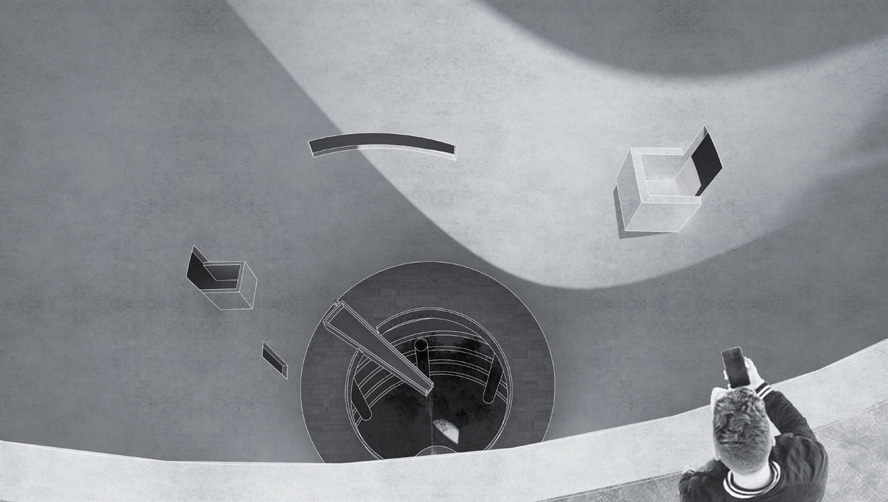
A Bird's-eye View of the City from the Rooftop Courtyard
The vertical cemetery in Shinjuku, Tokyo, features a more enclosed façade in the lower part, creating more inward-facing spaces. In contrast, the upper part opens up to more external views, allowing people to enjoy a comfortable bird's-eye perspective of the city from within the building while also letting natural light enter the interior.
figure
Pilgrimage Hall
Pilgrimage Hall
Viewing Hall
Viewing Hall
figure